



Stratasys Presents 'Customized Mass Production Vision' by Applying 3D Printing to Mass-Produced Vehicles
 Published2016.07.01 11:21
Unveiled unique custom design to be applied to the exterior of the new Copen 2-door Convertible
Stratasys announced that Japanese automaker Daihatsu has presented a vision for mass customization by applying 3D printing to mass-produced vehicles, becoming the first major automaker to do so.
Over the past three years, the scope of 3D printing has expanded beyond prototyping to include manufacturing tooling and small-batch production applications. Furthermore, 3D printing is expected to be utilized in customized mass production in the consumer goods sector.
Daihatsu, located in Ikeda, Osaka, Japan, conducted a joint project with 3D printing solution Stratasys, industrial design firm Znug Design, Inc.'s Kota Nezu, and 3D modeling artist Sun Junjie to actually realize the possibility of customized mass production.
Designers created 15 'effect skins' featuring geometric shapes and organic patterns, and 3D printed them in 10 different colors using a Stratasys Fortus 3D printer. Consumers can choose from a variety of options to create a one-of-a-kind custom design. This skin can be ordered and applied to the front and rear bumpers and fenders of the Copen vehicle.
"Effect Skin" was produced on a Fortus® 3D printer using Stratasys' ASA thermoplastic resin, which features high durability, UV protection, and an aesthetic appearance. Osama Fujishita, who oversees business planning at the Daihatsu Brand DNA Office, said, "Previously, development alone took two to three months, whereas now production is possible within two weeks." He added, "On-demand production using 3D printing offers the clear advantage of establishing efficient supply chain management, as well as providing customers with more options."
While traditional manufacturing methods could only achieve economic viability through economies of scale—that is, mass production—the 'Effect Skin' project demonstrates that 3D printing can be a solid alternative for manufacturing custom-made products that reflect individual consumer tastes and designs. "This project would have been impossible with traditional manufacturing processes or mold methods," said Cota Nezu of Tznag Design.

Comments
Related news
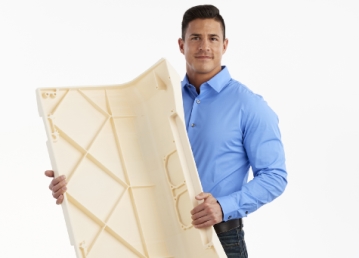
Stratasys Launches Latest FDM 3D Printer for Manufacturing Large Models
Stratasys announced four key improvements to its Stratasys FDM® (Fused Deposition Modelling) 3D printers for industrial applications, including the latest ST-130 material and Fortus 900mc Acceleration Kit. These improvements enable optimization of functional prototypes, manufacturing tools, and end-use parts production for the most demanding manufacturing applications requiring stringent conditions.
2016.05.27by 명세환 기자
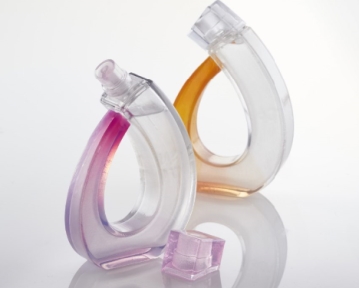
Stratasys Announces Latest PolyJet Materials for Fine 3D Printing Details
Stratasys has launched 'SUP706', a new water-soluble support material for PolyJet triple-jetting and dental 3D printers. The latest water-soluble support material significantly reduces the time and labor required for cleaning 3D printed models, enabling companies, dental laboratories, and dental clinics to efficiently produce large volumes of models and easily manufacture complex composite models with fine details through automated post-processing workflows.
2016.06.10by 명세환 기자
Partnering with Stratasys, InnoDesign, and others to foster the next generation of designers
Global design-leading company INNODESIGN (CEO Kim Young-se), Dassault Systemes Korea, a leader in the 3D solutions market (CEO Cho Young-bin), and Stratasys Ltd., a pioneer in 3D printing solutions (Branch Manager Daniel Thompson), announced that the three companies will jointly launch "DESIGN 2020," a youth design support project aimed at nurturing young designers who will lead the next generation of design in Korea.
2016.06.15by 명세환 기자

ESP32 Development Environment Selection and GPS Application Implementation
The ESP32 is a microcontroller that integrates Wi-Fi, Bluetooth, 12-bit ADC, capacitive touch, PWM, DAC, and UART in a single SoC. However, the abundance of features does not by itself solve the designer's problems. The real challenges lie in selecting the appropriate development environment, determining which pins can be used and which must be avoided, and converting raw data from modules into usable information. This document addresses ESP32 peripheral constraints (ADC2 and Wi-Fi coexistence limitation, UART1 occupancy, ADC non-linear regions), the trade-offs between Arduino IDE and ESP-IDF, and the process from connecting NEO-6M/NEO-M8N GPS modules to UART2, parsing NMEA sentences, and visualizing routes in Google Earth, all organized based on documented references.
2026.10.12by 편집부
MIPI CSI-2, DSI-2, C-PHY, D-PHY Test Solution Technical White Paper
The MIPI interface adopts a burst mode that transitions between low-power (LP) and high-speed (HS) states for low-power consumption, and in return, strict timing rules are imposed on state transitions. Additionally, the high-speed section operates as a packet-based protocol with headers, ECC, and CRC, so verification engineers must handle waveforms and protocols simultaneously. Traditional configurations combining general-purpose oscilloscopes and AWGs reveal limitations in setup complexity, measurement uncertainty, and lack of reproducibility when faced with these requirements. This white paper, based on webinar materials, organizes the structure of this problem and describes how the SV5C-DPTXCPTX generator for receiver testing and SV5C-DPRXCPRX analyzer for transmitter testing integrate state transition testing, stressed eye testing, and protocol analysis into a single bench, along with their application boundaries.
2026.10.12by 편집부











