



[Discussion] Autonomous Vehicles: "Overconfidence is dangerous, but there is no need to fear either"
 Published2016.07.25 12:00
Live coverage of the discussion on foundational technologies and future directions for the commercialization of autonomous vehicles
Automotive Innovation Day: Hundreds flock to see the latest automotive technology
Interest in autonomous vehicles shows no signs of waning. Autonomous vehicles presuppose extensive technological advancements, ranging from existing vehicle technology to advanced component technology, as well as surrounding infrastructure technology including roads. 'Automotive Innovation Day 2016' (hosted by Automotive Electronics), a leading domestic automotive technology exhibition, was held on the 14th with the participation of approximately 700 people.
The event received an enthusiastic response from participants as it covered key issues for future automotive development, including ADAS, autonomous vehicles, connected cars, the Internet of Car (IoC), automotive security, and testing—all hot topics in the automotive industry. During the panel discussion concluding the conference, government and industry experts on autonomous vehicles participated, providing insights into the latest industry trends. E4ds News provides live coverage of the panel discussion on 'Foundation Technologies and Directions for Autonomous Vehicle Commercialization'.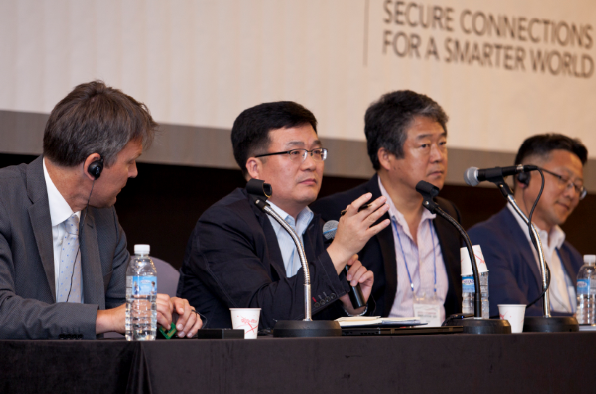
The panel discussion ( Moderator: Yoon Beom-jin, Automotive Electronics) was attended by , from left to right: Lars Reger, CTO (NXP Semiconductors) , Lee Jae-kwan, Head of Division (Korea Automotive Parts Research Institute) , Shin Jae-gon, Team Leader (Korea Transportation Safety Authority Automotive Safety Research Institute) , and Jeong Ui-gyeong, Section Chief (Ministry of Land, Infrastructure and Transport).
#All remarks
▶ Section Chief Jeong Eui-gyeong (Ministry of Land, Infrastructure and Transport): We introduced the test run system later than other countries. We started in February of this year, and currently, eight sections are in operation. These include the expressway section from Hobop to Singal, five national roads, and two urban areas. We plan to lift the restrictions on all sections going forward, unless there are exceptional circumstances. What is necessary for the commercialization of autonomous vehicles is safety standards, which is an area that requires international discussion. In addition, issues such as insurance, recalls, and inspections must also be resolved. For example, insurance coverage may vary depending on the level of autonomous vehicle development.
Regarding infrastructure, we provide support for two main areas. First is precision maps. We are currently developing them step by step. Details can be checked at the National Geographic Information Institute, and we have made them available for free download. Vehicle GPS for autonomous vehicles is currently under research and development and is scheduled for commercialization, primarily in the Seoul metropolitan area. Second, regarding road infrastructure, we are conducting a C-ITS pilot service between Daejeon and Sejong. Once a standardized model is developed, we will expand it nationwide. 
“The autonomous vehicle industry is the direction we must continue to move forward. To this end, the government will provide maximum support and actively incorporate valuable opinions into policy through the Autonomous Vehicle Future Forum.” – Jeong Eui-gyeong, Section Chief (Ministry of Land, Infrastructure and Transport)
To develop various technologies, testbeds with diverse conditions are necessary, but such facilities do not exist domestically. For instance, we are planning to create a small experimental city capable of simulating environments such as highways, urban sections, parking lots, and national roads. We plan to designate two or three demonstration zones and also intend to designate universities to provide support. One area where we lag behind is data; therefore, we intend to collect data related to various autonomous vehicles, establish a data sharing center, and provide it to small and medium-sized enterprises (SMEs) and venture companies.
Finally, we must also consider the issue of manpower and public acceptance of (autonomous vehicles). To enhance public acceptance, there are numerous issues to address, such as demonstration events, competitions, and forums related to autonomous vehicles. Accordingly, the Autonomous Vehicle Future Forum was recently established. The forum has created four divisions—institutional, standardization, social acceptance, and business (commercialization)—and plans to incorporate the opinions derived from them into policy. Autonomous vehicles are, after all, the direction we must continue to move forward in. To this end, the government will provide maximum support and actively reflect any good proposals received.
▶ Team Leader Shin Jae-gon (Automotive Safety Research Institute, Korea Transportation Safety Authority): Autonomous vehicles did not suddenly appear; rather, the boom was driven by the convergence of technologically advanced ADAS-based systems and Google's policies. Autonomous vehicles are a necessary technology for reducing traffic accidents and enhancing driver convenience. Currently, the focus is primarily on gasoline internal combustion engines, but in the future, the system will evolve by being integrated into electric and hydrogen vehicles.
For now, it seems there is no need to be overconfident or overly afraid of self-driving cars.
I would like to mention two things. First, regarding regulations, we are working to establish safety standards. Our research institute is conducting a government project titled "Development of Safety Evaluation Technology for Autonomous Vehicles." We research driving safety and functional safety for autonomous vehicles. In functional safety, the term 'failure safety' is used to describe the assessment of how to respond when a part fails, rather than the idea that we do everything ourselves.
The experimental city K-City is being constructed, which is similar to the US M-City but about 10 times larger in scale. Within K-City, five conditions are being established: dedicated road conditions, national and suburban road conditions, urban areas, parking spaces, and community conditions (school zones for the road-vulnerable). It is scheduled to be completed as early as the first half of next year. 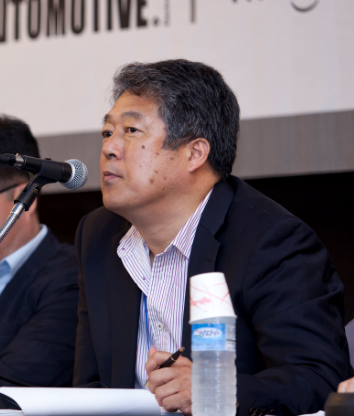
“Autonomous vehicles are an essential technology for reducing traffic accidents and enhancing driver convenience. In the future, the system will evolve by being integrated into electric and hydrogen vehicles. For now, I do not think there is any need to be overly confident or overly afraid of autonomous vehicles.” — Team Leader Shin Jae-gon (Automotive Safety Research Institute, Korea Transportation Safety Authority)
The following are international standards related to autonomous vehicles. Currently, regarding regulations for autonomous vehicles, the International Council on Automotive Standards (UN/ECE/WP29) is developing various regulations. A group within this organization is creating regulations for e-safety and e-security—specifically, parts of functional safety and security. They plan to create and publish guidelines, but it appears there will be a slight delay due to the intertwined interests of various sectors.
There is also an autonomous steering command function. Tesla calls this Autopilot, and regulations for the autonomous steering command function are currently being developed within WP29. Here, requirements are being established step-by-step, categorized into six areas, such as autonomous steering during parking and lane changes. For example, to use a function within a few seconds, it includes requirements to make the driver recognize that they are hands-off, then monitor the system, and finally control the vehicle. I believe that if these requirements had been specified in advance, the previous Tesla accident could have been prevented.
Requirements for features such as automatic parking are scheduled to be finalized by next March, while the original command functions for autonomous vehicles, including lane changes, are planned to be completed in the second half of next year. However, this does not mean immediate implementation; expert proposals must first be released, followed by international discussions. I estimate this process will take at least a year. Most of the information regarding WP29 is available on the website, so you can simply look up the details you need. Autonomous vehicle standards are progressing rapidly internationally. Although we are behind schedule, we are striving to establish the requirements as quickly as possible.
▶ Lee Jae-kwan, Head of Division / Korea Automotive Parts Research Institute: First, before discussing autonomous vehicles, we need a definition. An autonomous vehicle is not simply a vehicle that is capable of doing so; it requires cooperative or integrated control with infrastructure. There is also the concept of ITS (Intelligent Transportation Systems) for road infrastructure. Ultimately, it encompasses cloud computing and big data as well. The important thing is that the vehicle must be able to perceive its surroundings, assess risks, and take control; however, the most critical element underlying this is that it must drive safely on its own. The definition of an autonomous vehicle is that it should not allow the driver to become overconfident, and should warn the driver of dangerous situations so that they can take action. Therefore, it can be viewed as a different concept from an unmanned vehicle. Since unmanned vehicles can be viewed from a robotic perspective, the term "unmanned vehicle" is not favored by the automotive industry.
So, where do autonomous vehicles stand right now? Level 1, classified by the U.S. Department of Transportation, is known as ADAS and is equipment that can be easily purchased as an option. Level 1 is a concept of automation and driver assistance for a single function in one direction. Level 2 integrates longitudinal technology, allowing drivers to take their hands and feet off the wheel, while Level 3 allows drivers to conditionally take their eyes off the vehicle under limited conditions. Level 4 allows drivers to completely take their eyes off the vehicle and simply set the destination.
Up to Level 2, autonomous driving is possible using automotive technologies such as sensors and communication, but at Level 3, the limitations of vehicle sensing make it inevitable to rely on infrastructure assistance. Representative examples include digital maps, dynamic maps, and vehicle-to-vehicle communication. We currently stand at a crossroads where automotive infrastructure must be integrated into automotive technology.
In the case of the recent fatal accident involving a Tesla driver, there was a significant element of overconfidence in the driver. It seems they misunderstood the vehicle as an unmanned automatic system. Various safeguards must be implemented for the system. It is incomprehensible that the radar failed to detect the surroundings, as it is capable of seeing what the camera cannot. So, I think that part was designed incorrectly from a system perspective. 
“When we reach Level 3 autonomous vehicles, we will inevitably have to rely on road infrastructure due to the limitations of vehicle sensing. Key examples include the need for digital maps, dynamic maps, vehicle-to-vehicle communication, and communication between vehicle infrastructure. We currently stand at a crossroads where automotive infrastructure must be integrated into automotive technology.” – Lee Jae-kwan, Head of Division, Korea Automotive Parts & Materials Institute
Accordingly, while sensor and communication technologies are important, ultimately, how the system architecture is designed from a system engineering perspective is crucial. The design must be well-executed to allow the driver to switch from automatic to manual mode without over-relying on the vehicle. What is important is how the system responds in fail mode when a failure occurs. In terms of functionality, functional safety is critical.
In other words, autonomous vehicles must perceive, judge, and control their surroundings. Perception is achieved through sensing using cameras, radar, and lidar, and since information must be transmitted from the surroundings if sensing is inaccurate, wireless communication technologies such as V2V and V2X become crucial. In particular, security will become a critical issue. It is essential to understand the entire vehicle system—not just chips or software—to perform system engineering for security.
Finally, what should we do going forward? In standardization, I believe that people with industry experience, rather than academia, should participate in the process. I believe the government should focus its support on areas where we are significantly lacking—specifically, sectors with high dependence on foreign countries such as sensors, wireless communication, and connectivity devices, where self-reliance is weak—and that it is necessary to build infrastructure that the automotive industry alone cannot provide.
▶ Lars Reger , CTO, NXP Semiconductors: We have strived to prove, and have proven, that the sensors installed in automobiles are superior to the driver's ears and eyes. Under these conditions, I personally trust autonomous vehicles. If the number of sensors and radar sensors installed in vehicles were reduced, obstacles within 1 meter would not be visible. Using a poor radar system is like driving with one eye closed.
While I have previously spoken highly of regulations, the lines of liability regarding autonomous vehicles must also be clearly defined. For instance, if a 40-ton truck is involved in an accident while driving, there is significant interest in how to prevent such accidents within restricted areas. In three to four years, dedicated driving zones distinct from general roads will emerge. Accordingly, robust assistance systems are required. In other words, complete driving on public roads is only possible if the robot can be controlled to operate. 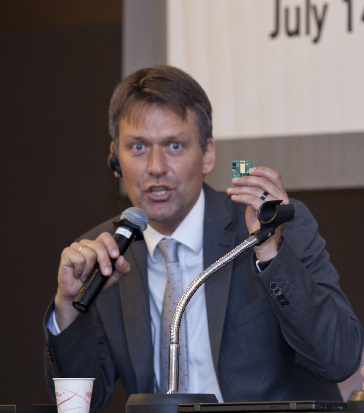
Since Korea, just like the U.S. or Germany, cannot handle autonomous vehicles alone, collaboration is more important than anything else. “Automakers, software companies, and semiconductor firms must all join forces.” – Lars Reger, CTO, NXP Semiconductors
In two to three years, we will be able to see autonomous vehicles even in downtown Seoul. Of course, the vehicles will be transport vehicles. As technology advances in the coming years, hybrid vehicles incorporating many technologies will emerge. They will drive safely within restricted areas, from home until they enter a dedicated zone. For example, if I set the vehicle to manual driving when visiting relatives, I can configure it so that the driver only handles the last 10 km of the 800 km journey.
However, for all these conditions to be feasible, technology must be further stabilized to enhance safety and control. Regulations also require discussion at an international level. Just as the U.S. and Germany cannot handle this alone, Korea cannot, so collaboration is of the utmost importance. The automotive industry, software companies, and semiconductor companies must all join forces.
Q&A
Why use WAVE instead of the existing 3G and 4G commercial networks?
What are the plans for operating pilot cities for autonomous vehicles?
What is the division of roles among ministries regarding autonomous vehicles?
▶ Floor Question: It is said that Hyundai aims to commercialize V2X by 2020. It seems difficult unless the entire fleet is replaced. Also, wouldn't existing commercial networks like 3G and 4G be sufficient without relying on V2V or V2X?
CTO Lars Leger: C2C technology will be released at GM in the U.S. as early as the end of this year. Commercialization will be possible by 2018. In existing cellular communication, other forms of communication can interfere between cellular networks. Therefore, the reason a new network is needed is to find a network suitable for camera or radar systems.
Director Lee Jae-kwan: The 2020 commercialization mentioned by Hyundai Motor refers to using vehicle sensing, not V2X. Google's self-driving cars are also capable of driving not solely through the technology of the vehicle body, but by sharing data such as digital maps via the cloud. One might then ask why WAVE is used when commercial 3G and 4G networks already exist. There are two reasons for using WAVE: providing uninterrupted information and addressing the issue of usage fees. Therefore, a service architecture must be clearly established. Much research is also being conducted on methods to fully utilize existing infrastructure and networks.
Team Leader Shin Jae-gon: There is a possibility that the V2X concept will be slightly delayed. Actual effectiveness depends on the vehicle penetration rate, which requires at least 10% adoption. In that sense, sensor-based autonomous vehicles will advance first, followed by V2X communication-based systems. However, it must be a system that integrates with sensors. During nighttime or rainy conditions, a communication infrastructure, rather than a sensor-based one, must provide the necessary support. Furthermore, the reason it is difficult to use existing commercial networks is that information must be provided without interruption even when vehicles are traveling at speeds of 150 km/h or 200 km/h, and 3G or 4G cannot cover this. However, in the case of V2I, where there is some communication margin, it may be possible to support it via 5G. I understand, however, that it is currently in the review stage due to software and security issues.
▶ Floor Question: Infrastructure integration is necessary for fully autonomous vehicles. How are you planning the pilot cities to facilitate this infrastructure integration?
Section Chief Jeong Eui-gyeong: We are internally considering three stages. First, K-City involves detailed work for technology development and establishing safety standards; second, we are planning activities that can be carried out in demonstration areas or on campuses; and finally, we intend to create a regulation-free zone. Since implementing this across the entire area is costly, we plan to designate specific zones. While it is difficult to realize immediately, it could potentially emerge similar to K-City in the near future, or even be built sooner.
▶ Floor Question: The three ministries—the Ministry of Trade, Industry and Energy, the Ministry of Science, ICT and Future Planning, and the Ministry of Land, Infrastructure and Transport—are handling eco-friendly and autonomous vehicles. What is the role of the Ministry of Land, Infrastructure and Transport?
Section Chief Jeong Eui-gyeong: There are three relevant departments. The Ministry of Trade, Industry and Energy is mainly involved in parts development, the Ministry of Science, ICT and Future Planning handles telecommunications and security, and the Ministry of Land, Infrastructure and Transport is responsible for overall management and establishing regulations and systems. Therefore, within the Ministry of Land, Infrastructure and Transport, there is a department responsible for precise road maps, as well as departments handling regulations, systems, safety standards, safety inspections, and infrastructure.
Director Lee Jae-kwan: (The roles of the ministries) are a concern in many places. Initially, they appeared to be acting separately, but I understand that they have been consulting jointly for the past three years. Recently, a comprehensive action plan has been developed, and the three ministries are responding jointly. It appears to be gradually improving.
Comments
Related news
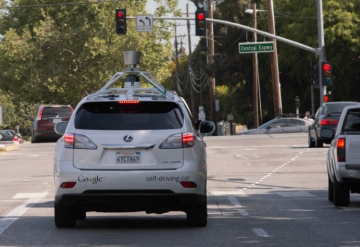
Why did Google's self-driving car spend 3.85 million kilometers on road tests?
Dr. Cha Won-yong, a representative futurologist in Korea and CEO/Director of ASPEC Future Technology Management Research Institute, revealed this through his recently published book titled "Intensive Patent Analysis of Google's AI-based Autonomous Vehicles," stating that "most of Google's patents are aligned with Levels (L) 3 and 4 as defined by the American SAE," and "patents related to software design capabilities for artificial intelligence (AI)-machine learning (ML)-deep learning (DL), which is the core of autonomous vehicles, and patents regarding situations, responses, and learning that occur during actual road testing based on this foundation." Dr. Cha identified 250 Google patents from 2009 through December 31, 2015, related to Google's Self-Driving Car (SDC) project, specifically semi-autonomous cars (Self-Autonomous Car) and autonomous cars (Autonomous Car), and analyzed 110 important patents among them. Most of these patents are sensor systems (Sensor System), autonomous driving computer systems (Autonomous Driving Computer System), which are core to autonomous vehicles, and authentication systems between users and autonomous vehicles when commercialized.
2016.05.02by 신윤오 기자
Localization of key components is necessary for the commercialization of autonomous vehicles
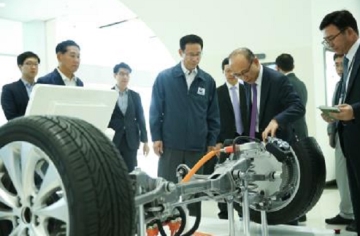
Choi Jeong-ho, Vice Minister of Land, Infrastructure and Transport, visited Hyundai Mobis's Mabok Research Institute on the 3rd, which became the first automotive parts supplier to receive temporary autonomous vehicle operation approval. He was briefed on the autonomous vehicle-related research and development initiatives being pursued at the institute. At a roundtable discussion attended by Hyundai Mobis Executive Vice President Jeong Seung-gyun and research institute officials, Vice Minister Choi encouraged them, stating, "I appreciate the efforts of those who have worked on technology development to make today's Hyundai Mobis possible."
2016.06.07by 명세환 기자
Can domestic LiDAR technology, the eyes of autonomous vehicles, drastically lower prices?
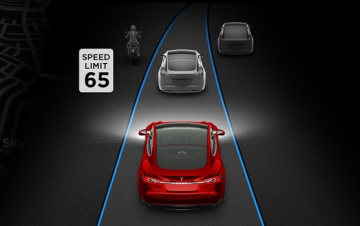
Last May, when a fatal accident involving a Tesla electric vehicle occurred while driving with autonomous driving capability (Autopilot), autonomous vehicles once again became the center of controversy. The U.S. National Highway Traffic Safety Administration (NHTSA) regards this accident as the first fatal accident occurring in autonomous driving mode. This accident has become an opportunity to comprehensively review autonomous vehicle technology, from the sensor role to commercialization. Accordingly, we examined autonomous vehicle forward detection technology through the current domestic technology status of LiDAR (Light Detection and Ranging), which can be considered the "eyes" of autonomous vehicles, and related technologies.
2016.07.04by 신윤오 기자

[e4ds Tech Day 2026 ⑨] Sim Sang-gyu, Autocrypt CTO: "In the Physical AI Era, Automotive Security Must Extend Beyond the Vehicle"
At e4ds Tech Day 2026, Sim Sang-gyu, CTO of Autocrypt, explained automotive cybersecurity strategies in the era of Physical AI and SDV (Software-Defined Vehicle). Automobiles are evolving as part of an ecosystem connected to AI, cloud, chargers, IoT, and robots, and he emphasized that the scope of security must expand beyond the vehicle interior to the entire connected environment. In particular, AI model tampering, adversarial attacks, OTA updates, and EV charger hacking were identified as major threats. He explained that response measures require zero trust, AI model integrity protection, intrusion detection, Security by Design and Default, and full lifecycle security management, and that proactive security system establishment beyond regulatory compliance is critical for securing future mobility competitiveness.
2026.10.12by 배종인 기자

Practical HIL Construction Strategy for Automotive and Off-Highway Controller Validation
As vehicle E/E architecture transitions to zonal structures and shifts to software-defined vehicles (SDV), the number of controllers (ECUs) requiring validation and software complexity are surging dramatically. Meanwhile, real vehicle testing cannot provide repeated verification under identical conditions and entails lead time and safety concerns. This white paper explains the principles of HIL (Hardware-in-the-Loop) validation and the structure of the NI platform composed of PXI, SLSC, and VeriStand, and through two actual implementation cases—Camera Record & Replay HIL for In-Cabin Monitoring Controller (ICMU) and Forklift Controller (VCU) HILS—describes how controller-level regression testing becomes possible. Additionally, it explicitly states application boundaries and limitations, such as lack of A2B support.
2026.10.12by 편집부











