


Korean-style Smart Factories to Drastically Transform Small and Medium-sized Manufacturing SMEs
 Published2016.08.02 03:37
Specification of the 8 Key Smart Technologies for Building Smart Factories
As the concept of a Korean-style smart factory is established as a form in which digitalization is fused with automation based on IoT and CPS (Cyber-Physical Systems), the outlines of the eight major smart manufacturing technologies have also emerged.
The Public-Private Joint Smart Factory Promotion Team (Director Park Jin-woo) defined a Korean-style smart factory as a factory that integrates the entire process—including planning, design, production, distribution, and sales—using ICT, focusing on innovation in small and medium-sized manufacturing companies to produce customized products at minimal cost and time.
The core technologies of smart factories, which can be implemented in various forms depending on the degree and capability of IT technology utilization, include smart application systems, scientific product and process technology design and development, intelligent control automation, IoT digital measurement and display, and IoT-based smart manufacturing method development. Underlying technologies constitute ICT-based solutions such as security, cloud services, and platforms.
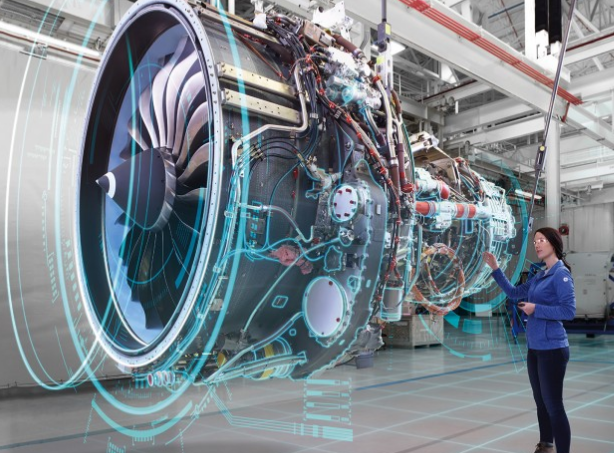
GE is a company famous for customized manufacturing and flexible production (GE website)
The Smart Factory Promotion Team, which aims to smarten one-third of manufacturing plants by 2020, is currently carrying out projects centered on the dissemination of smart factories, including research and development, standard certification, construction of demo factories, support for cloud big data analysis smart factories, and fostering leading smart factory suppliers.
Bae Gyeong-han, Deputy Director of the Smart Factory Promotion Team, stated, “The majority of our manufacturing companies remain at a level of ‘partial process automation’ or lower,” adding, “Phase-by-phase customized smartification is necessary in the future.” The team, which revealed that productivity has improved by 25% through support for the establishment of 1,240 smart factories in Korea, assessed that as of 2015, the results of the dissemination project included a 27.6% reduction in defect rates, a 29.2% reduction in costs, and a 19.0% reduction in delivery times.
Along with this, the eight major smart technologies for building smart factories and investments for each of the ten key scenarios have also been concretized. The eight major smart technologies, for which 416.1 billion won in new R&D will be jointly invested by the public and private sectors over the next five years, are expected to receive an annual average of 83.2 billion won in new investment until 2020. The investment required by technology is supported in the following order: big data (77.6 billion won), smart sensors (67.7 billion won), cloud (60.9 billion won), energy saving (55.5 billion won), 3D printing (55.1 billion won), CPS (cyber-physical systems) (49.3 billion won), Internet of Things (35 billion won), and hologram (15 billion won).
In addition, the total investment for implementing the 10 key scenarios is estimated at 336.3 billion won. By technology, it consists of 19.3% big data and 17.2% cloud, and by cycle, it is projected that 95.6 billion won will be required for manufacturing, 86.6 billion won for factory facilities, and a total of 154.1 billion won for the demand forecasting, product design, and distribution cycle combined.
Strategies for the eight smart manufacturing technologies for smart factories to realize this were also introduced, namely smart sensors, CPS, 3D printing, energy saving, the Internet of Things, big data, cloud, and hologram technology.
First, smart sensor technology refers to effective sensors capable of detecting various information in the manufacturing industry, enabling a smart manufacturing environment. Due to the lack of internal standardization, there are plans to align with international standards. Smart sensor standards such as IEEE 1451, IEC TC47, and SC47 are currently being promoted. CPS refers to an intelligent manufacturing system that integrates a manufacturing company's information computer systems with physical systems, such as people, processes, and equipment, into a network to provide safe, reliable, and distributed control. The strategy is to secure international standardization and standard patents to leap forward as a global leading nation by 2020.
416.1 Billion Won in New Public-Private R&D Investment for 8 Key Smart Technologies Over the Next 5 Years
3D printing is a technology and service that utilizes it to produce products by inputting digital information based on three-dimensional design technology into manufacturing equipment and adding materials. Since 2016, this service has focused on promoting inter-industry convergence, such as localization and advancement. Energy saving refers to technologies and services based on ICT and new technologies that promote the rational use of energy required throughout the entire manufacturing lifecycle and discover innovative manufacturing industries. We plan to build an energy information sharing database and establish a security platform using cloud technology.
The Internet of Things (IoT) establishes a global service infrastructure to enhance industrial efficiency by connecting various physical and virtual objects based on the internet and utilizing them in manufacturing, distribution, and logistics, while big data technology encompasses technologies that provide all necessary IT resources, such as computing resources, storage, and software required for smart manufacturing, in the form of services via the cloud.
Cloud technology refers to the technology for the intelligence and service of the entire manufacturing lifecycle (demand forecasting, design, equipment, manufacturing, distribution) through the collection and analysis of external data such as data generated during the manufacturing process and market environment policies and technology trends. Hologram technology is a human-friendly immersive image that provides a sense of depth and realism identical to seeing actual objects, and is classified into analog technology and digital technology, and there is also pseudo-hologram technology that mimics hologram image effects.
Lee Kyu-taek, the PD in charge of the Smart Factory, stated, “We must enhance the competitiveness of eight key technologies through demand-linked, market-creating, and strategic technology development investments, and successfully spread and establish smart production methods across major manufacturing sectors,” adding, “We plan to reduce all energy costs required for manufacturing by 30% and preempt new markets and shorten product development periods through demand-tailored product planning and prototype production.”
Comments
Related news
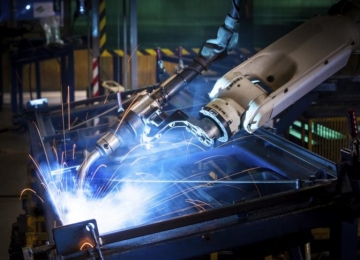
Aiming for the voluntary spread of smart factories through “Smart Factory Standards”
The Ministry of Trade, Industry and Energy (Minister Ju Hyung-hwan) held a symposium on "smart factory standardization," which is a key foundation for the voluntary expansion of smart factories. During the symposium, participants shared the achievements made so far in smart factory standardization and conducted in-depth discussions on future policy directions for smart factory standardization. The Ministry of Trade, Industry and Energy has promoted smart factory standardization in cooperation with the industry, and as a result, announced a standard framework, standard library, standardization roadmap, and national standard development plan that were prepared.
2016.02.09by 신윤오 기자

Smart factories become even smarter as ‘industrial Ethernet’ spreads rapidly
As smart factories have become a major issue following manufacturing innovation, interest in industrial network technologies has been growing. Regarding industrial network technology, industrial Ethernet is currently expanding rapidly in wired communication, while in the wireless communication field, technology based on 802.11 is mainly being utilized for monitoring purposes rather than control applications. First, in industrial wired communication, industrial Ethernet technology that takes into account the strengths of both existing Fieldbus and general Ethernet is spreading. Fieldbus is an industrial communication technology widely used because of its advantages in wiring convenience and small data processing capability, and above all, it is a proven technology in terms of cost competitiveness. However, it has drawbacks including insufficient communication media and compatibility, inability to respond to increasing application requirements, speed limitations (12~16Mbps), and weak implementation of redundancy functions.
2016.06.21by 신윤오 기자
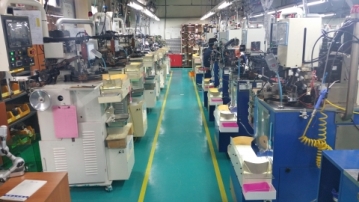
Samsung Electronics Supports a Total of 225 Companies to Date in 'Smart Factory' Project
Samsung Electronics supported 105 small and medium-sized enterprises (hereinafter SMEs) with its 'Smart Factory' project in the first half of this year. Building on its experience supporting 120 SMEs in the Gyeongbuk region last year, Samsung Electronics has so far provided 'Smart Factory' project support to a total of 225 companies: 27 companies in Gyeonggi and Incheon ▲11 companies in Jeolla, Chungcheong, and Daejeon ▲67 companies in Gyeongbuk and Gyeongnam regions. The 'Smart Factory' project is an initiative that transfers Samsung Electronics' manufacturing competitiveness and expertise to SMEs to enhance the companies' manufacturing capabilities. The project began at the Gyeongbuk Creative Economy Innovation Center last year.
2016.07.05by 명세환 기자
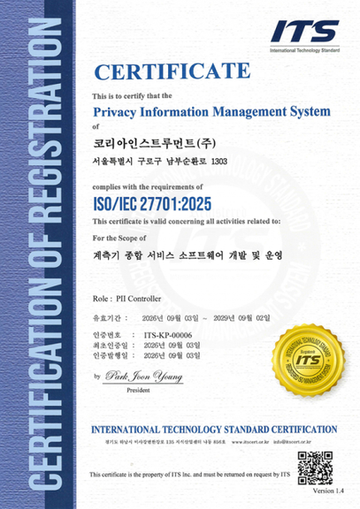
Korea Instrument, KOLAS Accredited Calibration Agency First to Simultaneously Acquire ISO/IEC 27,001·27,701
Korea Instrument has become the first among KOLAS accredited calibration agencies to simultaneously acquire ISO/IEC 27,001 and ISO/IEC 27,701 certifications. Through its proprietary platforms CWIZ Enterprise and CWIZ Partners, the company has embedded information security and personal data protection requirements across all business processes including customer information, equipment data, and calibration reports, with plans to continuously advance its management system through regular audits and security inspections.
2026.10.12by 배종인 기자
TeamViewer One, IT Incident Automation Workflow and Resolution Center Enhanced
TeamViewer has added IT incident automation capabilities and an advanced Resolution Center to its integrated digital workplace management platform 'TeamViewer ONE'. Recurrent service disruptions, configuration errors, and capacity shortages are automatically handled according to preset policies, and device status verification through script deployment can be managed in a unified interface, significantly reducing repetitive tasks for IT teams.
2026.10.12by 배종인 기자











