



Self-driving car patent applications are booming domestically, while overseas applications are plummeting.
 Published2016.09.05 11:12
Strength only in automotive condition monitoring system technology that utilizes wireless communication.
It was revealed that Korea's overseas patent application rate, which can be considered a barometer of the competitiveness of autonomous vehicle technology, is very low.
According to the Korea Intellectual Property Strategy Institute (KISTA), Japan, the United States, and Germany, the leading countries in autonomous vehicle development, averaged 41.8% of the market, while Korea's market share was only 7.9%. This is believed to be due to Korea's still early stages of autonomous vehicle development, and its insufficient technological capabilities targeting overseas markets.
The overall number of patent applications related to autonomous vehicles has been rapidly increasing since 2002, driven by the increase in autonomous vehicle concept cars and R&D development plans. Patent applications are primarily concentrated in the US and Japan. While Japan's patent applications are primarily driven by a small number of automakers, the US's applicants are diverse, encompassing a number of component manufacturers, internet companies, and automakers.
As development issues in the ICT field increase, the number of new market entrants has increased, leading to a sharp increase in self-driving car patent applications since 2013. During this period, the United States filed 12,800 patents (38.5%), Japan 10,367 patents (31.2%), Korea 6,569 patents (19.8%), and Europe 3,496 patents (10.5%).
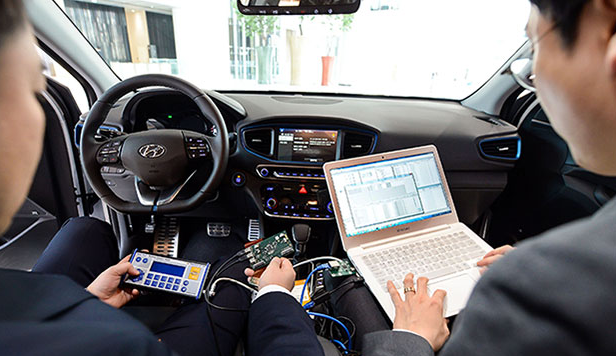
▲ Hyundai Motor Company and Kia Motors announced their connected car development concept in April and named it the ‘Hyper-connected and Intelligent Car.’
Korean applicants ranked third in patent share, but fourth overall in key market penetration. By applicant nationality, Japan led the way with 38.5%, followed by the United States at 21.6%, Korea at 19.4%, Germany at 10.2%, and France at 1.9%. However, a closer look at the key market penetration rates of applicants by nationality reveals a marked drop in Korean applicants. Korea ranked fourth in key market penetration at 7.1%, following Japan (42.5%), the United States (19.5%), and Germany (18.2%).
Japan, with its active market penetration rate, has approximately half of its patent applications filed in major overseas countries. This suggests that Japanese applicants are focusing on technology development aimed at overseas markets rather than the domestic market.
The top 10 companies account for 29.8% of applications.
The autonomous vehicle industry, led by major leading countries, is leading the way in technological prowess, with the top 10 companies accounting for 29.8% of applications. Toyota (1st), Honda (4th), and Nissan (5th) have seen recent declines in their patent application rates due to declining R&D spending. However, Denso (2nd) and Hyundai Motor Company (3rd) have recently seen increases in their patent application rates as they explore new R&D areas. With GM (9th) and Ford (10th) entering the top 10, an increase in patent applications is expected.
Looking at the development trends of major companies, Toyota primarily applied for patents in sensing systems (17.7%), accident prevention/avoidance systems (15.5%), and actuating systems (13.7%). Its recently filed patent in the sensing system field, "Unusual Driving Section Detection Device and Unusual Driving Detection Method (JP2015-138316)," describes technology that obtains information about unusual driving points on the road using sensors and detects driving information.
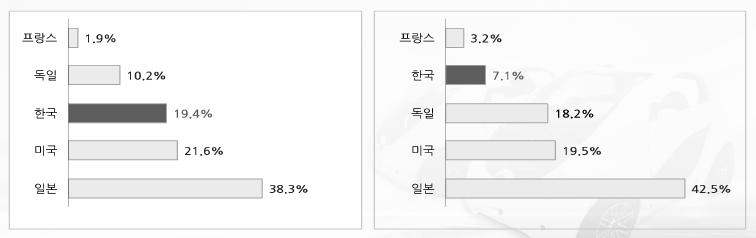
▲ Patent share by nationality of applicants for self-driving car-related patents (left) and key market acquisition rate by nationality of applicants
DENSO also focuses its patents on sensing systems (17.8%), accident prevention/avoidance systems (11.4%), and HMI systems (14.3%). For example, the patent for "System for Applying Smart Devices to Vehicles" in the HMI system field describes a vehicle interface control device that controls the vehicle interface to connect to the smart device's communication system and perform its functions.
Hyundai Motor Company holds many patents in areas such as accident prevention/avoidance systems (13.3%), driver assistance systems (13%), and HMI systems (13%). The patent for vehicle control system and autonomous driving method (KR1567207) describes technology that enables a lane-keeping device to control steering based on lane information and control vehicle attitude based on driving conditions. The patent for vehicle information display device and display method (KR1646340) describes technology that displays the vehicle's driving speed and the distance from the preceding vehicle in an augmented reality display area of a front display device.
We are far behind in sensing system and passive safety system technology.
Korea is leading the way in automotive condition monitoring systems, leveraging its wireless communications capabilities, and in electrical and electronic architecture technology. Conversely, Japan focuses on driver assistance systems and passive safety systems, while the United States excels in automotive SoC technology, actuation systems, HMI systems, and autonomous driving systems.
Furthermore, Korea is lagging significantly behind leading countries in the application of sensing systems and passive safety systems. Most of the detailed technologies in these fields are being developed by Japanese automakers, who are focusing on developing autonomous vehicles. “This patent analysis shows that in Korea, there are more applications for vehicle driving-based technologies for safety than for technologies specialized for autonomous vehicles,” said Lee In-hee, a senior researcher at the Korea Intellectual Property Strategy Institute.
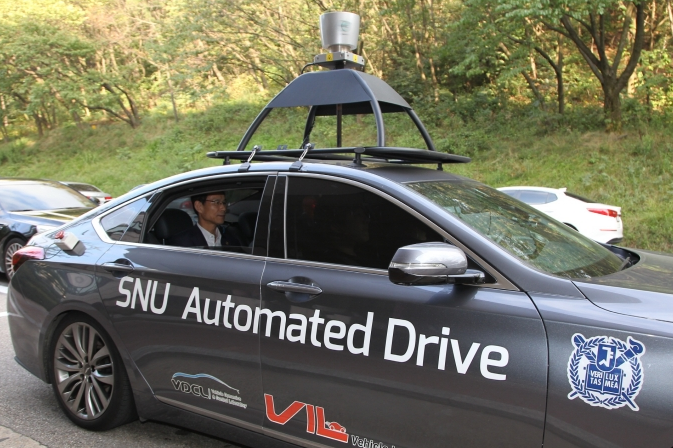
▲ On the 2nd, Choi Jeong-ho, 2nd Vice Minister of Land, Infrastructure and Transport, visited Seoul National University's Intelligent Vehicle Research Center and test-drove a self-driving car.
In line with the rise in smartphone penetration, Korea is also seeing a surge in technological development for incorporating mobile systems into vehicles. While leading countries, such as the US, averaged 9.88 citations, Korea's average was only 3.35. The technological gap between Korea and other countries in automotive embedded technology and vehicle condition monitoring systems is significant.
Senior Researcher Lee In-hee said, “As revealed in the patent analysis, major domestic applicants are actively filing domestically, but their overseas filings are minimal,” and added, “Since it is expected that autonomous vehicles will be commercialized overseas before domestically due to national policy, we should actively pursue overseas filings.”
Comments
Related news
[Automotive Innovation Day] NXP Semiconductor Leads Autonomous Vehicles with V2X and Radar Chips
NXP Semiconductor, participating in the Automotive Innovation Day (2016 Automotive Innovation Day) held on the 14th, hosted by Automotive Electronics, showcased automotive solutions including Ethernet and V2X. The automotive Ethernet solution for ADAS and infotainment consists of complete hardware and software. Audio and video playback synchronization between multiple displays is possible.
2016.07.18by 신윤오 기자
[Discussion] Autonomous Vehicles: "Overconfidence is dangerous, but there is no need to fear either"
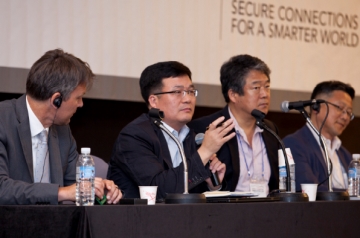
Interest in autonomous vehicles shows no signs of cooling. Autonomous vehicles require extensive technological advancement starting from existing automotive technology itself, encompassing advanced component-related technologies, and extending to surrounding infrastructure technologies including roads. 'Automotive Innovation Day 2016,' hosted by Automotive Electronics, a representative automotive technology exhibition in Korea, was held on the 14th with the participation of approximately 700 people. The event addressed key issues for future automotive development including ADAS and autonomous vehicles, connected cars and IoC (Internet of Car), automotive security, and testing—hot topics in the automotive industry—and received enthusiastic response from participants. In the panel discussion concluding the conference, government and industry experts related to autonomous vehicles participated, providing insights into the latest industry trends. E4ds News presents a live coverage of the panel discussion on 'Core Technologies and Implementation Directions for Autonomous Vehicle Commercialization.' The panel discussion, moderated by Beom-jin Yoon (Automotive Electronics), included ▲Ui-kyung Jung, Section Chief (Ministry of Land, Infrastructure and Transport) ▲Jae-gon Shin, Team Leader (Korea Transportation Safety Authority Automotive Safety Research Institute) ▲Jae-gwan Lee, Director (Korea Automotive Technology Institute) ▲Lars Reger, CTO (NXP Semiconductors), and others.
2016.07.25by 신윤오 기자
Secure system semiconductor technology for autonomous vehicles by 2021
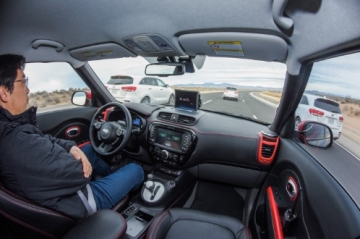
Nine national strategic projects have been announced to secure new growth drivers. The nine national strategic projects selected by the government are ① autonomous vehicles ② post-steel lightweight materials ③ smart cities ④ artificial intelligence ⑤ virtual and augmented reality ⑥ precision medicine ⑦ carbon resources ⑧ (ultra)fine dust ⑨ bio-pharmaceuticals. The government announced at the second presidential Science and Technology Strategy Meeting held on the 10th that it has decided to intensively foster the nine national strategic projects through concentrated investment at the national level and public-private collaboration.
2016.08.11by 신윤오 기자
GAIA-Festa 2026, Autonomous Driving, AI, and Aerospace Experts Gather…Discussing Global Cooperation in the 'Silicon Intelligence Era'
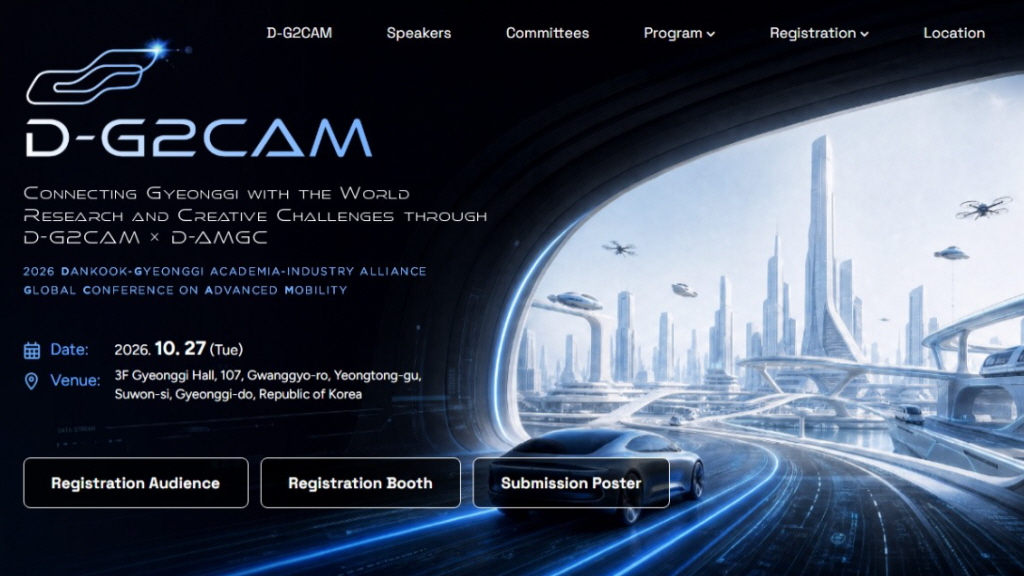
GAIA-Festa 2026, which will be held in Suwon on October 27, is an industry-academia-research exchange event that explores the present and future of future mobility and AI technology through the global conference D-G2CAM 2026 and the international contest D-AMGC 2026. Domestic and international experts will share the latest research in autonomous driving, 5G/6G mobility, space technology, and data protection fields, while university students will showcase robots and physical AI prototypes that they have independently developed. Additionally, through poster presentations, corporate exhibitions, international cooperation meetings, and signing ceremonies, a platform will be established to connect the research capabilities and industrial needs of the Gyeonggi region with a global cooperation network.
2026.10.13by 배종인 기자
[e4ds Tech Day 2026 ⑨] Sim Sang-gyu, Autocrypt CTO: "In the Physical AI Era, Automotive Security Must Extend Beyond the Vehicle"
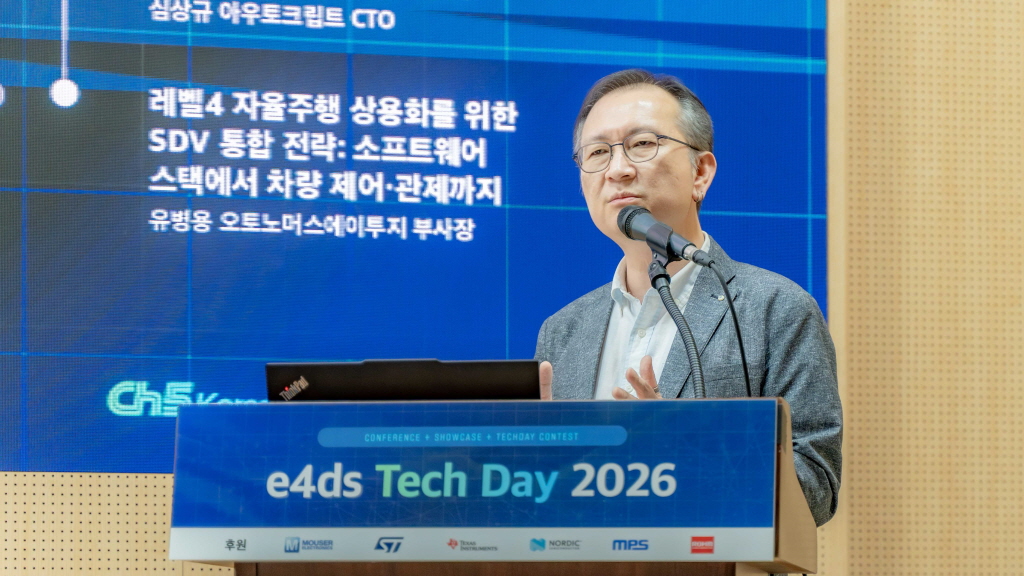
At e4ds Tech Day 2026, Sim Sang-gyu, CTO of Autocrypt, explained automotive cybersecurity strategies in the era of Physical AI and SDV (Software-Defined Vehicle). Automobiles are evolving as part of an ecosystem connected to AI, cloud, chargers, IoT, and robots, and he emphasized that the scope of security must expand beyond the vehicle interior to the entire connected environment. In particular, AI model tampering, adversarial attacks, OTA updates, and EV charger hacking were identified as major threats. He explained that response measures require zero trust, AI model integrity protection, intrusion detection, Security by Design and Default, and full lifecycle security management, and that proactive security system establishment beyond regulatory compliance is critical for securing future mobility competitiveness.
2026.10.12by 배종인 기자











