



What are the promising technologies for the future and business items advantageous for SMEs?
 Published2016.09.19 11:10
Numerous medical fields including body augmentation, software wearables, and bio.
What are the new promising future technologies that will emerge after 2017?
The Korea Institute of Science and Technology Information (KISTI), which has been announcing promising future technologies every year, has once again announced the technology fields that will change the future this year. KISTI also presented promising commercialization items that will open new avenues for small and medium-sized enterprises and startups.
It was announced that promising future technologies were selected to support national competitiveness by comparing and analyzing the investment leadership and concentration of domestic and major developed countries, and adding factors such as alignment with domestic science and technology policies and alignment with domestic and international issues and trends.
The top 10 promising future technologies selected this time are bio-printing, synthetic cell technology, body augmentation technology, medical virtual reality application technology, soft wearable technology, automotive lightweight material technology, Industrial Internet, next-generation communication technology utilizing visible light (Li-Fi), intelligent cyber security, and chameleon environment-sensitive materials.
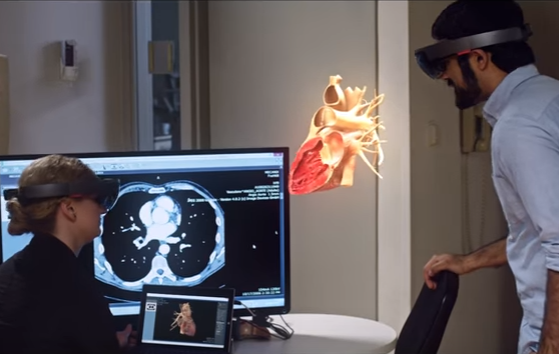
▲ Microsoft aims to apply virtual reality using HoloLens to the medical field. (MS video)
Bioprinting is a 3D printing technology that produces tissues or organs by layering living cells into a desired shape or pattern, and synthetic cell technology refers to a technology that creates artificial cells by introducing an artificially synthesized genome into a living organism from which genes have been removed.
Body augmentation technology is a technology that attempts to permanently or temporarily overcome the limitations of the human body through natural or artificial means, and medical virtual reality application technology can apply a virtual three-dimensional digital environment that mimics the real world in the medical field.
Soft wearable technology refers to technology that is worn on the body to continuously collect a user's biosignals and information about the surrounding environment, and enables communication with the user through voice, video, touch, etc., while lightweight automotive materials include aluminum, magnesium, and high-strength steel.It includes materials used for lightweighting automobile bodies, such as metal materials like plates and carbon fiber reinforced composite materials.
The Industrial Internet of Things (Industrial IoT) is a collective term for platform technologies that create new added value based on the connection of machines, data, and people by applying and utilizing the Internet of Things across all sectors of manufacturing, including processes, products, services, marketing, and distribution. Additionally, next-generation communication utilizing visible light (Li-Fi), which transmits data by embedding digital information in light using visible light—compared to Wi-Fi transmission technology that uses radio electromagnetic waves—was also included in the top 10 technologies. Li-Fi is considered a next-generation communication technology with wireless internet speeds up to 100 times faster than existing WiFi.
Intelligent cybersecurity technology utilizes artificial intelligence techniques to automate the detection and response to vast cybersecurity threats and predict even unknown potential threats, while Chameleon Environment-Sensitive Material is an advanced stimulus-response chemical material capable of reversibly or irreversibly controlling its chemical properties and physical form by autonomously reacting to minute changes in the external environment caused by physical/chemical stimuli (heat, mechanical force, pressure, magnetism, electric fields, light, pressure, chemicals, pH, etc.).
KISTI has identified promising future technologies through scanning global public investment information and expects them to be commercialized within the next 5 to 10 years, which will have a significant impact on economic and social development, such as the creation of new markets and industries.
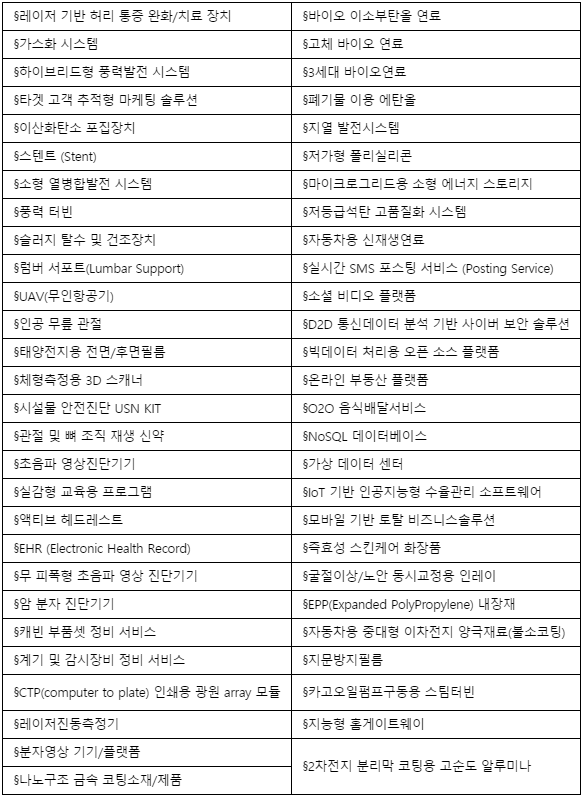
<55 Promising Commercialization Items for SMEs>
For reference, among the 11 promising future technologies announced by KISTI last year, actual research and development has begun in earnest or investment plans have been announced for technologies such as machine control that moves according to thought, neuro-mimetic semiconductor chips, soft robots, biomimetic five-sense recognition sensors, and quantum computer technology. In addition, the 11 major technologies included eco-friendly carbon-zero engines, intelligent nanomachines for diagnosis and treatment, functional molecular electronic devices, urban, ocean, and desert greening technologies, super bacteria response technologies, and artificial photosynthesis-based clean energy production technologies.
Meanwhile, KISTI selected 300 promising items for commercialization in five fields (ICT, electronics/machinery/equipment, chemistry/materials, bio/medical, and others) as promising items for small and medium-sized enterprises.
Among these, they were categorized into four groups based on market-technological and financial potential, and 55 items (see table) with high market, technological, and financial potential were selected. Of these, 23 were selected in the ICT sector and 16 in the electronics/machinery/equipment sector, indicating that a significant number of promising items related to the 'Fourth Industrial Revolution' were projected to be core businesses for future growth.
Comments
Related news

Smart healthcare, do you have a 'medical assistant' just for you?
The wellness industry is a sector supported as part of the 19th Future Growth Engine customized investment strategy, encompassing mobile-based healthcare including wearable devices and health-related applications. The wellness investment strategy supports the development of wellness IT programs and platforms linking hospitals and companies, cultivates specialized personnel for wellness device services, and supports the acquisition of international standards for devices. Additionally, it promotes the development of testing and certification methods and service guidelines. This includes pilot projects for mobile healthcare at public health centers.
2016.04.04by 신윤오 기자
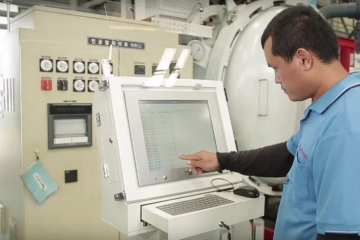
Urgent need to embrace changes in smart production through the utilization of industrial IoT
In the utilization of Industrial Internet of Things (IIoT), which serves as the foundation for realizing smart factories, manufacturers' preparedness has been insufficient, indicating that a paradigm shift in awareness regarding smart production is urgently needed. Industrial Internet of Things is being utilized in the manufacturing industry for process optimization and production efficiency improvement, and is expanding to other industries overseas. With the digitalization of manufacturing, IoT technology is being integrated into traditional production processes, with cost reduction and productivity improvement becoming increasingly evident. Industrial Internet of Things, which connects various physical and virtual objects based on the Internet, refers to the collective infrastructure that is utilized in equipment, manufacturing, logistics, and distribution to support intelligent supply chains from a manufacturing perspective and demand-driven production from a sales perspective, and provides various services to enhance industrial efficiency accordingly. Accordingly, it comprises services, devices, and platforms, and through the provision of connectivity among each component, all elements of equipment, manufacturing, distribution/logistics, and services interoperate with one another, providing high value-added creation in the smart manufacturing sector based on this foundation.
2016.06.07by 신윤오 기자

[A Close Look at ICT R&D] ⑦ Foster New Media Industries such as VR/AR
Broadcasting and smart media services refer to a series of processes and forms in which content is produced targeting multiple users, delivered through wired and wireless networks, and consumed by users through various reception devices. This includes broadcasting and smart media-related services, content, media infrastructure, consumer terminals, mobile broadcasting, broadcasting-telecommunications convergence, immersive broadcasting, signage and other platforms, as well as public welfare and disaster safety technologies. Accordingly, the market size is substantial. The broadcasting and smart media industry is projected to grow at a compound annual growth rate of 11.5%, from 23.86 billion dollars in 2016 to 43.92 billion dollars in 2022. Specifically, services and content are expected to grow at an annual average rate of 2.2%, from 3.22 billion dollars to 3.67 billion dollars, the infrastructure and consumer (terminal) sector is projected to expand at a compound annual rate of 20.1%, from 7.53 billion dollars to 22.63 billion dollars, and the platform sector is anticipated to grow at an annual average rate of 6.4%, from 12.04 billion dollars to 17.51 billion dollars.
2016.09.09by 김수지 기자
Nvidia invests $5 billion in Intel
NVIDIA and Intel, leaders in global AI computing technology, are now forging ahead in providing cutting-edge solutions through NVLink-based architecture integration. NVIDIA and Intel have officially announced a strategic partnership and stated that they will jointly develop customized data center and personal computing products to accelerate diverse applications and workloads ranging from hyperscale to enterprise and consumer markets, thereby laying the foundation for the next generation computing era.
2025.09.22by 배종인 기자
.jpg)
Applied Materials Launches Environmental Protection Campaign to Mark World Cleanup Day
Applied Materials Korea (CEO Park Kwang-seon) is carrying out environmental cleanup activities with employees and their families around the Dongtan Sinricheon area on the occasion of World Cleanup Day, evolving into a company that engages with the local community beyond technological innovation.
2025.09.22by 명세환 기자











