



Why does Disney have so many drone patents?
 Published2016.09.26 13:45
DJI focuses on functionality and control, Google on transportation and delivery, and Disney on air displays.
An analysis of drone-related patents registered with the U.S. Patent and Trademark Office over the past four years revealed that the service sector had the most patents, followed by function and platform, urban infrastructure, and privacy patents.
Director Cha Won-yong of ASPAC Future Technology Management Research Institute, who is a leading domestic futurist and a government ICT convergence expert, searched for about 500 global patents related to drones, unmanned aerial vehicles (UAVs), or unmanned aerial systems (UAS) registered with the United States Patent and Trademark Office (USPTO.GOV) from June 7, 2012 to August 4, 2016, and announced a report analyzing 130 patents among them that were judged to be important or ideas with a high possibility of being realized within 10 to 25 years.
The head of the tea department analyzed 130 drone patents by dividing them into three categories: △improvement of drone functions and platforms, △services utilizing drones, and △urban infrastructure, privacy, UI/UX, and authentication for drones.
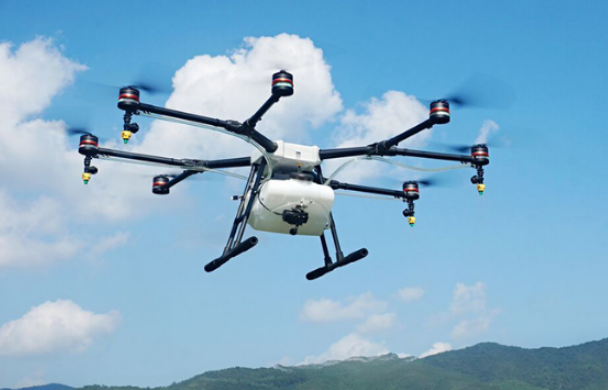
▲ China's DJI attracted attention by registering 22 out of 24 patents (92%) related to drone functions, control, collision avoidance, flight mode, and reliability enhancement. (DJI homepage)
The analysis results showed that services were the most numerous with 79 cases (61%), followed by functions and platforms with 39 cases (30%), and urban infrastructure, privacy, UI/UX, and authentication verification with 12 cases (9%). Of these, 88% of patents were registered in the past two years, and in particular, the number of patents for urban infrastructure, privacy, UI/UX, and authentication verification has been rapidly increasing recently, so future trends in this area are drawing attention.
First, service-related patents were divided into the following categories: △transportation and delivery of goods △next-generation mailboxes △logistics warehouse management △infrastructure diagnosis and management maintenance △building painting and cleaning △reconnaissance and surveillance △communication network utilization △AR VR tourism △air shows and air displays △agricultural support △transportation and automobile support △defense and terrorism prevention △other services.
Among these, patents related to air shows and air displays were the most numerous at 15 cases (19%), followed by patents related to goods transport and delivery at 14 cases (17%), reconnaissance and surveillance at 8 cases (10%), and transportation and automobile support at 7 cases (9%).
Accounting for 61% of all service-related patents
Next, patents related to functions and platforms were mainly in the following categories: △Drone detection and classification △Drone function/control/collision prevention/flight mode/reliability enhancement △Drone maintenance/protection △Battery charging/exchange station/system △Multi-drone (UAVs) configuration/operation/management infrastructure and platform patents. Among these, drone function/control/collision prevention/flight mode patents accounted for the largest number of patents with 24 cases (62%), followed by battery charging/exchange station/system patents with 8 cases (21%). 98% of these patents were registered in the past two years.
Patents related to urban infrastructure, privacy, UI/UX, and authentication for drones are divided into △ urban infrastructure redesign △ privacy management and consideration such as flight bans, denials, and permits △ next-generation UI/UX/GUX △ authentication confirmation between users and UAVs, etc. The proportion of these patents did not differ much, but privacy-related and consideration patents were the most numerous at 4 cases (33%). It was analyzed that 100% of these patents were registered in the past 2 years.
DJI, which has 70% of the entire drone market, also holds many patents related to battery charging
Among the 130 patents, the trend of patent registration by major companies is very interesting. China's DJI has concentrated 32 patents (25%) in the past two years, followed by Google in the US with 15 patents (12%), Disney with 14 patents (11%), IBM with 12 patents (9%), Amazon with 12 patents (9%), and Elwha LLC with 7 patents (5%). Among domestic companies, LG Electronics recently registered one patent (control and feedback of UAV through smartphone app execution and UI/UX).
DJI attracted attention by registering 22 out of 24 patents (92%) for drone functions, control, collision avoidance, flight modes, and reliability enhancement patents. This clearly shows why DJI, which is unrivaled in the fields of drone functions and control, has occupied 70% of the global drone market. In addition, the company registered 5 out of a total of 8 patents (62.5%), including battery charging/exchange station/system patents, which clearly shows the areas in which recent competition among companies is taking place.

▲130 global drone patents Patent registration trends by field (unit: cases (%))
For example, a UAV autonomous control patent for collision avoidance registered by DJI in February describes a system and method for an unmanned aerial vehicle to autonomously determine operation or flight rules even in complex situations. In other words, when a user presses the autonomous flight mode button, the UAV flies on its own according to a set path and rules. The autonomous decision-making of the aircraft is based on sensor data collected by cameras, LiDAR, and ultrasonic sensors mounted on the UAV. The sensor data is analyzed by one or more processors mounted on the UAV to determine the obstacle density and select the most appropriate and optimized flight rules to minimize the likelihood of collisions.
Google in the US stands out in the service sector patents. A total of 14 patents were registered for the transportation and delivery of goods, packages, and medicines, and 11 (79%) of them were registered. Alphabet, a subsidiary of Google, received conditional testing approval for drone delivery services from the federal government on August 2, which means that it was not only supported by lobbying but also by technology.
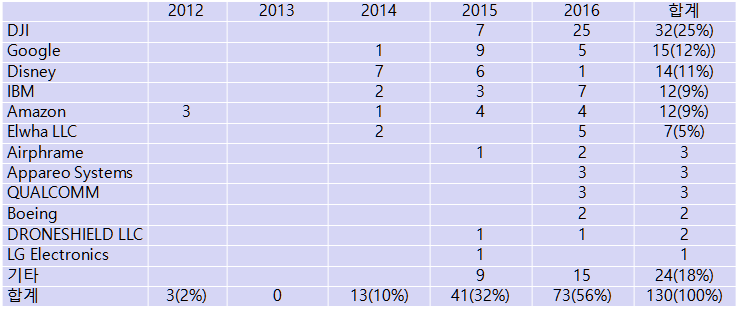
▲Trends in patent registration by major companies among 130 patents (unit: cases (%))
Google's patent for a payload delivery system and a drop device (registered in 2015) covers a payload delivery system and a drop device in which the drop device is returned to a UAV that is suspended in the air by a rope or chain. The payload delivery system lowers the payload from the UAV to the ground, and a drop device or delivery device is used to ensure the safety of the payload during the descent to the ground and during the drop of the payload on the ground.
Disney registers a total of 15 items including air shows and air displays… Specializing in entertainment
Amazon in the US is unrivaled in inventory, logistics, and warehouse management. It was revealed that all six patents in this sector are owned by Amazon. Amazon, a logistics company, is currently using ground robots (Kiva) to reduce costs, but it is expected to use UAVs (unmanned aerial vehicles) in the future for delivery.
Among service patents, surprisingly, Disney of the United States is leading. A total of 15 patents have been registered for air shows and air displays so far, and Disney has an unrivaled position with 14 (93%). The patent for synchronized control of drone swarms for air shows is an idea to implement artistic performances of entertainment as air shows or air displays through synchronized or choreographed flight manners of multiple drones moving at the same speed and direction. Disney appears to have patented the idea of using drones to perform choreographed shows and displays at theme parks, concerts, stadiums, and more.
Director Cha Won-yong, who drew attention from the industry in the first half of the year by analyzing Google’s self-driving car patents, said in this report on the US drone policy strategy and key patent analysis, “While new businesses using drones are important, it is necessary to utilize drones in existing businesses to strengthen capabilities such as cost reduction and customer satisfaction.” He added, “I hope that you will thoroughly analyze and understand the contents of the patents introduced in this report and find more creative and innovative insights.”
Comments
Related news
[Reporter's Notebook] If we don't dominate the public drone market, it will all be lost to China.
The proportion of unmanned aircraft in the overall aircraft market is increasing, as confirmed by figures. The global unmanned aircraft market is projected to reach $12.5 billion in 2025 with an annual average growth rate of 10%, and the domestic unmanned aircraft market is expected to grow at an annual average rate of 22%, reaching $525 million in 2022. While the majority of the unmanned aircraft market is military-focused, the proportion of the civil market is also increasing. Military unmanned aircraft is projected to increase to $11.59 billion in 2023 at an annual average growth rate of 9%, while civil unmanned aircraft is forecasted to reach $880 million in 2023 with an impressive annual average growth rate of 35%. In particular, small commercial unmanned aircraft for civil use is expected to experience a surge in mid to long-term demand with the preparation of legislation to activate the market.
2016.06.27by 신윤오 기자
Creating Three-Dimensional Drone Corridors Containing Spatial and Obstacle Information
The Ministry of Land, Infrastructure and Transport (Minister Kang Ho-in) announced that it is promoting the construction of dedicated "drone corridors" for drones to enhance safety management and accident prevention as the applications of drones in logistics transport, disaster safety, agriculture and other fields continue to expand. Drone corridors refer to drone flight paths based on three-dimensional spatial information—a new concept that includes "three-dimensional precision spatial data" necessary for safe drone flight and "obstacle information that interferes with flight." Currently, two-dimensional maps are being used for drone flights, but the absence of information regarding terrain elevation and obstacles such as transmission towers, utility poles, and high-voltage lines is causing difficulties in safely operating drones.
2016.07.25by 신윤오 기자
Counterattack by Patent Trolls: Will Autonomous Vehicle Patent Disputes Intensify?
What fields of autonomous vehicles are NPEs focusing on? These entities have shown considerable interest in accident prevention/avoidance systems and vehicle state monitoring systems. The detailed technologies with the most litigation patents were automotive SoC technology, vehicle state monitoring systems, and accident prevention/avoidance systems, in that order. Among these, vehicle state monitoring systems and accident prevention/avoidance systems were patents favored by NPEs, which is because these two technologies have high infringement potential and are technologies where infringement is easy to prove.
2016.09.09by 신윤오 기자
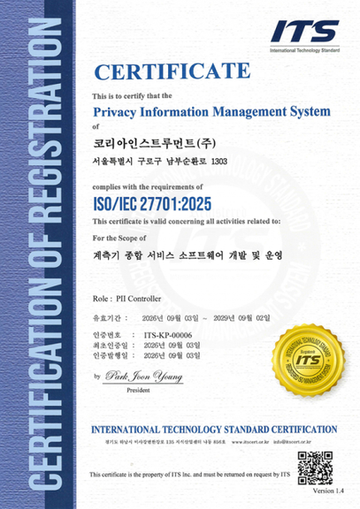
Korea Instrument, KOLAS Accredited Calibration Agency First to Simultaneously Acquire ISO/IEC 27,001·27,701
Korea Instrument has become the first among KOLAS accredited calibration agencies to simultaneously acquire ISO/IEC 27,001 and ISO/IEC 27,701 certifications. Through its proprietary platforms CWIZ Enterprise and CWIZ Partners, the company has embedded information security and personal data protection requirements across all business processes including customer information, equipment data, and calibration reports, with plans to continuously advance its management system through regular audits and security inspections.
2026.10.12by 배종인 기자
TeamViewer One, IT Incident Automation Workflow and Resolution Center Enhanced
TeamViewer has added IT incident automation capabilities and an advanced Resolution Center to its integrated digital workplace management platform 'TeamViewer ONE'. Recurrent service disruptions, configuration errors, and capacity shortages are automatically handled according to preset policies, and device status verification through script deployment can be managed in a unified interface, significantly reducing repetitive tasks for IT teams.
2026.10.12by 배종인 기자











