


Infineon Announces CAN FD Transceiver for Faster, More Secure In-Vehicle Communications
 Published2016.11.15 15:55
Today, approximately 60 electronic control units (ECUs) communicate with each other in automobiles using the Controller Area Network (CAN). As networking accelerates and convenience and automation capabilities increase, the demand for in-vehicle communication is growing.
A revised version of this protocol, CAN Flexible Data (CAN FD), enables higher data bandwidth and transmission speeds. This protocol reduces the time required for programming, testing, diagnostic routines, and software updates over the air (SOTA).
Using Infineon's TLE925x CAN FD transceivers, data exchange can be up to 30 times faster than currently possible. The TLE925x achieves transmission rates of up to 5 Mbit/s. Compared to conventional CAN transceivers with a maximum payload of 8 bytes, CAN FD transceivers like the TLE925x can transmit up to 64 bytes of payload per message.
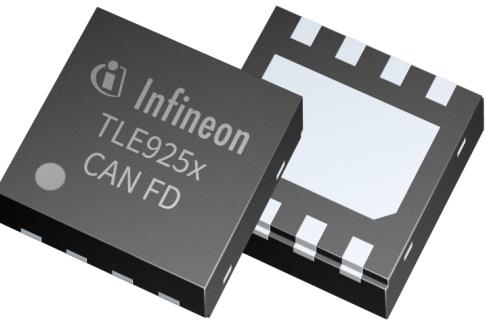
This allows for a 21-bit checksum, rather than the previously available 17-bit, to verify that transmitted data matches the transmitting control device. Using a longer checksum ensures reliable communication between control devices. This allows for more reliable data transmission without the need for complex ECU application software.
The TLE925x CAN FD transceivers are ideal for applications such as body control modules and gateways, power steering, engine and transmission control units, and radar- and camera-based driver assistance systems. Today, the average car uses 17 CAN transceivers, a number expected to increase to more than 20 within the next five years.
The TLE925x CAN FD transceivers support interface voltages of 3.3 V and 5 V with a microcontroller, enabling optimal signal symmetry. The more symmetrical the signal, the better the electromagnetic compatibility (EMC). Furthermore, compared to previous CAN generations, Infineon has improved the EMI robustness of the CAN FD transceivers with a standard frequency range of 1 MHz to 1 GHz.
The TLE925x's electromagnetic emission (EME) range is 150kHz to 1GHz, which is lower than that of other CAN transceivers. Furthermore, these CAN FD transceivers passed the ?8kV electrostatic discharge (ESD) test according to IEC61000-4-2.
Infineon offers a comprehensive range of transceiver products for various bus segments, including CAN FD, CAN with Partial Networking, High-Speed CAN, LIN, and FlexRay. For CAN FD at 5 Mbit/s, the TLE9278 Multi-CAN Power-SBC family is available as a system basis chip (SBC) along with the TLE925x transceiver, which meets ISO11898-2:2016. The TC3xx multicore microcontrollers from the AURIX™ family offer up to 12 CAN FD channels according to ISO11898-1:2015.
Comments
Related news
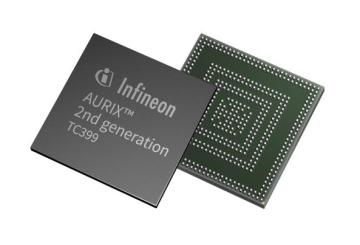
Infineon Launches Next-Generation AURIX MCU to Accelerate Autonomous Driving and EVs
Infineon Technologies (Korea Representative Director Lee Seung-soo) has announced a next-generation AURIX™ microcontroller product family supporting the requirements of autonomous vehicles and electric vehicles. The next-generation TC3xx microcontroller offers industry-leading integration and three times higher real-time performance compared to the previous generation. The AURIX product family TC3xx combines a high-performance hexa-core architecture with advanced features for connectivity, security, and embedded safety, making it ideal for diverse automotive applications. Powertrain applications include engine management and transmission control as well as new systems for electric and hybrid drives.
2016.11.07by 홍보라 기자
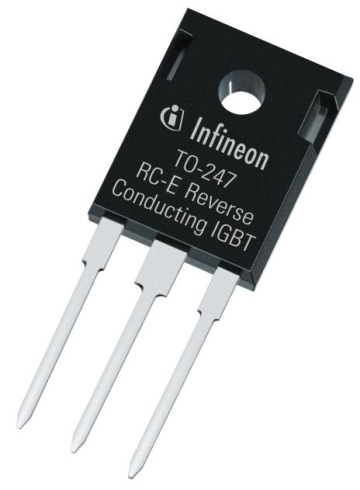
Infineon Launches Discrete IGBTs Suitable for Mid-to-Low-Range Induction Cookers
Induction cooking appliances typically use resonant topology that enables bidirectional current flow, and require discrete IGBTs with optimal performance and low losses at switching frequencies of 18 kHz to 40 kHz. Infineon Technologies (Korea CEO Lee Seung-soo) has launched a new discrete IGBT product family that meets these requirements. The newly released RC-E device provides an optimized balance of cost and functionality, specifically addressing the needs of mid-range to budget induction cookers and induction rice cookers.
2016.11.09by 신윤오 기자
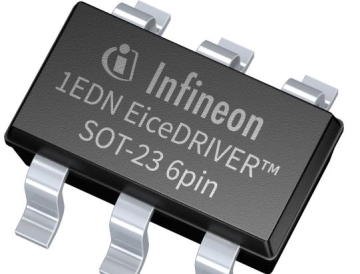
Infineon Launches 1EDN Gate Driver IC Family
Infineon Technologies (Korea Representative Director Lee Seung-soo) announced the launch of the 1EDN EiceDRIVER™ product family. This 1-channel low-side gate driver IC is optimized for driving MOSFET, IGBT, and GaN power devices. These products feature pinout and packaging that are fully compatible with industry standards, enabling direct replacement in existing designs.
2016.11.14by 신윤오 기자
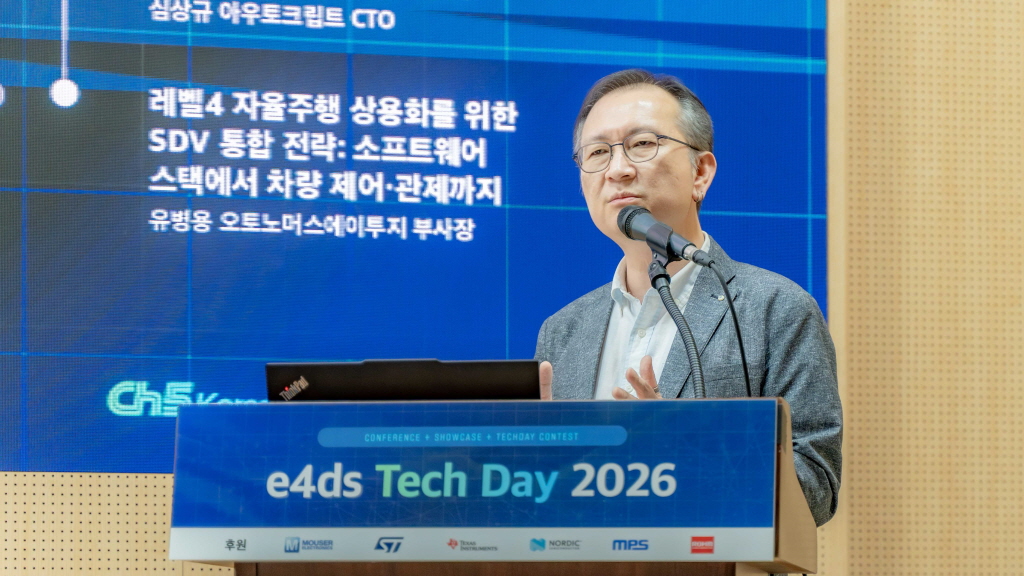
[e4ds Tech Day 2026 ⑨] Sim Sang-gyu, Autocrypt CTO: "In the Physical AI Era, Automotive Security Must Extend Beyond the Vehicle"
At e4ds Tech Day 2026, Sim Sang-gyu, CTO of Autocrypt, explained automotive cybersecurity strategies in the era of Physical AI and SDV (Software-Defined Vehicle). Automobiles are evolving as part of an ecosystem connected to AI, cloud, chargers, IoT, and robots, and he emphasized that the scope of security must expand beyond the vehicle interior to the entire connected environment. In particular, AI model tampering, adversarial attacks, OTA updates, and EV charger hacking were identified as major threats. He explained that response measures require zero trust, AI model integrity protection, intrusion detection, Security by Design and Default, and full lifecycle security management, and that proactive security system establishment beyond regulatory compliance is critical for securing future mobility competitiveness.
2026.10.12by 배종인 기자
Practical HIL Construction Strategy for Automotive and Off-Highway Controller Validation
As vehicle E/E architecture transitions to zonal structures and shifts to software-defined vehicles (SDV), the number of controllers (ECUs) requiring validation and software complexity are surging dramatically. Meanwhile, real vehicle testing cannot provide repeated verification under identical conditions and entails lead time and safety concerns. This white paper explains the principles of HIL (Hardware-in-the-Loop) validation and the structure of the NI platform composed of PXI, SLSC, and VeriStand, and through two actual implementation cases—Camera Record & Replay HIL for In-Cabin Monitoring Controller (ICMU) and Forklift Controller (VCU) HILS—describes how controller-level regression testing becomes possible. Additionally, it explicitly states application boundaries and limitations, such as lack of A2B support.
2026.10.12by 편집부











