



Global smartphone sales in the third quarter increased 5.4% year-over-year.
 Published2016.11.21 12:01
Samsung Electronics saw the sharpest decline, with overall mobile phone sales down 1.3%.
Gartner Inc. announced that the three largest Chinese mobile phone manufacturers—Huawei, Oppo, and BBK Communication Equipment (BBK)—accounted for 21% of global smartphone sales in the third quarter of 2016. Gartner said that of the top five smartphone vendors worldwide, only these three saw increases in both sales and market share during the quarter.
“Chinese brands led the smartphone market growth in the third quarter of 2016,” said Anshul Gupta, research director at Gartner. “Smartphone sales in China grew by 12.4%, and the companies that most successfully capitalized on this growth were Oppo and BBK, which accounted for 81% and 89% of their smartphone sales in China, respectively. Both companies are also growing at a significant rate in India, Indonesia, Malaysia, Thailand, and Russia.”
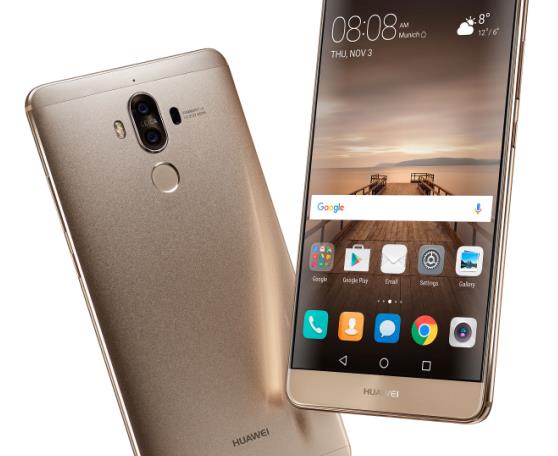
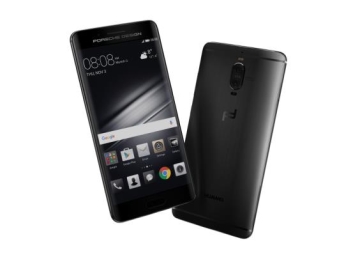
▲ Huawei's latest premium smartphone, the Mate 9.
Global smartphone sales to end users totaled 373 million units in the third quarter of 2016, a 5.4% increase over the same period last year. However, overall mobile phone sales fell 1.3% as the popularity of feature phones waned.
Samsung Electronics had a strong start to the third quarter, but sales of its high-end Note series declined following battery issues that caused some Galaxy Note 7 smartphones to catch fire. Samsung's overall smartphone sales in the third quarter fell 14.2% year-over-year, marking its worst performance ever. The previous record low for Samsung smartphone sales was the fourth quarter of 2014, when sales fell 12.3% year-over-year.
"While the decision to withdraw the Galaxy Note 7 from the market was the right one, the negative impact on Samsung's brand makes it unlikely that smartphone sales will recover in the short term," said Anshul Gupta, senior research analyst at Samsung Electronics. "Samsung is desperately looking to regain the trust of its partners and consumers by successfully launching the Galaxy S8."
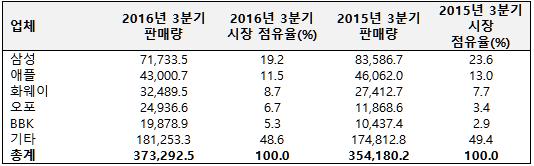
▲Global smartphone sales to end users by manufacturer in Q3 2016 (unit: thousands of units)
Apple's iPhone sales continued their downward trend in the third quarter, declining 6.6%. Apple's global smartphone market share fell to 11.5%, its lowest level since the first quarter of 2009. Sales in the US and China, its largest markets, fell 8.5% and 31%, respectively, indicating that the iPhone 7 failed to drive replacement demand.
Huawei narrowed the gap with Apple in smartphone market share to less than 3 percentage points in the third quarter of this year. Honor products, with their superior features and competitiveness, have continued to perform well in global markets, and are expected to maintain their strong growth this year thanks to their expansion into the European and American markets.
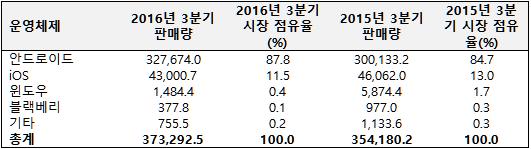
▲Global smartphone sales to end users by operating system in the third quarter of 2016 (unit: thousands of units)
In the smartphone operating system (OS) market, Android has steadily gained market share from iOS, reaching nearly 88%. Roberta Cozza, research director at Gartner, said, “Despite the discontinuation of the Galaxy Note 7, the windfall for the iPhone 7 Plus will be minimal,” adding, “This is because existing Galaxy Note 7 users are likely to switch to other Samsung smartphone models or continue to use Android devices in the future.”
He said, "In the short term, other Android vendors are likely to benefit to some extent. This includes Huawei and other Chinese smartphone makers that have entered the premium Android smartphone segment. The discontinuation of the Galaxy Note 7 will also be a boon for Google, which has begun selling the Pixel and Pixel XL in mature markets."
Comments
Related news
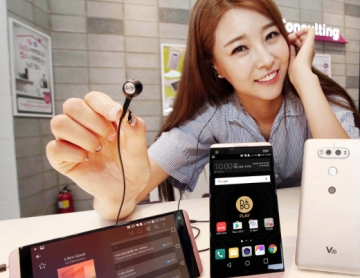
The premium smartphone market is expected to recover to 3.5% growth in 2017.
Gartner Inc. forecasted that global shipments of all devices (PCs, tablets, ultrabooks, and mobile phones) would decline by 3% year-over-year in 2016. This marked two consecutive years of decline, following a 0.75% drop in the global device market in 2015. Ranjit Atwal, principal research analyst at Gartner, stated, "It will not be easy for the global device market growth rate to return to single digits in the near term," and added, "The growth rate is expected to remain at current levels over the next five years. While growth rates are expected to decline across all devices in 2016, premium ultrabooks and utility mobile phones (basic mobile phones) are expected to be exceptions. Single-digit growth is anticipated in these two segments this year."
2016.10.10by 김수지 기자
Huawei Unveils Latest Premium Smartphone Mate 9
Huawei unveiled the Mate 9 for the first time at a private global launch event held in Munich, Germany. The newly introduced Huawei Mate series is a smartphone that stands out for its sophisticated design and powerful performance, and is expected to provide users with the best processing speed, SuperCharge technology, and an innovative Android experience through a new UX.
2016.11.07by 장은성 기자
Smartphone Market in 2017: “China is slowing down and India is rising”
At a system semiconductor forum hosted by the Korea Semiconductor Industry Association, Park Won-jae, an analyst at Daewoo Securities, stated, "The growth slowdown in the U.S. and Western European markets that led smartphone growth is beginning in earnest, and growth in the Chinese market, which was the main driver of smartphone market expansion, is also starting to decelerate," adding, "Future growth is expected to be driven primarily by India." As such, the 2017 smartphone market is projected to be characterized by sales volume of 1.53 billion units and keywords of full maturity and intensified competition. In 2016, handset estimated shipments declined to 1.95 billion units, while smartphone shipments are expected to reach 1.46 billion units in 2016, following 1.3 billion units in 2014 and 1.44 billion units in 2015.
2016.11.21by 신윤오 기자
ESP32 Development Environment Selection and GPS Application Implementation
The ESP32 is a microcontroller that integrates Wi-Fi, Bluetooth, 12-bit ADC, capacitive touch, PWM, DAC, and UART in a single SoC. However, the abundance of features does not by itself solve the designer's problems. The real challenges lie in selecting the appropriate development environment, determining which pins can be used and which must be avoided, and converting raw data from modules into usable information. This document addresses ESP32 peripheral constraints (ADC2 and Wi-Fi coexistence limitation, UART1 occupancy, ADC non-linear regions), the trade-offs between Arduino IDE and ESP-IDF, and the process from connecting NEO-6M/NEO-M8N GPS modules to UART2, parsing NMEA sentences, and visualizing routes in Google Earth, all organized based on documented references.
2026.10.12by 편집부
MIPI CSI-2, DSI-2, C-PHY, D-PHY Test Solution Technical White Paper
The MIPI interface adopts a burst mode that transitions between low-power (LP) and high-speed (HS) states for low-power consumption, and in return, strict timing rules are imposed on state transitions. Additionally, the high-speed section operates as a packet-based protocol with headers, ECC, and CRC, so verification engineers must handle waveforms and protocols simultaneously. Traditional configurations combining general-purpose oscilloscopes and AWGs reveal limitations in setup complexity, measurement uncertainty, and lack of reproducibility when faced with these requirements. This white paper, based on webinar materials, organizes the structure of this problem and describes how the SV5C-DPTXCPTX generator for receiver testing and SV5C-DPRXCPRX analyzer for transmitter testing integrate state transition testing, stressed eye testing, and protocol analysis into a single bench, along with their application boundaries.
2026.10.12by 편집부











