



[Reporter's Notebook] Regulatory Improvements 'Boldly' Like Autonomous Vehicle Test Runs
 Published2016.12.12 16:19
With international affairs and economic conditions changing rapidly day by day, it is difficult to foresee what lies ahead. Next year will be no different. While key industries such as computers, displays, and wireless communication devices are facing difficulties, an increasing number of industries are being rapidly overtaken or have already been surpassed by China. What is concerning is the reality that even the industries being fostered as new growth engines for the future are losing competitiveness compared to developed nations.
Looking at China alone, one can glimpse the ruthlessness (?) of time. When examining the sectors where China—once considered a relatively latecomer in technology—has caught up with Korea in global market share, analyses indicate that the steel and oil refining industries fell behind in 2003, followed by petrochemicals in 2004, automobiles and shipbuilding in 2009, and finally the smartphone market in the second quarter of 2014. Even the semiconductor industry, which still maintains the top spot, faces a situation where it could be overtaken at any moment due to China's declaration of its "rise" and the astronomical sums it is pouring into it.
However, this does not mean that new growth engines are promising. Although the government has focused on developing new industries through policies such as the 19 future growth engines and new energy industries, it has found itself in a position where it must watch as advanced nations, which are already far ahead due to regulations and fragmented support, continue to advance.
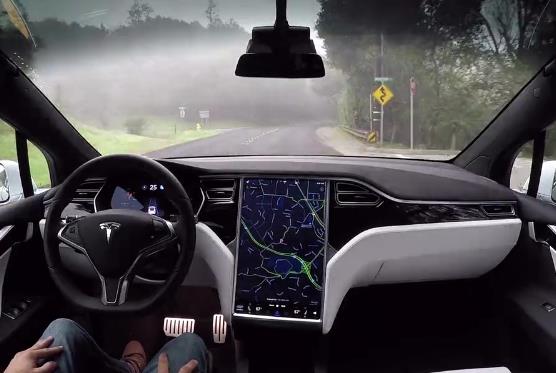
<From the Tesla Autopilot introduction video>
Now the world talks about the Fourth Industrial Revolution. Having passed through the First Industrial Revolution, which transitioned from the steam engine to the age of mechanization, the Second Industrial Revolution of mass production, and the Third Industrial Revolution of automated production and the IT revolution, we have now entered the era of the Fourth Industrial Revolution, the era of one-on-one customized production.
With the emergence of these new industrial trends, hyper-connectivity, intelligence, product-service convergence, networked collaboration structures, and low-carbon, eco-friendly new industries are garnering attention. Accordingly, global companies are continuously securing future competitiveness through mergers and acquisitions, and are attempting changes by boldly divesting from industries lacking differentiation or launching entirely unimaginable new businesses. Collaboration between IT companies and automotive firms has become a natural occurrence, and medical companies are partnering with IT firms to develop advanced materials.
The government is also focusing on fostering new industries such as smart cars, drones, robots, wearable devices, and bio-health to create new sectors. Focusing on these new industries is tantamount to striving for regulatory improvements alongside continuous investment.
A prime example is that, starting next year, test runs of autonomous vehicles will be possible anywhere in the country. To provide intensive support for smart car R&D, the government is investing 145.5 billion won by 2021 to develop eight key components for autonomous vehicles. In particular, it is focusing on activating convergence alliances to foster the future autonomous vehicle industry through inter-industry convergence.
The same applies to the drone industry, which aims to create an initial market specifically with high-performance medium-to-large unmanned aerial vehicles. The plan is to develop the industry by specializing in high-performance, medium-to-large commercial UAVs, which represent a promising, untapped market in the global market that is a step behind. Efforts are also being made to continuously improve regulations regarding deregulation, which is an obstacle to the drone industry, such as allowing flight beyond visual range and night flight.
To promote the development of the robot industry, we are advancing smart factories to expand advanced manufacturing robots, while also making efforts to identify public demand for service robots and expand their distribution. For wearable devices, we have focused on securing an early market advantage through rapid commercialization. The bio-health industry, aiming to secure global niche markets, has permitted genetic testing services by non-medical institutions for 12 categories, including beauty and wellness.
Despite the government's determination, concerns remain. The tens to hundreds of billions of won the government plans to invest often falls short of the investment of a single global company, and the development of core components is frequently limited to specific sectors. Although deregulation is emphasized, relevant legislation remains stalled in the National Assembly, and concrete examples of inter-industry collaboration networks for industrial convergence are rare.
Next year's economic situation will by no means be easy. The factors destabilizing our economy are bound to increase rather than decrease. However, we cannot simply sit idly by. Therefore, I believe we need to be bolder going forward. 'Bold' regulatory reforms, 'bold' investments, and 'bold' inter-industry convergence cannot be emphasized enough.
Comments
Related news
Running robot industry, crawling parts technology 'Localization rate less than 20%'
The domestic localization rate of components in the robotics sector, spurred by interest in artificial intelligence technology, has been below 50% according to statistics over the past three years, with major core components showing a localization rate of less than 20%. Robots are broadly categorized into industrial, professional service, and personal service robots. According to 2014 data, industrial robots accounted for 9.5B (64%), professional service robots for 3.6B (24%), and personal service robots for 1.7B (12%). The domestic component market for these robots reached a total sales volume of 396.2 billion won, representing 13.9% of total components; however, from an import perspective, 50.1% of components were found to be import-dependent. In other words, this means that half of the core components such as image sensors were imported and used. This aligns with the fact that there are not many domestic companies manufacturing core robot components, which are categorized into sensors, controllers, and actuators. When examining the technology level and localization rate for each component type, this situation becomes clearly evident.
2016.06.27by 신윤오 기자
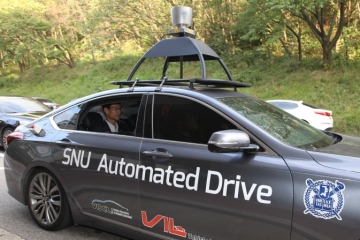
Review of the introduction of new transportation services, such as autonomous taxis
Choi Jung-ho, Vice Minister of Land, Infrastructure and Transport, visited Seoul National University's 'Intelligent Vehicle Research Center' and 'Vehicle Dynamics and Control Laboratory' on the 2nd, and received a briefing on the current status of autonomous vehicle-related research being actively developed by the research team. At this occasion, Vice Minister Choi test-drove the autonomous vehicle being developed by Seoul National University and said, "Seoul National University's vehicle control technology is at a considerable level, having been the first domestic university to receive provisional operation approval and the first to successfully conduct autonomous vehicle test operations on expressways in Korea." Expressing his impressions from the visit, he added, "Going forward, we will actively review the introduction of new concepts in transportation services such as Snuber, an autonomous taxi."
2016.09.05by 홍보라 기자
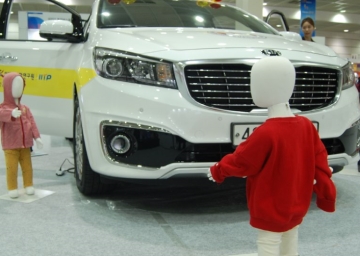
Counterattack by Patent Trolls: Will Autonomous Vehicle Patent Disputes Intensify?
What fields of autonomous vehicles are NPEs focusing on? These entities have shown considerable interest in accident prevention/avoidance systems and vehicle state monitoring systems. The detailed technologies with the most litigation patents were automotive SoC technology, vehicle state monitoring systems, and accident prevention/avoidance systems, in that order. Among these, vehicle state monitoring systems and accident prevention/avoidance systems were patents favored by NPEs, which is because these two technologies have high infringement potential and are technologies where infringement is easy to prove.
2016.09.09by 신윤오 기자
Nvidia invests $5 billion in Intel
NVIDIA and Intel, leaders in global AI computing technology, are now forging ahead in providing cutting-edge solutions through NVLink-based architecture integration. NVIDIA and Intel have officially announced a strategic partnership and stated that they will jointly develop customized data center and personal computing products to accelerate diverse applications and workloads ranging from hyperscale to enterprise and consumer markets, thereby laying the foundation for the next generation computing era.
2025.09.22by 배종인 기자
.jpg)
Applied Materials Launches Environmental Protection Campaign to Mark World Cleanup Day
Applied Materials Korea (CEO Park Kwang-seon) is carrying out environmental cleanup activities with employees and their families around the Dongtan Sinricheon area on the occasion of World Cleanup Day, evolving into a company that engages with the local community beyond technological innovation.
2025.09.22by 명세환 기자











