


[2017 Outlook] Focus on Multi-Cloud Adoption and Expanding Business Mobility
 Published2016.12.23 06:17
Acceleration of IT Uberization and Strengthening of CIO Leadership Due to Increase in IT Professionals
VMware (CEO Pat Gelsinger) has announced its 'Top 10 IT Predictions for 2017'. This report, authored by Bask Iyer, Chief Information Officer (CIO) at VMware headquarters, covers the outlook for the IT market in 2017 and trends to watch.
According to the report, as corporate digitalization intensifies in 2017, business mobility is projected to evolve beyond simple mobile management to a level that enhances sales and operational efficiency. Furthermore, as the types of cloud services utilized by enterprises diversify, effective operational methods will gain attention as a core competency, and the expanding influence of IT will accelerate innovation and improve the customer experience.

VMware CIO Vasque Ayer (pictured) emphasized that all 10 trends presented in this announcement are closely interconnected, stating that organic synergy between trends will drive transformation. He identified ten trends: the evolution of mobility, the rapid growth of the cloud, the advent of the true IoT era, the rise of blockchain, the Uberization of IT, IT-based innovation and enhanced customer experience, the transformation of shadow IT into business IT, the rise of U.S. manufacturing, shifts in leadership, and the expanding influence of open source.
1. The Evolution of Mobility
Enterprise mobility must evolve beyond the level of basic enterprise applications, such as Mobile Device Management (MDM) and calendar provision, by providing creative and optimized solutions and actively utilizing artificial intelligence. Enterprise applications will advance to the level of commercial applications and combine with the latest user technologies that can be applied to actual sales operations.
2. Rapid growth of the cloud
According to a survey conducted by VMware this year in collaboration with The Economist, teams use an average of eight clouds for their work. The multi-cloud era is already just around the corner, and hybrid cloud environments are now an essential element for enterprises. Efficiently managing, connecting, orchestrating, and securing existing private clouds and various public clouds within an enterprise will determine corporate competitiveness.
3. The Advent of the True IoT Era
While IoT will become more powerful driven by advancements in machine learning and AI, it will simultaneously face challenges such as data leaks, breaches, and cyber threats. Given the expected rapid growth of IoT, it is essential to strengthen security within existing IoT architectures from the initial stages to prepare for sophisticated security threats.
4. Blockchain activation
Crowdsourcing-based blockchain is being widely used for many transactions recently, as it is highly valued for its advantages, such as fraud prevention, and its potential to transform economic structures. Financial institutions are also increasingly adopting blockchain, which could serve as a solution for strengthening the security of IoT systems in the future.
5. The Uberization of IT
The so-called Gig Economy, a model in which companies and workers enter into service provision contracts rather than employment contracts, is spreading to the IT sector and will accelerate the Uberization of IT (where demanders and suppliers directly exchange specific goods or services without intermediaries). This phenomenon is occurring as the number of IT professionals increases, and it is expected that regular employees will also become more likely to engage in project-based work, while the number of people holding two or more jobs will also rise.
6. IT-based Innovation and Enhanced Customer Experience
IT is driving innovation starting from core business operations, and its influence is gradually accelerating due to digital business transformation. As the most responsive to innovation, IT is in the most suitable position to rapidly optimize the customer experience. IT-led innovation is expected to reach its golden age in 2017.
7. Business IT Transformation of Shadow IT
Shadow IT, where business users or individual users purchase cloud services on their own without IT department approval, will now drive business-centric IT initiatives. Companies will now need not only to fully embrace and grow IT initiatives but also to actively lead them to survive.
8. The Rise of U.S. Manufacturing
As the costs associated with overseas manufacturing increase and the desire to produce goods closer to potential customers grows, it is predicted that an increasing number of companies will return to the United States. Factors contributing to this trend include lower costs, rapid access to knowledge and innovation, automation capabilities, and government incentive policies. This trend is particularly accelerating in the electric vehicle (EV) manufacturing industry, with more than 30 EV companies in the U.S. beginning production in 2016 alone. Along with this, the rise of U.S. manufacturing is expected to continue as IoT-related manufacturing industries also grow rapidly next year.
9. Changes in Leadership
IT practitioners aspiring to become CIOs in the future will have a clear career roadmap that includes mentoring programs, certifications, and performance metrics, leading more CIOs to aspire to the CEO position. This trend is expected to be particularly pronounced in IT companies or firms preparing for digital transformation.
10. Expanding Influence of Open Source
As open source establishes itself as a core component of enterprise business models, its importance will continue to grow. This will gain even greater power as developer capabilities and the application market combine. As a new growth engine for innovation, open source aligns with the requirements of many companies, such as modern features, interoperability, and agility, and is closely linked to the latest trends of sharing and crowdsourcing. Open source is already an essential element of developer toolsets, operating systems, and databases, and it will gradually expand its reach into the cloud.
Lee Hyo, Head of Technology at VMware Korea, emphasized, “In 2017, the influence of IT within enterprises is expected to grow increasingly larger and become a determining factor in a company’s survival,” adding, “To adapt to digital transformation accelerating through the use of multi-cloud and the expanding influence of open source, companies must strengthen their competitiveness by adopting solutions optimized for their business environment.”
Comments
Related news

Global IT spending increased by 2.9% in 2017, driven by software and IT services.
Gartner Inc., a leading global IT advisory firm, announced at the Gartner Symposium/ITxpo 2016 being held in Orlando that a new type of infrastructure must be built that not only reconfigures business but also transforms the way people live their lives. Gartner refers to this as "civilization infrastructure," and the Chief Information Officer (CIO) of enterprises is responsible for building such infrastructure.
2016.10.19by 김수지 기자

What are the top 10 predictions to watch out for since 2017?
Gartner Inc., a leading global IT advisory firm, has announced its top 10 strategic predictions to watch beyond 2017. Gartner's key predictions for 2017 evaluate the fundamental impact of secondary effects resulting from three ongoing digital revolutions: ▲experience and engagement ▲business innovation ▲and digital capability enhancement. Daryl Plummer, Executive Vice President and Gartner Fellow and Chief Research Officer, stated, "Gartner's strategic technology predictions continue to provide provocative insights into emerging possibilities in the most critical areas of technology evolution. The concept of digital disruption, which has transformed into a wave of constant change that redefines markets and entire industries, is key to future performance." He added, "Last year, Gartner forecasted that digital change would arrive rapidly. This year, acceleration will continue, and secondary effects that broadly impact people and technology may occur."
2016.10.20by 김수지 기자
[2017 Outlook] Leading the Way as a Smart Company by Leading IoT and Artificial Intelligence
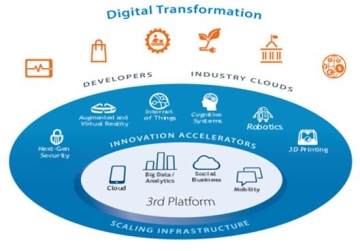
Korea IDC (CEO Hong Yoo-suk) introduced "Korea IDC's Top 10 Predictions for 2017," highlighting major issues and trends expected in the domestic IT market for 2017. Jang Soon-yul, Senior Managing Director overseeing the research group at Korea IDC, stated, "While the low-growth trend in the IT market continues, the traditional IT market faces difficulties in growth. However, the third-platform-based technology market driving digital transformation—including cloud, mobility, big data analytics, and social—is leading IT investments." He added that digital transformation (DX) is exerting significant impact on the macroeconomy through the digital economy (DX Economy).
2016.12.05by 김수지 기자

[2017 Outlook] Artificial Intelligence Begins Realizing the 'AI First' Era with Voice Assistant Services at the Forefront
KT Economic and Management Research Institute announced the 10 major ICT issues to watch in 2017. In outlook on the 10 major ICT issues for 2017, it stated, "Artificial intelligence is expected to be applied to our daily lives and industries through advanced algorithms, implementing an 'AI First' era, and 5G, which is drawing attention as a next-generation network, will appear before us as concrete services along with standard establishment." It also noted that MR (mixed reality) will provide entirely different experiences and enjoyment compared to VR and AR, autonomous vehicles are expected to fundamentally overturn the automotive industry paradigm of 130 years of history, and biometric authentication will become a new alternative to increasingly growing personal information threats.
2016.12.05by 홍보라 기자
[Outlook] What would a dish made by a robot taste like?
2017 was expected to see ICT convergence services take off in earnest across healthcare, media, finance, robotics, and automotive sectors. The seven major ICT convergence trends for 2017 were identified as ▲smart healthcare ▲virtual reality ▲fintech ▲home IoT ▲drones ▲robotics ▲autonomous vehicles.
2016.12.12by 신윤오 기자











