


2017 will see increased progress in industrial IoT in smart buildings and industrial automation.
 Published2016.12.28 06:24
Semiconductors achieved significant growth in industrial applications in 2016.
As a result of mergers and acquisitions among various companies, the industry's major players continue to grow.

Preet Sibia
Senior Director of Marketing, ON Semiconductor
The semiconductor industry also followed the path of global GDP expansion and growth.
Q: What is your overall view of the semiconductor and electronics industries in 2016? The number of mergers and acquisitions continues to rise, breaking records. What impact have these acquisitions had on the overall semiconductor industry?
A: In 2016, the semiconductor industry also faced global macroeconomic headwinds. A good example is China, the world's second-largest economy, which saw GDP growth of 6.7%. While the US saw GDP growth of less than 2% this year, other global economies saw relatively flat GDP growth in 2016 compared to the previous year. Assuming no significant changes in the fourth quarter, global GDP growth will remain slightly below 3% for the third consecutive year. The semiconductor industry, now entering its maturity phase, also saw growth in line with global GDP expansion.
Significant growth was particularly evident in the automotive sector, the Internet of Things (IoT), and industrial applications such as motor control and building automation. One of the defining trends of 2016 was mergers and acquisitions . In a relatively flat semiconductor market, several acquisitions, including ON Semiconductor's acquisition of Fairchild Semiconductor, enabled the industry's major players to maintain growth. This has led to significant investment in product development to enable more complex integrated solutions and products that industry and consumers require.
Q: How did ON Semiconductor perform overall in the market in 2016? What strategies, policies, and methods led to this achievement? Which product lines and applications performed particularly well?
A: ON Semiconductor's goal is always to exceed market expectations, and we successfully achieved this in 2016. Our strategy was to develop innovative solutions in key application areas, combined with strategic acquisitions. Strategic growth areas include automotive, the Internet of Things (IoT), high-performance power conversion (HPPC), and motor control . With the acquisition of Fairchild, ON Semiconductor further advances its global leadership in semiconductors, better supporting automotive, industrial and wireless end-markets than ever before with a comprehensive portfolio of power devices, ICs and power modules products and solutions across low-, medium- and high-voltage technologies.
"2017 is the year for semi-autonomous vehicles.
Supporting ADAS applications
" It seems that sensor and imaging related technologies will take off ."
Q: 2016 witnessed robust technological developments in areas like 5G, IoT, AI, and autonomous driving, but there's still a long way to go. In what areas do you anticipate breakthroughs in 2017?
A: I see this as an evolution rather than a revolution. While new technologies and work methods will be adopted, these areas are expected to continue to evolve. IoT encompasses many applications, but we believe that progress will be particularly strong in areas such as smart buildings and industrial automation, particularly in the industrial IoT.
In the field of autonomous driving, 2017 is expected to see the emergence of sensor and imaging technologies supporting ADAS applications for semi-autonomous vehicles. This will likely lead to the development of many platforms necessary for the ultimate realization of fully autonomous vehicles.
Q: What development trends do you foresee for the semiconductor industry in 2017? What variables will influence competition among companies?
A: Analysts all predict low single-digit growth for the semiconductor industry in 2017. As companies continue to invest in high-value-added products at a scale necessary for growth, we also anticipate these mergers and acquisitions to become key variables in the competitive landscape. From a technology perspective, we believe semiconductor manufacturers will continue to evolve beyond simply producing semiconductor components to establishing and supplying comprehensive technologies and ecosystems. We are approaching a time when providing customers with access to complete solutions that address a wide range of challenges, from the board to the cloud, is essential to increasing value.
The semiconductor industry is expected to show low single-digit growth in 2017.
Q: What technology development trends and application areas will ON Semiconductor focus on in 2017? What are the key challenges ON Semiconductor will face?
A: With the acquisition of Fairchild Semiconductor, we aim to help our customers shorten their time to market and increase revenue across a wider range of applications. To achieve this, we will continue to pursue a broader product portfolio that offers more comprehensive and differentiated solutions, packaging expertise, enhanced cost competitiveness through increased production scale, and more efficient global operations.
For example, we have a broad portfolio of power, analog, and sensing products that continue to support the electrification and electrical sectors of the automotive industry, enabling widespread adoption of HEV/EV, LED lighting, and intelligent advanced driver assistance systems (ADAS). In particular, our broad portfolio of sensors, connectivity, processors, and power technologies will position us as the perfect partner for diverse IoT designs as well as emerging Industry 4.0 applications.
"Onsemi offers a broad portfolio of sensor, connectivity, processor and power technologies.
In addition to various IoT designs, it is also used in emerging Industry 4.0 applications.
"We will establish ourselves as the perfect partner"
Q: What are your expectations for ON Semiconductor's business performance in 2017? What justifies your prediction?
A: ON Semiconductor has performed well in the market over the past several years and we expect this to continue in 2017. The acquisition of Fairchild Semiconductor solidifies our position as a leading semiconductor manufacturer.
This means that the company will not only lead in power semiconductors, but will also become more competitive in other high-growth sectors, including automotive charging, motor control, high-performance power conversion, and IoT. Building on this, the company plans to maintain its high growth curve in 2017 by further strengthening its market profitability.
Q: What is the semiconductor industry's biggest challenge in 2017? Why?
A: It's crucial to recognize that customers are increasingly demanding solutions and ecosystems that accelerate their execution while allowing them to focus on their unique capabilities, while also expecting better products. The most successful semiconductor manufacturers in 2017 and beyond will need to offer a diverse technology portfolio, integrated solutions, and tools. We believe that we will also need to invest in R&D on a scale that will enable the more complex integrated solutions that the industry needs.
"The electronics industry is IoT (including Industry 4.0),
In exciting fields such as mobile communications and automotive industries,
We will continue to pursue many technological innovations ."
Q: Semiconductor development is nearing its limit. How do you think we can overcome this?
A: There are several ways to address the challenges of silicon-based technology, depending on the target application. For example, to meet the performance, power density, and efficiency requirements of digital power designs, large companies like ON Semiconductor will need to offer more devices based on advanced super-junction processes and diverse materials like GaN and SiC. Packaging and analog-digital integration solutions will play a key role in maximizing silicon technology, and hybrid solutions combining silicon with other materials will also be created. We believe that only with this innovative approach will silicon technology remain a strong foundation for the industry in the coming years.
Q: Do you have any other thoughts on the industry and its outlook?
A: Perhaps more than any other industry, the electronics industry will continue to drive many technological innovations in exciting areas such as the Internet of Things (including Industry 4.0), portable communications, and the automotive industry. ON Semiconductor will continue to drive exciting developments across all sectors, including advanced driver assistance systems (ADAS) that are evolving for connected cars, semi-autonomous driving, and ultimately, fully autonomous vehicles. To succeed in this rapidly changing environment, ON Semiconductor will need to achieve scale in its technology portfolio while also being able to innovate with a solutions-based approach that allows customers to focus on their core competencies.
Comments
Related news

ON Semiconductor Presents Diverse Solutions, From Autonomous Vehicles to Industrial IoT
ON Semiconductor will showcase solutions for four major markets at the electronica 2016 exhibition being held in Munich this year. Visitors to the ON Semiconductor booth, which covers more than 400 square meters, will see products and innovative solutions related to automotive, Internet of Things (IoT), motor control, and wearable devices. Sixteen live demonstrations will showcase how diverse products and technologies converge as integrated systems for energy efficiency innovation. In the automotive sector, ON Semiconductor's diverse product and technology portfolio continuously addresses cutting-edge applications including active ADAS safety, LED lighting, motor control, connectivity, and in-vehicle electrical systems during high-speed driving. In particular, ON Semiconductor's products will display various solutions required for semi-autonomous and fully autonomous vehicles.
2016.09.21by 홍보라 기자

ON Semiconductor Completes Acquisition of Fairchild, Birth of 'Another Dinosaur Semiconductor Company'
ON Semiconductor and Fairchild Semiconductor International jointly announced that ON Semiconductor has successfully completed the acquisition of Fairchild for $2.4 billion in cash as planned. Keith Jackson, Chairman of ON Semiconductor, stated, "The acquisition of Fairchild will accelerate our vision to become the leading supplier of power management and analog semiconductor solutions for a broad range of applications and end-market products. The acquisition of Fairchild provides a platform to significantly expand profitability in the increasingly restructured semiconductor industry. As Fairchild's product portfolio is added to our company, our industry-leading financial position has been further improved. Additionally, through the integration of both companies, we have secured a position to create greater shareholder value."
2016.09.23by 신윤오 기자
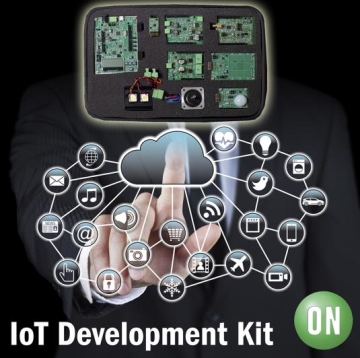
ON Semi Launches Modular Development Platform to Expand IoT Support
onsemi has launched a modular IoT Development Kit (IDK) that provides engineers with a complete set of hardware and software building blocks needed to accelerate evaluation, design, and implementation of industrial, medical, and home IoT applications. onsemi has been supplying market-leading, power-efficient semiconductor portfolios for smart and connected IoT designs that include sensors, power management, connectivity, processors, and actuators. The IDK, which integrates these silicon solutions with a software framework, provides developers with a modular, compact platform to expedite cloud-based IoT design development.
2016.11.09by 김수지 기자
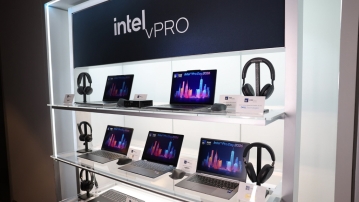
Intel Unveils Next-Generation 'Core Ultra Series 3' and vPro Platform for Enterprise PCs
Intel has officially unveiled the "Intel Core Ultra Series 3" for next-generation enterprise PCs and the latest vPro platform, addressing a wide range of demands from enterprise notebooks to high-performance workstations.
2026.03.26by 배종인 기자
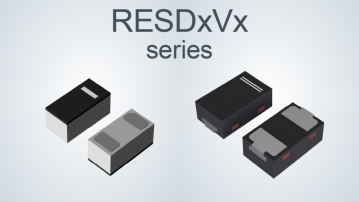
ROHM Launches ESD Protection Diode Compatible with High-Speed Interfaces of 10Gbps or Higher
Semiconductor specialist ROHM has developed the 'RESDxVx series' of ESD (electrostatic discharge) protection diodes capable of responding to next-generation high-speed data communication environments exceeding 10Gbps, simultaneously enhancing both signal quality maintenance required in high-speed interfaces and IC protection performance.
2026.03.26by 배종인 기자











