



[Defining IT Scene] Smart Glasses Utilizing Augmented Reality and AI
 Published2017.01.09 18:16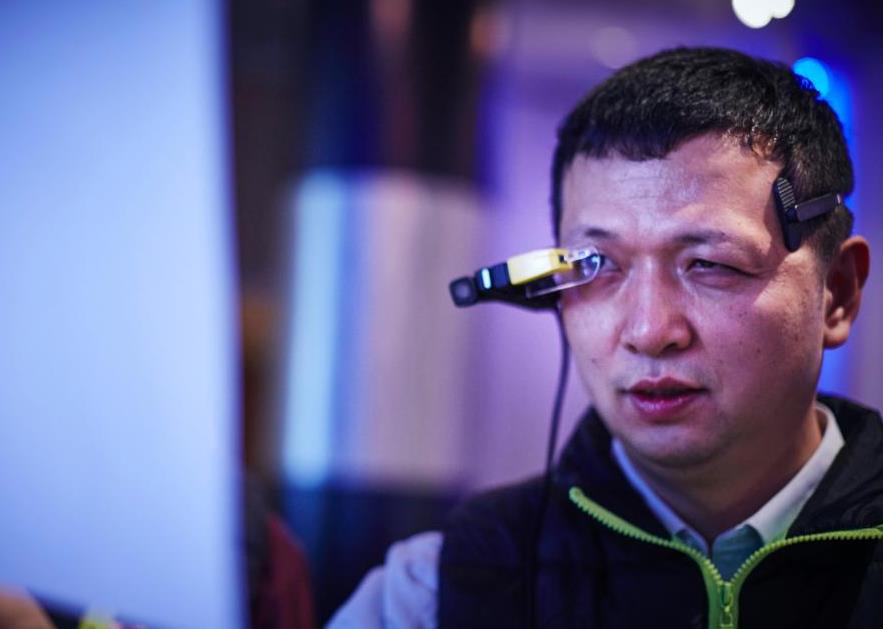
Lenovo Unveils Smart Glasses 'New Glass C200' at CES 2017
Targeting the enterprise market??? Rapid information gathering and access, support for collaboration with remote locations
Lenovo unveiled the 'Lenovo New Glass C200,' a smart glass equipped with augmented reality (AR) and artificial intelligence (AI) technologies, at 'CES 2017.'
The Lenovo New Glass C200 is a single-lens smart glasses system for the enterprise market that utilizes artificial intelligence technology to recognize and identify real-world objects. By collecting information within its field of view and providing step-by-step guidance and instructions for tasks, this product helps users perform their work more efficiently. Furthermore, it supports features that allow for quicker access to information and easy collaboration with colleagues in remote locations, as well as the identification of problematic equipment.
The 'Lenovo New Glass C200' consists of two parts: a Glass Unit and a Pocket Unit. The Glass Unit, which runs on the Linux operating system, is ultra-lightweight at less than 60g, making it easy to wear. In addition, because it is worn on only one eye, it allows users to view the augmented reality world and the real world simultaneously, providing a superior 'Mixed Reality' experience.
In addition, installing the 'New Glass' app on a smartphone and connecting the pocket unit not only improves processing and CPU performance but also allows the smart glasses to be connected via LTE. The 'Lenovo New Glass C200' package includes accessories that allow the pocket unit to be clipped onto a belt or pocket.
Lenovo has developed Lenovo NBD Martin, an AI recognition software that utilizes computer vision technology to identify scenes or objects in real time. Through Lenovo NBD Martin, the 'Lenovo New Glass C200' identifies images and can recognize over 20 types of objects within them, including actual building wiring diagrams. Furthermore, it acts as an AI assistant by analyzing data generated from the smart glasses camera, sensors, and user habits, and combining this with insights derived from user interactions such as voice commands, gestures, and button inputs. This enables users to easily access the information and tools necessary for their tasks.
Comments
Related news
The top 3 most important issues TI presents at CES 2017
Autonomous vehicles, next-generation displays, and connectivity available anywhere are no longer dreams. Texas Instruments (TI) is making these dreams a reality, and TI will continue to support developers in advancing next-generation product technologies and help realize them in the future.
2017.01.04by 홍보라 기자
Globally Competitive Korean Startups Recognized at CES
The Ministry of Science, ICT and Future Planning (Minister Choi Yang-hee) announced that four domestic startups—Kremotech, Mango Slab Co., Ltd., Soltied Venture Co., Ltd., and Neofect—received 'Innovation Awards' at CES 2017. CES, which marks its 50th anniversary this year, will host approximately 3,800 companies from over 150 countries with thousands of products on display. Among these, a total of 446 products across 28 categories will receive 'Innovation Awards.' Additionally, 35 products have been selected for the 'Best of Innovations' award, which is presented only to the highest-scoring product in each category.
2017.01.05by 홍보라 기자
[CES 2017 Wrap-up] Home Appliances and Cars Are Now a Single AI Device
Last year's CES (the world's largest consumer electronics trade show) clearly demonstrated the IT transformation of automobiles, while this year's exhibition stood out for the evolution of artificial intelligence (AI) being applied to these consumer electronics and automobiles. In contrast to previous instances where certain home appliances and smartphones exchanged information and controlled operations with one another, AI-enabled home appliances connect all products to one another, enabling them to independently learn customers' product usage patterns and surrounding environments and provide optimized solutions. Additionally, this year's exhibition notably highlighted cooperation between IT companies and automobile manufacturers for the commercialization of autonomous vehicles more than ever before. Through major companies participating in CES, we examined prospects on how artificial intelligence will transform the concepts of home appliances and automobiles and reshape everyday life.
2017.01.09by 신윤오 기자

ESP32 Development Environment Selection and GPS Application Implementation
The ESP32 is a microcontroller that integrates Wi-Fi, Bluetooth, 12-bit ADC, capacitive touch, PWM, DAC, and UART in a single SoC. However, the abundance of features does not by itself solve the designer's problems. The real challenges lie in selecting the appropriate development environment, determining which pins can be used and which must be avoided, and converting raw data from modules into usable information. This document addresses ESP32 peripheral constraints (ADC2 and Wi-Fi coexistence limitation, UART1 occupancy, ADC non-linear regions), the trade-offs between Arduino IDE and ESP-IDF, and the process from connecting NEO-6M/NEO-M8N GPS modules to UART2, parsing NMEA sentences, and visualizing routes in Google Earth, all organized based on documented references.
2026.10.12by 편집부
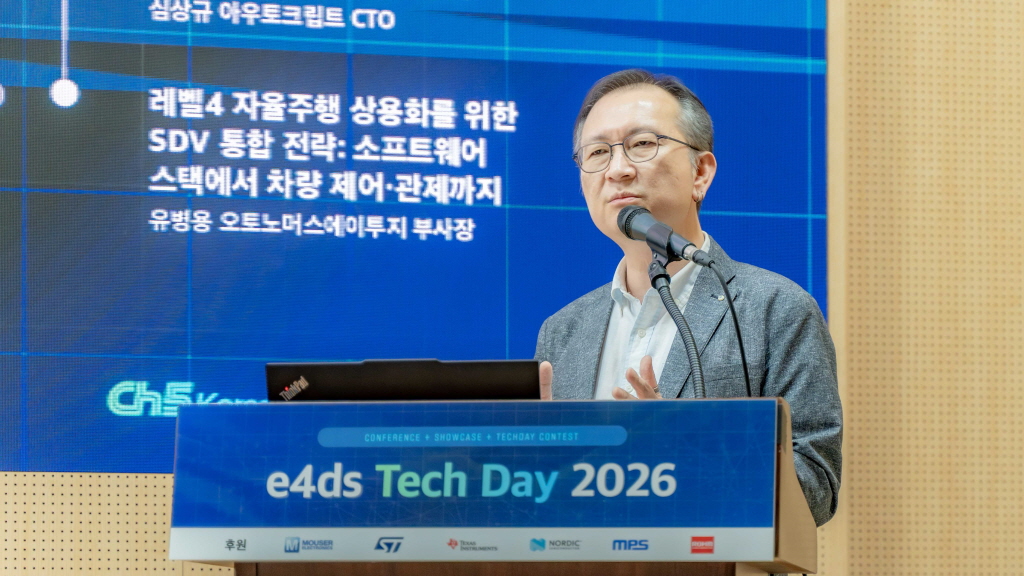
[e4ds Tech Day 2026 ⑨] Sim Sang-gyu, Autocrypt CTO: "In the Physical AI Era, Automotive Security Must Extend Beyond the Vehicle"
At e4ds Tech Day 2026, Sim Sang-gyu, CTO of Autocrypt, explained automotive cybersecurity strategies in the era of Physical AI and SDV (Software-Defined Vehicle). Automobiles are evolving as part of an ecosystem connected to AI, cloud, chargers, IoT, and robots, and he emphasized that the scope of security must expand beyond the vehicle interior to the entire connected environment. In particular, AI model tampering, adversarial attacks, OTA updates, and EV charger hacking were identified as major threats. He explained that response measures require zero trust, AI model integrity protection, intrusion detection, Security by Design and Default, and full lifecycle security management, and that proactive security system establishment beyond regulatory compliance is critical for securing future mobility competitiveness.
2026.10.12by 배종인 기자











