



Tektronix Launches BERT Device Supporting 32 Gb/s Protocol Recognition
 Published2017.01.26 06:10
Provides tools needed to visualize the link training process.
Tektronix has launched a BERT instrument supporting 32 Gb/s protocol recognition. The new Tektronix BSX Series BERTScope can characterize receivers in third- and fourth-generation system devices, and features link training capabilities for RX testing and convenient features for debugging bit error rate issues, reducing measurement times.
As fourth-generation high-speed serial signaling systems, such as PCIe 4.0, USB3.1, and SAS4, become increasingly complex and fast, testing becomes increasingly difficult, as entering test mode itself becomes difficult without protocol handshaking between the instrument and the device under test. The BSX series provides the tools and flexibility needed to visualize and control the handshaking and link training processes for devices running up to 32 Gb/s through its protocol-aware capabilities.
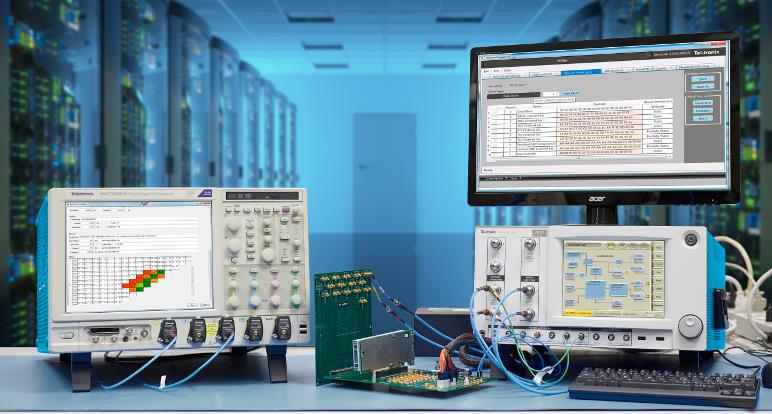
Supporting data rates up to 12.5 Gb/s, 24 Gb/s, and 32 Gb/s, the BSX series is ideal for the numerous test cases required by the 4th generation standard, as it simultaneously provides tools to automate compliance testing. It also serves as a receiver test tool that continuously records the context (timing, bit position) of each bit error. Sophisticated error analysis tools, such as pattern sensitivity and forward error correction emulation, use this information to help identify the factors contributing to bit errors.
“When problems arise during receiver testing, customers need more than just a test suite,” said Brian Reich, general manager for high-performance oscilloscopes at Tektronix. “They need tools that can identify the root cause of the problem, translate complex results into reliable measurements, reduce test times, and help them meet project schedules.”
Receiver testing goes beyond simply measuring bit error rates. It also requires understanding why specific bit error rates are occurring or why handshaking failures occur. The BSX series captures the precise location and timing of bit errors, providing unique visibility into the root cause of physical layer issues.
Comments
Related news
.jpg)
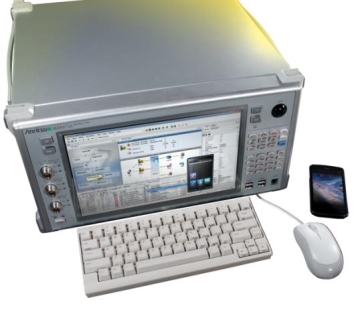
Develop automotive applications without worrying about mobile communication protocols
As the number of applications in mobile communications increases, the demand for mobile test environments is also growing. With automobiles becoming connected to the internet, the need for test environments supporting automotive applications such as emergency response systems currently being deployed in Europe and Russia is also increasing.
2015.08.20by 명세환 기자
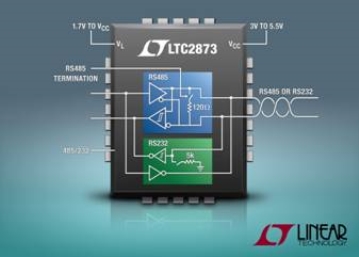
Linear Launches Highly Integrated Multiprotocol Transceiver
Linear Technology Korea announced the release of the LTC2873, an RS485/RS232 multi-protocol transceiver in a compact 20mm² package. The LTC2873 integrates all essential functions to provide the most compact multi-protocol IC currently available. Supporting ±26kV HBM ESD bus protection, the LTC2873 offers a powerful software-selectable interface for 3V to 5.5V systems.
2016.03.17by 명세환 기자
Intel Unveils Next-Generation 'Core Ultra Series 3' and vPro Platform for Enterprise PCs
Intel has officially unveiled the "Intel Core Ultra Series 3" for next-generation enterprise PCs and the latest vPro platform, addressing a wide range of demands from enterprise notebooks to high-performance workstations.
2026.03.26by 배종인 기자
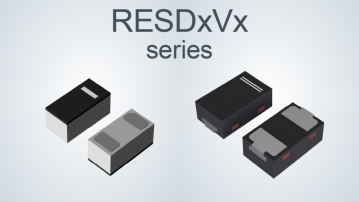
ROHM Launches ESD Protection Diode Compatible with High-Speed Interfaces of 10Gbps or Higher
Semiconductor specialist ROHM has developed the 'RESDxVx series' of ESD (electrostatic discharge) protection diodes capable of responding to next-generation high-speed data communication environments exceeding 10Gbps, simultaneously enhancing both signal quality maintenance required in high-speed interfaces and IC protection performance.
2026.03.26by 배종인 기자











