


ARM MCU Onboard Supply Spacecraft
 Published2017.02.21 12:12
Leveraging chip design technology in experiments to verify computing implementation in space environment
ARM announced that a VORAGO Technology microcontroller (MCU) based on the ARM Cortex-M0 processor has been onboarded on SpaceX CRS-10, launched by the U.S. National Aeronautics and Space Administration (NASA) to supply materials to the International Space Station (ISS).
NASA had previously adopted the ARM Cortex A-53 processor to develop next-generation space electronic equipment. The project, supported by NASA and the U.S. Air Force Research Laboratory, marks the first instance of an MCU developed based on ARM Cortex-M0 with radiation hardening being adopted in a space mission.
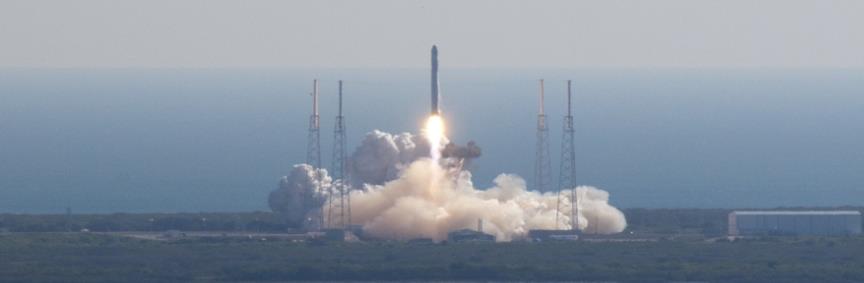
▲ SpaceX Falcon 9 Launch
RHEME (Radiation Hardened Electronic Memory Experiment) is a critical experiment to verify whether computing can be implemented in the harsh space environment. This experiment utilized the enhanced radiation-hardening chip design technology possessed by VORAGO.
In space, electronic memory can be exposed to high-energy protons and radioactive particles, and when such particles collide with memory or other microscopic circuits, information stored in memory bits can be damaged. Corrupted data causes serious problems that can impair electronic equipment.
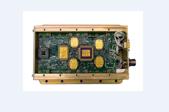
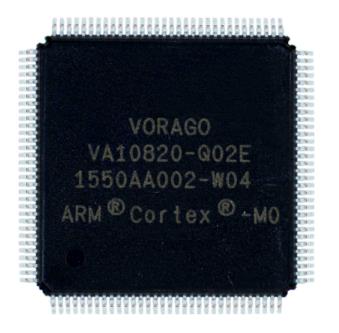
▲RHEME system module and Cortex-M0-based chip
RHEME plans to monitor the effects resulting from particle collisions with memory over the next year. It is controlled by a VORAGO ARM Cortex-M0-based microcontroller. Through this experiment, spacecraft electronic equipment errors are detected and corrected with low power consumption.
Ross Bannatyne, marketing director at VORAGO Technology, stated, "Radiation-hardened microcontrollers are becoming increasingly popular technology among spacecraft computing application designers. In particular, they are gaining prominence in the small satellite segment. ARM possesses the technology to meet such demands." He continued, "Low power consumption is extremely important for spacecraft that rely on solar power. In addition, the wide ecosystem for development support and the technology to implement compact chips that can be used in spacecraft with tight space constraints are also critical factors. This experiment is expected to provide very important data for future chip development for space systems."
Comments 1
1 Comments:
Related news
ARM Announces New Bus Interconnect and Memory Controller Technology
ARM has announced new bus interconnect and memory controller technologies that can meet requirements for scalability, performance, and efficiency across diverse fields including 5G, data center infrastructure, high-performance computing (HPC), automotive, and industrial systems. The newly announced ARM® CoreLink® CMN-600 Coherent Mesh Network interconnect and CoreLink DMC-620 DDR controller enable the development of the latest ARM-based SoCs that deliver unparalleled data processing capabilities and the shortest latency in the market.
2016.09.30by 신윤오 기자
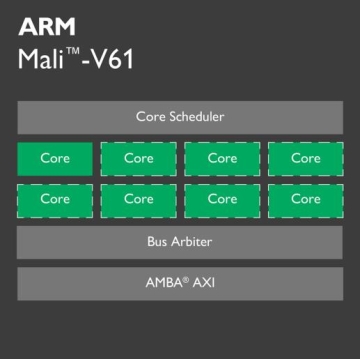
ARM Announces New Processor for Enhanced Mobile VR and 4K Streaming
ARM announced two new processors designed to meet the demands of Gen Z and mainstream users seeking more immersive and interactive visual content experiences on mobile devices. ARM unveiled the Mali-V61 VPU (Video Processing Unit), which delivers breakthrough real-time 4K120 video performance with superior efficiency and scalability, and the Mali-G51 GPU (Graphic Processing Unit), which offers the best performance per unit area and energy efficiency among GPUs released to date.
2016.11.08by 신윤오 기자

ARM Launches Automotive Safety Hypervisor for Cortex-R52
ARM announced that it has developed a software hypervisor for the ARM Cortex-R52 processor. The Cortex-R52 converts a single base chip into multiple virtual machines, enabling different software tasks to run simultaneously.
2017.01.26by 김지혜 기자

Intel Unveils Next-Generation 'Core Ultra Series 3' and vPro Platform for Enterprise PCs
Intel has officially unveiled the "Intel Core Ultra Series 3" for next-generation enterprise PCs and the latest vPro platform, addressing a wide range of demands from enterprise notebooks to high-performance workstations.
2026.03.26by 배종인 기자
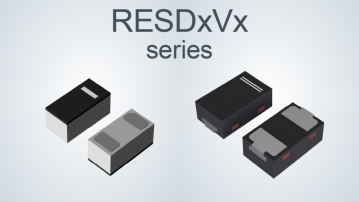
ROHM Launches ESD Protection Diode Compatible with High-Speed Interfaces of 10Gbps or Higher
Semiconductor specialist ROHM has developed the 'RESDxVx series' of ESD (electrostatic discharge) protection diodes capable of responding to next-generation high-speed data communication environments exceeding 10Gbps, simultaneously enhancing both signal quality maintenance required in high-speed interfaces and IC protection performance.
2026.03.26by 배종인 기자












좋은 정보 감사합니다