


Corporate Workforce Survey: Korea Ranks Improving 'Employee Experience' as a Business Priority
 Published2017.03.23 15:47
Only 40% of companies support the latest hardware and technology
Dell announced the results of its 'Workforce Transformation' study, which investigated the current status and perceptions of workforce innovation among companies.
This study, commissioned by Dell to global market research firm Forrester Consulting, was based on a survey of 327 IT executives and management from companies with more than 500 employees located in 10 Asia-Pacific countries, including Korea, Japan, China, India, Singapore, Malaysia, and Australia. The 'Workforce Transformation' study focused particularly on innovation in work productivity as part of digital transformation, which has emerged as a survival condition for companies today.
In the digital age, improving employee productivity is closely linked to customer experience and revenue growth, but this survey revealed that executives have a low understanding of this. In particular, despite the critical importance of providing employees with the skills necessary for productivity improvement, only 61% of respondents answered that their company's IT capabilities are sufficient to achieve business goals.
In addition, only 40% of respondents answered that 'the in-house IT department provides the latest hardware and technology.' Only 34% and 20% of companies, respectively, used professional monitoring tools or active methods such as surveys to measure employees' IT user experience, while more than half (52%) of companies stated that they only conduct passive audits.
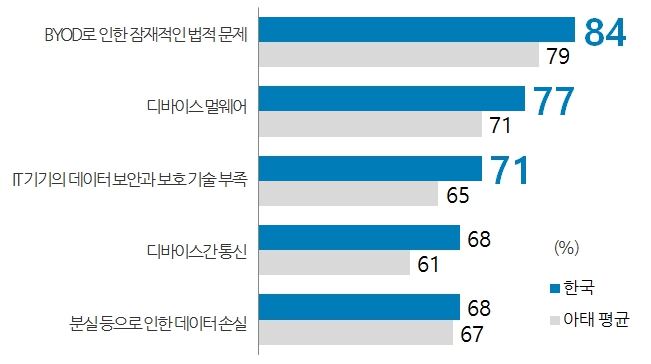
It has been found that as IT devices become more diverse, work requirements have become more complex, and concerns regarding cybersecurity have also risen. According to the survey, 71% of respondents cited the increased complexity of employee requirements due to various operating systems, devices, and applications as their biggest concern. In today's world, where employees have access to information far more than in the past, security threats such as hacking are becoming increasingly sophisticated; however, as corporate security policies are failing to adequately address this, endpoint security is becoming more vulnerable.
Six out of ten companies assess their current organizational technology level as sufficient.
53% of responding companies answered that they "need to have remote IT support capabilities for mobile workers," while only 32% answered that they "provide customized software or PCs for individual employees as needed." Only 43% of companies possessed remote management and security solutions for IT devices. More than half of the respondents (54%) stated that "strengthening cybersecurity will increase employee productivity," and 63% felt that the work environment was safer when newly issued PCs were equipped with enhanced security technology.
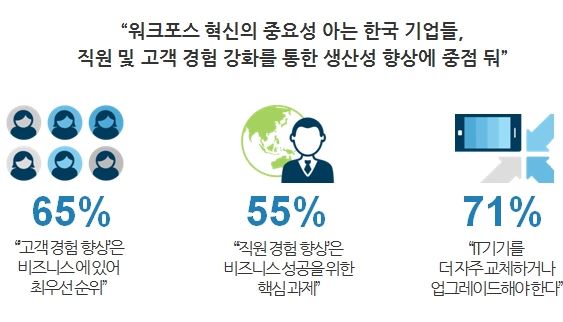
As Korea’s economic level and IT infrastructure are ahead of the average in the Asia-Pacific region, interest in digital innovation and enhancing employee productivity to support it was also higher. Korean companies participating in the survey cited "improving customer experience" (65%), "cost reduction" (61%), and "addressing employee needs" (55%) as their business priorities for the next year.
In particular, 55% of Korean respondents cited "improving employee experience" as a business priority, a figure significantly higher than the Asia-Pacific average of 38%. However, the percentage of respondents who answered that they "use the latest IT devices and technologies and conduct related training to achieve business goals" was 41%, which is not high and similar to the Asia-Pacific average (40%).
Korea, which has a high penetration rate of the latest IT devices such as smartphones, appears to be grappling with the growing diversity of BYOD (Bring Your Own Device) policies, similar to other Asia-Pacific regions. Both Korea and the Asia-Pacific region cited "potential legal issues, such as data protection or management responsibilities," followed by "device malware" as the biggest security vulnerabilities of work devices. Regarding the next most concerning security vulnerability, the Asia-Pacific region cited "data loss due to misplacement," whereas Korean respondents stated that data security and protection technologies are insufficient, indicating greater concern for endpoint security.
88% of domestic respondents believed that "IT support should be provided more quickly," while 71% stated that "IT devices need to be replaced or upgraded more frequently." Korea also showed differences from other Asia-Pacific regions when investigating the factors influencing decision-making regarding hardware replacement. While the Asia-Pacific region as a whole showed the order of factors as "user experience" (56%), "hardware performance such as speed and battery life" (50%), "technical support" (40%), and "reduction in Total Cost of Ownership (TCO)" (38%), Korean respondents ranked "hardware performance such as speed" and "technical support" (52% each), followed by "user experience" (45%) and "enhanced security" (39%), revealing a difference in perception compared to Asia-Pacific respondents.
Niloy Mukherjee, Vice President of Product Marketing for Dell’s Asia Pacific Client Solutions Group, stated, “If corporate leaders better understand the needs of their employees and provide the devices and technologies to meet those needs, it can lead to improved customer experience, as well as true digital transformation and enhanced corporate competitiveness.”
Comments
Related news
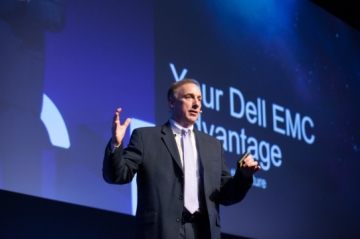
"We are currently in an era of digital transformation; only companies that respond quickly and proactively will survive."
"Dell Technologies," which was reborn as the world's largest unlisted IT company through the merger of Dell and EMC, held its first official domestic event in Korea, "Dell EMC Forum 2016," successfully on October 11 at Grand InterContinental Seoul Parnas in Gangnam-gu, Seoul. The "Dell EMC Forum 2016" event, which succeeded the 13-year history of the EMC Forum, was attended by approximately 1,600 IT industry officials and customers, as well as 17 domestic and international sponsors. As the first official combined event of Dell EMC, Dell EMC Forum 2016 presented key topics for the present and future of enterprise IT in line with its theme "Let the Transformation Begin," and introduced Dell EMC's vision, strategy, and solutions.
2016.10.12by 김수지 기자
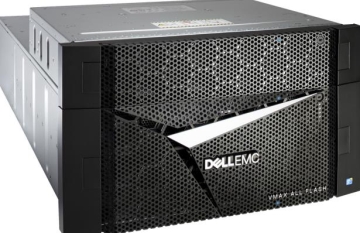
Dell EMC Strengthens All-Flash Market with Major New Product Announcements
Dell Technologies announced the launch of the high-end all-flash storage 'Dell EMC VMAX 250F' along with various updates, unveiling a significantly strengthened all-flash portfolio. Leading the all-flash storage market, Dell EMC is providing groundbreaking cost-effectiveness and convenience for modern data centers through these newly announced products and updates.
2016.10.18by 김수지 기자
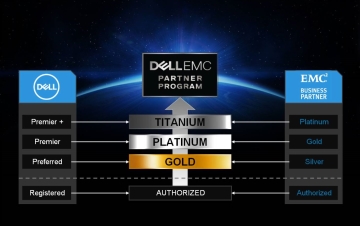
Dell EMC Unveils New 'Integrated Partner Program'
With the merger of Dell and EMC, we are introducing a new integrated partner program. The integrated program announced this time leverages the strengths of the existing partner programs held by both Dell and EMC, while being developed with profitability, simplicity, and predictability as core pillars to enhance benefits for partner companies. The new integrated program applies to Dell EMC solution providers, cloud service operators, strategic outsourcing vendors, OEM partners, and systems integrators. All partner companies, excluding distributors, are classified into three tiers—Gold, Platinum, and Titanium—based on the level and scale of business cooperation with Dell EMC.
2017.02.14by 서아람 기자
Nvidia invests $5 billion in Intel
NVIDIA and Intel, leaders in global AI computing technology, are now forging ahead in providing cutting-edge solutions through NVLink-based architecture integration. NVIDIA and Intel have officially announced a strategic partnership and stated that they will jointly develop customized data center and personal computing products to accelerate diverse applications and workloads ranging from hyperscale to enterprise and consumer markets, thereby laying the foundation for the next generation computing era.
2025.09.22by 배종인 기자
.jpg)
Applied Materials Launches Environmental Protection Campaign to Mark World Cleanup Day
Applied Materials Korea (CEO Park Kwang-seon) is carrying out environmental cleanup activities with employees and their families around the Dongtan Sinricheon area on the occasion of World Cleanup Day, evolving into a company that engages with the local community beyond technological innovation.
2025.09.22by 명세환 기자











