


[Reporter's Notebook] The World Uber Dreams Of and the World We Only Dream Of
 Published2017.04.10 15:00
Uber Carpooling Service Conceptualizes Flying Taxis Following Autonomous Trucks
While some may not be aware, the smartphone-based transportation service Uber is currently operating a taxi service in Seoul. This means there are surprisingly many people who believe that the company completely withdrew from the Korean market because taxi operations were once deemed illegal.
As those in the know are aware, Uber is not just a transportation service provider. Everyone in the IT field is aware that it is a leading company in the autonomous vehicle sector, which is currently the hottest topic in the automotive industry.
For several years, Uber has been internally recruiting talent and investing in technology companies to move into the autonomous driving market, while externally, it is even building its own maps to compete against rivals such as Google, Apple, Audi, BMW, and Daimler. In March 2015, it acquired the French mapping company deCarta, and in June of the same year, it acquired the mapping technology and location information company Bing, absorbing approximately 100 Microsoft employees working in image collection and data analysis.
Furthermore, in July of last year, the company acquired a mapping vehicle in Mexico capable of recording surrounding scenery and various images while driving, and in August, it stirred tension in the industry by announcing plans to invest $500 million in building its own maps. This is interpreted as an attempt to reduce dependence on Google Maps and build its own maps, and can be analyzed as signaling direct competition with Google regarding accurate map systems, a key element of autonomous vehicles.
Taxis and autonomous vehicles—what business model comes to mind when you think of these? Simply put, the ambition is to enable customers to summon and drive autonomous vehicles to their desired locations and destinations. It is about providing customers with "driverless vehicles," as they put it. This is precisely the concept of ride-sharing. In other words, it refers to car-sharing based on autonomous vehicles. As evidenced by statistics showing that current vehicle usage is only 5% and 94% of accidents are caused by humans, this could have a profound impact on vehicle usage rates, accident prevention, parking space utilization, and the environment.
Then, can it coexist with existing taxis, which have also been an issue domestically? Baek Eun-kyung, Uber's Head of Policy for Asia, stated, "Uber's position is ride-sharing." "The goal is to use convenient vehicle services anytime, anywhere," he said, adding, "Looking at foreign examples, Uber is actually seeing increased service in underserved and suburban areas, showing a complementary relationship with existing taxis and actually increasing the use of public transportation, including taxis."
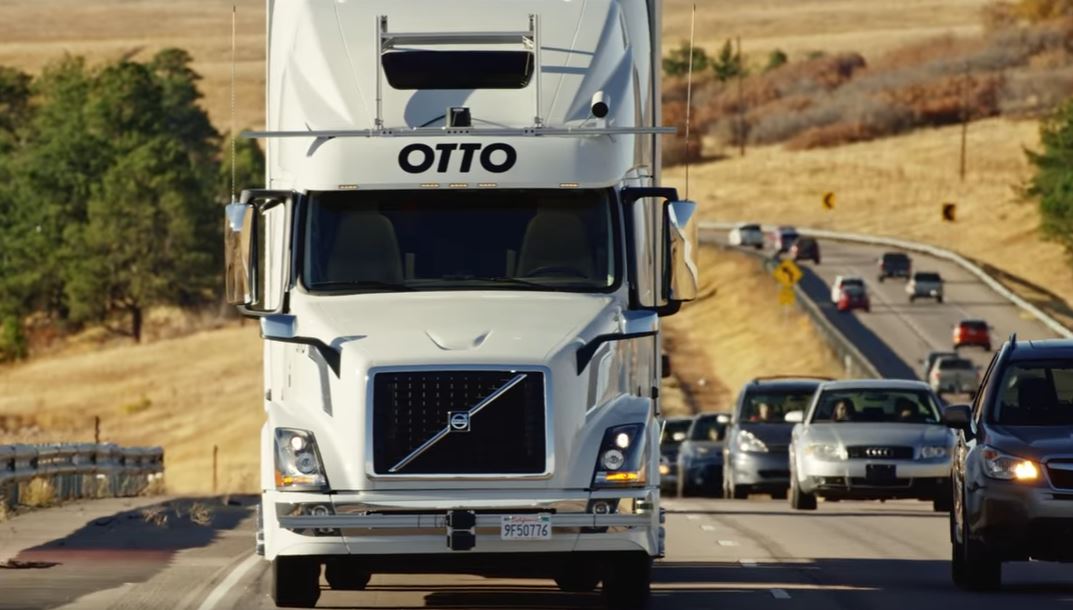
Following its carpooling service 'Uber Pool,' Uber is now eyeing the freight transportation sector. To this end, Uber acquired Otto, a San Francisco-based self-driving truck startup, for $680 million last August and successfully transported 50,000 cans of Budweiser beer in Colorado using autonomous driving. Of course, a driver was present; the driver operated the vehicle until it entered the highway. Once the highway map appeared and the real-time sensor data matched, the driver switched the vehicle to autonomous mode. Subsequently, the driver moved from the driver's seat to the back seat, fastened their seatbelt, and heeded the warning to disengage autonomous mode, but the autonomous truck drove 120 miles on its own.
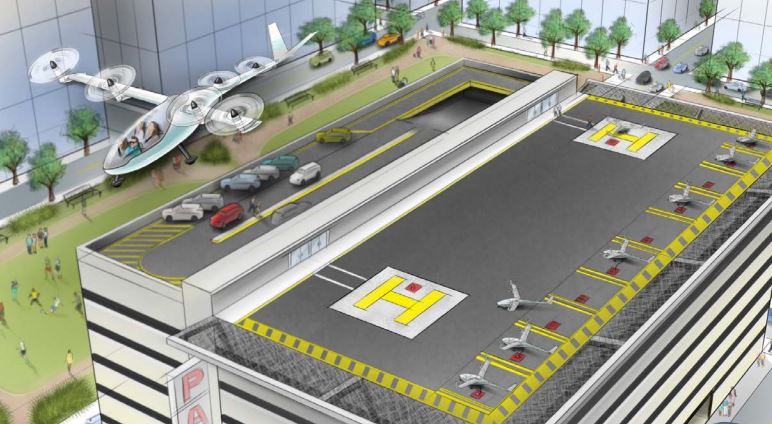
What is even more interesting is that Uber unveiled a concept last year for 'Uber Elevators,' taxis that fly through the sky rather than on the roads during rush hour. The story is that Uber taxis, capable of vertical take-off and landing using rotary propellers, will fly through the air to transport people.
Given that such science fiction-like concepts are actually being discussed as business ventures, the domestic situation looks bleak. While there is widespread talk of advancing autonomous vehicle technology, there are significant limitations on both the availability of test vehicles and road access.
We need to test 200 autonomous vehicles in Seoul to compete in infrastructure, maps, standards, laws, etc.
Cha Won-yong, Director of the ASPAC Future Technology Management Research Institute, pointed out, “We also need to conduct extensive testing with autonomous vehicles, but having just two at Seoul National University, one at Naver, and three at Hyundai-Kia Motors is insufficient. Google is testing 60 vehicles. We also need to test 200 vehicles in Seoul to be able to compete in terms of infrastructure, maps, standards, and regulations.”
The scenario in which an autonomous vehicle comes to pick me up and takes me to my destination is becoming a reality. It could take the form of my personal car, a taxi, or even a flying vehicle. This is the reality and (near) future demonstrated by Uber, a ride-sharing service that was once simply viewed as a company taking away the taxi industry's livelihood. However, just as we cannot immediately grow a company like Google, it will not be easy to create a company like Uber.
In response, Director Cha stated, “I hear that Uber plans to deploy 200 autonomous vehicles in Seoul, but we should use this as an opportunity to simultaneously research society, culture, economy, infrastructure, and legal systems, provided the government grants permission.” This suggests that technological advancement through cooperation is the solution if independent development capabilities are lacking, but it raises concerns that the government’s policy direction is too heavily skewed toward independent technology development.
Comments
Related news
[CES 2017 Wrap-up] Home Appliances and Cars Are Now a Single AI Device
Last year's CES (the world's largest consumer electronics trade show) clearly demonstrated the IT transformation of automobiles, while this year's exhibition stood out for the evolution of artificial intelligence (AI) being applied to these consumer electronics and automobiles. In contrast to previous instances where certain home appliances and smartphones exchanged information and controlled operations with one another, AI-enabled home appliances connect all products to one another, enabling them to independently learn customers' product usage patterns and surrounding environments and provide optimized solutions. Additionally, this year's exhibition notably highlighted cooperation between IT companies and automobile manufacturers for the commercialization of autonomous vehicles more than ever before. Through major companies participating in CES, we examined prospects on how artificial intelligence will transform the concepts of home appliances and automobiles and reshape everyday life.
2017.01.09by 신윤오 기자
[Promising Future Technologies ⑧] Smart Car Windshield Hazard Detection: Augmented Reality Service: "Is This Possible?"
Smart cars refer to vehicles that are continuously connected to networks through the convergence of automotive and IT technologies. They are evolving in a direction that enhances safety and convenience by incorporating sensors for environmental awareness and strengthening connectivity between vehicle interior and exterior systems. To develop smart cars that converge automobiles with other fields, active collaborative development is being conducted between different industries. The market size is ranked in the following order by smart car technology elements: safety, autonomous driving, and entertainment. Starting with Audi in 2017, numerous automotive companies plan to launch autonomous vehicles through the 2020s.
2017.03.06by 신윤오 기자
[Planning-Autonomous Vehicles①] Domestic Technology 'Cannot Stand Alone' - Strategic Collaboration Ecosystem Must Be Established
The most striking aspect of the 2017 Seoul Motor Show that concluded last week was the first-time participation of NAVER, a leading domestic IT company. While IT companies developing automobiles is no longer an unfamiliar sight, the appearance of a leading domestic IT company at Korea's representative auto show holds significant symbolic meaning for the automotive sector. NAVER became the first domestic IT company to receive temporary road-driving approval from the Ministry of Land, Infrastructure and Transport for autonomous vehicles. Presenting a Level 3 autonomous vehicle, NAVER is developing autonomous vehicles as part of environmental implementation with 'living environment intelligence' as its technological direction. Prior to this, Hyundai Motor presented a Level 4 vehicle where the system can safely operate without driver intervention. Hyundai achieved autonomous driving by adding only minimal sensors such as radar and LiDAR to sensors already applied in mass-production vehicles.
2017.04.10by 김지혜 기자

[e4ds Tech Day 2026 ⑨] Sim Sang-gyu, Autocrypt CTO: "In the Physical AI Era, Automotive Security Must Extend Beyond the Vehicle"
At e4ds Tech Day 2026, Sim Sang-gyu, CTO of Autocrypt, explained automotive cybersecurity strategies in the era of Physical AI and SDV (Software-Defined Vehicle). Automobiles are evolving as part of an ecosystem connected to AI, cloud, chargers, IoT, and robots, and he emphasized that the scope of security must expand beyond the vehicle interior to the entire connected environment. In particular, AI model tampering, adversarial attacks, OTA updates, and EV charger hacking were identified as major threats. He explained that response measures require zero trust, AI model integrity protection, intrusion detection, Security by Design and Default, and full lifecycle security management, and that proactive security system establishment beyond regulatory compliance is critical for securing future mobility competitiveness.
2026.10.12by 배종인 기자

Practical HIL Construction Strategy for Automotive and Off-Highway Controller Validation
As vehicle E/E architecture transitions to zonal structures and shifts to software-defined vehicles (SDV), the number of controllers (ECUs) requiring validation and software complexity are surging dramatically. Meanwhile, real vehicle testing cannot provide repeated verification under identical conditions and entails lead time and safety concerns. This white paper explains the principles of HIL (Hardware-in-the-Loop) validation and the structure of the NI platform composed of PXI, SLSC, and VeriStand, and through two actual implementation cases—Camera Record & Replay HIL for In-Cabin Monitoring Controller (ICMU) and Forklift Controller (VCU) HILS—describes how controller-level regression testing becomes possible. Additionally, it explicitly states application boundaries and limitations, such as lack of A2B support.
2026.10.12by 편집부











