



What is important in a battery analysis system is the ADC
 Published2017.04.18 11:44
ADC, 넓은 입력 범위에서 작은 신호 변화도 정확히 측정 해야
이러한 배터리 건전 상태를 확인할 수 있는 배터리 분석 시스템에는 정밀 아나로그-디지털 컨버터(ADC)가 핵심 부품으로 사용된다. ADC의 속도, 분해능, 지연시간과 같은 주요 사양에 따라 배터리 건전 상태를 보다 정확하게 분석할 수 있다. 그림 1의 랜들(Randles)의 납축전지 모델을 보면 ADC의 성능이 얼마나 중요한지 알 수 있다.
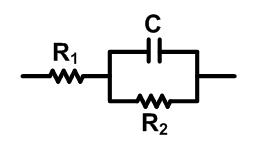

그림 1에서 R1은 능동 전해 저항이고, R2는 전하 전달 저항이고, C는 이중층 용량이다. 이들이 결합되어 납축전지의 개략적 등가 회로를 이루고 있다. 이들 세 소자를 측정하고 기대갑과 공지갑을 비교함으로써 배터리 건전성에 대한 근사치를 얻을 수 있으며, 이러한 건전성은 CCA(Cold Cranking Amps), 충전 상태, 용량을 포함한다.
배터리를 테스트 하는 방법에는 방전/충전 사이클, DC 부하, AC 테스트 같은 방법이 잇지만 가장 정확도가 우수한 방법은 전기화학 임피턴스 부광기(EIS)이다. EIS는 CCA, SOC 및 배터리 용량을 빠르게 측정할 수 있다. 과정을 보면, 배터리로부터 일련의 작은 저주파 신호들을 인출하고 션트 저항 상에서 그에 상응하는 전류와 배터리 DC 전압을 측정한다. 이 측정으로 R1, R2, C를 계산할 수 있으며 이것을 기대갑과 비교해서 배터리 건전성을 계산한다.
테스트 하려는 배터리 건전성과 유형에 따라 측정되는 전류 및 전압은 매우 낮은 레벨부터 매우 높은 레벨까지 이른다. 측정을 변환하기 위해 선택되는 ADC는 넓은 입력 범위에서 입력 신호의 작은 변화까지도 정확하게 측정할 수 있어야 한다.
SAR(연속 근사 레지스터) ADC는 동적 범위, 속도, 분해능이 우수하고 지연시간이 낮다는 점에서 많이 선호되는 컨버터이다. 높은 분해능의 SAR ADC는 저속 신호(DC부터 수 메가헤르츠까지)를 정밀하게 측정할 수 있고 그런 다음 이것을 호스트 프로세서(FPGA)를 사용해서 오버샘플링하고 디지털 필터링 함으로써 시스템의 정확성을 높인다. 대안으로는 델타-시그마 ADC (일정한 범위의 입력 주파수를 측정하는 용도로 그렇게 적합하지 않음)와 파이프라인 ADC(고속 대신 분해능이 떨어짐)가 있다. 또한 SAR ADC는 지연시간이 낮으므로 측정 시 정확도 저하 없이 요구되는 시간을 단축한다.
배터리 분석 시스템은 전류(낮게는 밀리암페어에서부터 높게는 수 암페어까지) 또는 전압(수 볼트에서부터 수십 볼트까지)을 전체 범위에서 매우 정확하게 측정하기는 어려울 수 있다. 보다 정확한 측정을 위해서는 동적 범위(입력 범위)가 넓고 적어도 수백 kSPS(초당 킬로 샘플)에 이르는 고분해능의 SAR ADC를 사용하여 매 입력 신호에 대해서 다중 측정을 하고, 이것을 호스트 프로세서가 디지털 필터링해야 한다. 그림 2는 배터리 테스터 시스템의 개략적인 다이어그램이다.
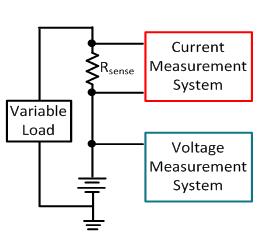
그림 2에서 볼 수 있듯이 부하가 변함에 따라 배터리로부터 AC 전류를 인출하고, 그 결과 높은 정확도의 소형 감지 레지스터상에 AC 전압이 발생된다. 그런 다음에는 신호 왜곡을 최소화하도록 설계된 고정밀 데이터 포착 시스템을 사용해서 이 레지스터상에서 구축된 전압을 증폭시켜 측정한다. 배터리 DC 전압을 측정하는 경우에는 흔히 이 입력을 증폭기를 사용해서 스케일링을 함으로써 ADC가 넓은 전압 범위를 측정할 수 있다. 두 경우 모두, 신호를 디지털화하기 위해 선택하는 ADC는 분해능이 충분히 높아야만 입력 신호에 대한 작은 변화까지도 검출할 수 있다.
이 전압을 측정하기 위해서는 다양한 SAR ADC 중에서 적합한 제품을 선택할 수 있다. 표 1의 TI ADS8900B 제품군은 높은 분해능, 빠른 샘플링 속도, 뛰어난 AC 및 DC 성능을 비롯한 여러 면에서 우수한 제품들이다. 이들 특징은 배터리 건전성 분석 시 발생하는 넓은 동적 범위 신호를 측정하고 전체 입력 범위에서 정확도를 유지하기 위해서 중요하게 요구되는 것들이다.
| ADS890xB | ADS891xB | ADS892xB | |
| 분해능 | 20bit | 18bit | 16bit |
| 속도 | 최대 1MSPS | 최대 1MSPS | 최대 1MSPS |
| 입력범위 | ± 5V | ± 5V | ± 5V |
| INL (Integral Nonlinearity) | ± 1.1 LSB | ± 0.5 LSB | ± 0.3 LSB |
| 신호대 잡음비 | 104.5dB | 102.5dB | 96.8dB |
| 총 고조파 왜곡 | -125dB | -125dB | -125dB |
| 게인 | ± 0.005%FSR | ± 0.005%FSR | ± 0.005%FSR |
| 오프셋 (-40℃~ -125℃) | ± 10.5 LSB | ± 3 LSB | ± 3 LSB |
| 패키지 | 4mm x 4mm QFN | 4mm x 4mm QFN | 4mm x 4mm QFN |
이들 제품은 또한 내부 레퍼런스 버퍼를 채택함으로써 시스템 정확도를 더욱 향상시키며 크기를 줄여준다. 이러한 특징은 특히 휴대형 배터리 분석 시스템을 위해 중요하다. 그림 3은 데이터 수집 시스템에서 외부 및 내부 레퍼런스 버퍼를 비교한다.
정밀 데이터 수집 시스템에서는 레퍼런스 전압 회로가 중요하다. 데이터 컨버터가 입력 신호를 비교할 수 있는 기준점을 제공하기 때문이다. 레퍼런스 전압에 오차가 있으면 입력 신호를 부정확하게 측정하게 된다. 매 변환 사이클마다 ADC는 컨버터의 내부 스위치드 커패시터 아키텍처로 인해서 레퍼런스로부터 상당한 전류를 인출한다. 레퍼런스 버퍼는 변환 시에 발생되는 전압 드룹(voltage droop)을 최소화한다. ADS8900B 제품군은 내부 레퍼런스 버퍼가 ADC의 레퍼런스 핀을 구동하도록 최적화됨으로써 AC 및 DC 성능을 극대화하고 외부 레퍼런스 버퍼를 사용하는 것보다 더 정밀도가 우수한 시스템을 제공한다.
앞서 ADS8900B를 사용함으로써 배터리 분석 시스템이 배터리 건전성을 보다 정확하게 측정할 수 있다는 것을 확인하였다. 하지만 배터리 분석 시스템 외에도 작은 또는 동적인 신호를 정밀하게 측정하고자 하는 어떤 시스템이든 이들 제품이 제공하는 이점을 활용할 수 있다.
Comments
Related news
MCU processing speed improvement with LEA modules
Devices connected to the internet are highly diverse, ranging from industrial sensors used for factory process monitoring and intelligent fire detection systems to home Wi-Fi-connected thermostats and video doorbells, as well as barbecue thermometers. Many fields wish to add connectivity functionality, but implementation has been difficult due to hardware complexity and cost. Due to these constraints, it has recently become feasible with the emergence of user-friendly and cost-effective wireless connectivity modules and ICs.
2017.03.17by 김지혜 기자
USB Type-C, design is important for use regardless of cable
A new type of USB has emerged. As USB Type-C ports become more prevalent in tablets, notebooks, and smartphones, early adopters are experiencing issues due to the use of many USB Type-C cables that are incompatible with the USB 3.1 specification. In previous USB implementations (Figure 1), most systems were able to tolerate less than 10W delivered by non-compliant cables. However, with the adoption of USB Type-C, charging capacity has increased to a maximum of 100W, making the implementation of appropriate system protection functions more complex.
2017.03.29by 김지혜 기자
To make a small, cost-effective Bluetooth speaker
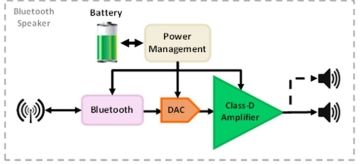
Multiple manufacturers are launching a variety of Bluetooth speakers, ranging from affordable speakers for basic systems to high-end premium models. To develop cost-effective products with competitive performance, design constraints such as solution size, component count, cost, efficiency, and battery capacity must be considered. The basic components inside a Bluetooth speaker can be seen in Figure 1. Batteries are essential in portable applications. The battery must be small and lightweight while providing maximum usage time using cells. The power management block supplies the necessary power to the rest of the circuit. Due to battery limitations, the voltage provided from one or two battery cells is very low. Therefore, a boost converter is required to increase the available voltage for the rest of the system.
2017.04.14by 김지혜 기자
Intel Unveils Next-Generation 'Core Ultra Series 3' and vPro Platform for Enterprise PCs
Intel has officially unveiled the "Intel Core Ultra Series 3" for next-generation enterprise PCs and the latest vPro platform, addressing a wide range of demands from enterprise notebooks to high-performance workstations.
2026.03.26by 배종인 기자
ROHM Launches ESD Protection Diode Compatible with High-Speed Interfaces of 10Gbps or Higher
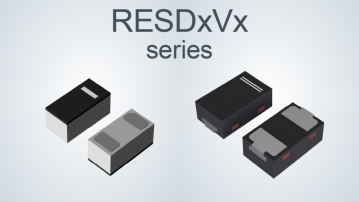
Semiconductor specialist ROHM has developed the 'RESDxVx series' of ESD (electrostatic discharge) protection diodes capable of responding to next-generation high-speed data communication environments exceeding 10Gbps, simultaneously enhancing both signal quality maintenance required in high-speed interfaces and IC protection performance.
2026.03.26by 배종인 기자











