



[Interview] MCU External Memory Expansion, No More Worries
 Published2017.05.04 09:54
If you learn the first design implementation, it will be more accessible.
The development of the Internet of Things, lighting, building automation, capacitive touch sensing, smart mirroring, etc. has increased the use of microcontroller units (MCUs) and expanded new markets. As a result, the demand for MCU memory has also increased, and the density of internal memory has continuously increased, and the demand for external memory expansion has also increased.
The traditional role of microcontrollers is to assist the main processor and control peripheral devices, and the focus is on structural simplicity, easy control, and low power. The current trend is to develop performance to the point where it can replace the design that the main processor handles while maintaining the traditional role as much as possible.
The greatest demand for MCUs occurs when they are driven in a GUI environment. In addition, external memory implementation is necessary when a network node that collects a large amount of data and uploads it periodically, or a temporary data storage facility in the form of FIFOs is required to cope with high-speed network loads. Accordingly, the MCU market is moving toward a direction that demands high storage capacity and low price.
MCU external memory expansion is divided into Serial Interface Memory and Parallel Interface Memory. Serial memory is represented by Serial Flash and EEPROM, which use conventional general-purpose serial interfaces such as SPI or I2C. Quad-SPI and SD card memory are also extensions of serial communication from a circuit perspective.

Parallel memory is a typical form of extended memory, in which both address lines and data lines for accessing the basic memory unit are exposed to an external interface. In order to implement this type of memory in a form in which all exposed address lines are mapped to a part of the processor memory map, it must be designed by considering the entire memory map inside and outside the processor. In addition, address decoding is required to connect or expand multiple parallel memory devices externally.
STMicroelectronics MCU FAE Deputy Manager Taejong Jang explained the difficulty of memory expansion, saying, “In order to support various functions, Quad-SPI and SD card memory among serial memories require understanding of complex protocols, as well as analysis and understanding of the software stack for dedicated hardware control related to this.”
Parallel memory is also difficult to expand because it “requires characteristics and design considerations for connecting to various memories, and the many control lines and address/data lines on the circuit make debugging difficult,” he added.
The MCU called FMC (Flecible Memory Controller) of the STM32 line provides functions by dividing parallel memory into Static Memory, Dynamic Memory, and NAND Flash Memory. It supports SRAM, NOR flash, PSRAM, etc., which have traditional SRAM interface forms as static memory, and SDRAM, referred to as DRAM, as dynamic memory. In particular, it supports connection of NAND flash memory, which is widely used for storage purposes.
ST's MCUs can reduce bottlenecks between the high-speed MCU core and the slow-speed built-in flash memory with the built-in flash acceleration technology called ART accelerator. In addition, they have excellent low-power and high-temperature characteristics and are highly versatile because they use the ARM Cortex-M architecture.
“Most types of memory have clear specifications described in industry standards organizations. Like other technologies such as RTOS, USB, and TCP/IP that are based on basic theories and standards, once you gain experience and learn from the initial design implementation, it will be easier to do it later,” said Vice President Jang, trying to ease the difficulties of external memory expansion.
Accordingly, in the online seminar (eeWebinar) to be held on the 11th, we will cover the overview and usage of Quad-SPI and FMC included in STM32 MCU, as well as details on external memory expansion.
Comments
Related news
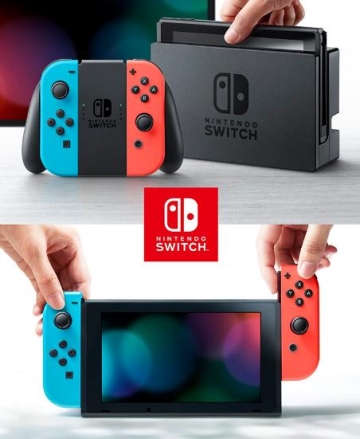
ST, Motion Controller IC and MCU Go into Nintendo
STMicroelectronics (ST) has been selected to supply its advanced semiconductor solutions, including motion sensors and touch screen controller ICs, STM32 microcontrollers, and NFC controller ICs, for Nintendo's latest gaming console, the Nintendo Switch system. The Nintendo Switch is a home gaming console that can be played anywhere, consisting of one console unit, two Joy-Con detachable controllers, a Joy-Con charging grip, and a stand. ST's products are incorporated into the gaming device in a way that implements an intuitive user interface as well as provides NFC-connectivity features that enhance gameplay.
2017.03.24by 김지혜 기자
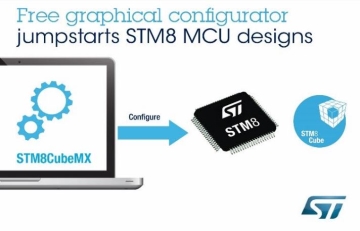
ST, Easy and Fast STM8 Microcontroller Design with Graphical Configurator
STMicroelectronics has launched STM8CubeMX, a graphical configurator that enables easy and rapid initiation of designs based on the 8-bit MCU STM8. STM8CubeMX supports the entire portfolio of mainstream, low-power, and automotive 8-bit STM8 microcontrollers. The newly released tool is provided free of charge and helps designers select 8-bit MCUs from the STM8 product family to meet their design application requirements. Designers can pre-configure the tool in the same way as the MCU implemented on the selected board, enabling immediate development start with STM8 boards based on the ST portfolio.
2017.04.06by 김자영 기자

MCU Market Tectonic Shift, NXP Semiconductors No. 1… Samsung Surges
According to IC Insights, NXP Semiconductor, which acquired Freescale, has captured the number one position in the global MCU market share. According to data released by IC Insights, NXP Semiconductor recorded $2.914 billion in 2016, representing a 116% increase compared to 2015 ($1.35 billion). Renesas, which took second place, recorded $2.458 billion, down 4% from the previous year, while Microchip recorded $2.027 billion, showing a 50% increase from the previous year.
2017.05.04by 신윤오 기자

Intel Unveils Next-Generation 'Core Ultra Series 3' and vPro Platform for Enterprise PCs
Intel has officially unveiled the "Intel Core Ultra Series 3" for next-generation enterprise PCs and the latest vPro platform, addressing a wide range of demands from enterprise notebooks to high-performance workstations.
2026.03.26by 배종인 기자

ROHM Launches ESD Protection Diode Compatible with High-Speed Interfaces of 10Gbps or Higher
Semiconductor specialist ROHM has developed the 'RESDxVx series' of ESD (electrostatic discharge) protection diodes capable of responding to next-generation high-speed data communication environments exceeding 10Gbps, simultaneously enhancing both signal quality maintenance required in high-speed interfaces and IC protection performance.
2026.03.26by 배종인 기자











