



NVIDIA Actively Supports Promising AI Startups with GPUs, Prize Money, and More
 Published2017.05.15 18:26
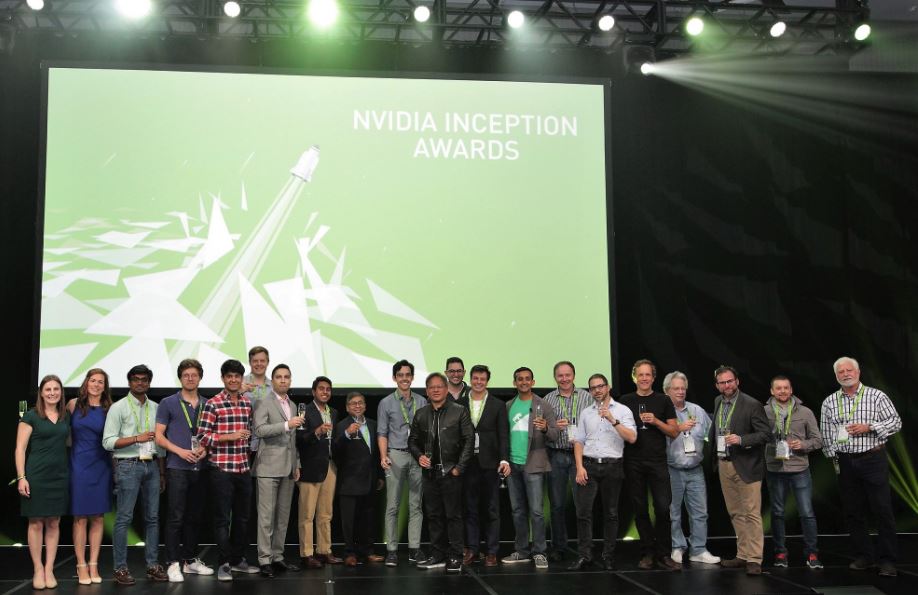
At the Inception Awards ceremony held during the NVIDIA GPU Technology Conference (GTC), six startups that showcased ideas utilizing artificial intelligence were selected and awarded $1.5 million in prize money.
This awards ceremony is the first event of NVIDIA’s Inception virtual accelerator program, through which NVIDIA is currently providing various resources, such as GPUs and networking, to 1,300 AI startups worldwide.
NVIDIA CEO Jensen Huang, along with executives from Goldman Sachs, Fidelity Investments, SoftBank, Microsoft, and Coatue Management, served as judges for this year's winner selection. Based on the presentations of the 14 finalist teams held in San Francisco last month, the judges selected the first and second place teams in three categories: notable emerging companies, top innovative companies, and best social innovation companies.
At the awards ceremony, the first-place teams were each awarded $375,000 and the second-place teams $125,000 in prize money.
Hottest emerging companies
The technology in this category can lower the cost of blood tests by utilizing Athelas's device, which costs only $500. It is currently undergoing FDA review and is being sold to hospitals and home users. Twenty-year-old Athelas founder Tanay Tandon commented, “It is great that NVIDIA, which is shaping and leading the AI industry, is supporting related startups,” adding, “This award will serve as motivation for us to continue moving forward.”
Second place was awarded to Focal Systems, which is introducing artificial intelligence to grocery stores. Focal Systems, located in Menlo Park, California, developed a deep learning algorithm that installs GPU servers on shelves and mounts tablet computers and cameras on shopping carts, enabling shoppers to find products, check sale items, and pay for purchased groceries without having to go to the checkout counter. If the product sells out, a notification is provided to the distributor.
Most disruptive companies
Deep Instinct, based in Israel, took the top spot. Cybersecurity emerged as a major issue following the incident last year in which Russia hacked Democratic Party computers during the U.S. presidential campaign. In response, the company developed GPU-accelerated deep learning software capable of detecting malware in real time. Its neural network, trained on hundreds of millions of files, learns to detect security threats and leverages that experience to predict new attacks. David Eli, co-founder and CEO of Deep Instinct, noted that while over one million new malware threats are discovered daily, most antivirus software focuses only on existing threats.
Second place went to Smartvid.io, based in Cambridge, Massachusetts. Smartvid.io believes that while safety experts inspect sites, that is not enough. Smartvid.io developed an AI inspector capable of detecting hazards in videos collected from construction sites.
Social innovation
The winner of the Social Innovation Enterprise category is Genetesisek, based in Cincinnati. In the United States, there are 10 million emergency room visits due to chest pain. Currently, it is very difficult to determine whether chest pain is related to heart disease, such as a heart attack, or if there are other causes. In some cases, electrocardiogram results are insufficient to draw a conclusion, so it is common for patients to have to endure several hours of additional testing.
Genetesis is currently conducting clinical trials for CardioFlux, a non-invasive biomagnetic imaging system that measures minute magnetic fields generated by the heart. GPU-based CardioFlux generates a 3D map of the heart's electrical performance in just 90 seconds, providing medical professionals with a fast and accurate method to diagnose blocked blood vessels and pinpoint their exact locations.
Ranked second is San Francisco-based Bay Labs. Bay Labs aims to address heart disease issues by enabling general practitioners to utilize affordable ultrasound scanners. The company aims to improve the convenience of interpreting scan data by training GPU-accelerated deep learning software to recognize ultrasound images. Bay Labs stated that utilizing its solution would increase the number of users by approximately eight times compared to existing ultrasound equipment, and reduce the cost per scan from $400 to $50.
Jensen Huang, Founder and CEO of NVIDIA, who personally attended the event to congratulate the winners, stated, “Thanks to NVIDIA’s journey to create a new computing platform 10 years ago, the startups gathered here today have been able to make new discoveries and contribute to the world,” adding, “I am truly moved by the achievements of the promising startups gathered here.”
Comments
Related news
NVIDIA improves Mental Ray features for 3ds Max
Nvidia announced new feature improvements to Mental Ray for 3ds Max at the Nvidia GPU Technology Conference. The new Mental Ray for 3ds Max, provided free of charge by Nvidia, includes workflow updates and enhanced MDL (Material Definition Language) support capabilities in addition to existing features used by 3ds Max users. Additionally, through convenient GI-Next global illumination, it achieves rendering up to 7 times faster when using high-end GPUs. 3ds Max users can leverage supported processors in their machines to create diverse scenes and renderings with Nvidia Mental Ray regardless of resolution. Mental Ray also provides complete backward compatibility for all features and data. A license is required only for network rendering.
2017.05.12by 김지혜 기자
SKT-NVIDIA Begin Joint Research on Autonomous Vehicles
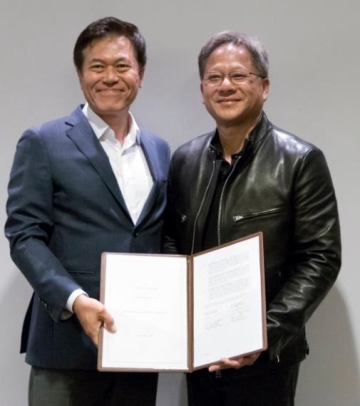
SK Telecom announced that it has concluded a strategic agreement with NVIDIA on autonomous driving and has begun joint technology development. Through the agreement, the two companies decided to collaborate in various fields including ▲production of 3D ultra-precision maps (HD Map), a core autonomous vehicle technology ▲vehicle communication (V2X, etc.) based on next-generation networks such as 5G ▲autonomous driving platform serving as the 'brain', and other areas. SK Telecom's technology will be combined with NVIDIA's hardware and software for deep learning and inference, including vehicle-mounted artificial intelligence computers (NVIDIA Drive PX2) and artificial intelligence supercomputers (NVIDIA DGX-1).
2017.05.15by 김지혜 기자
[Decisive IT Scene] "The New 'Moore's Law' is in GPU Computing Power"
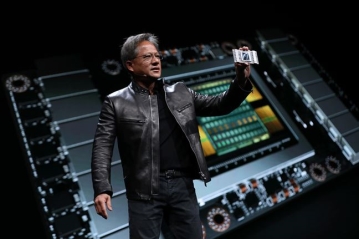
Jensen Huang, founder and CEO of NVIDIA, made this declaration during the keynote speech at the NVIDIA GPU Technology Conference (GTC) held at the McEnery Convention Center in San Jose, California, USA from the 8th to the 10th local time. On this day, CEO Jensen Huang introduced various technologies leading the future of artificial intelligence, including Volta, a new GPU architecture delivering 5x performance improvement compared to the previous generation.
2017.05.15by 신윤오 기자
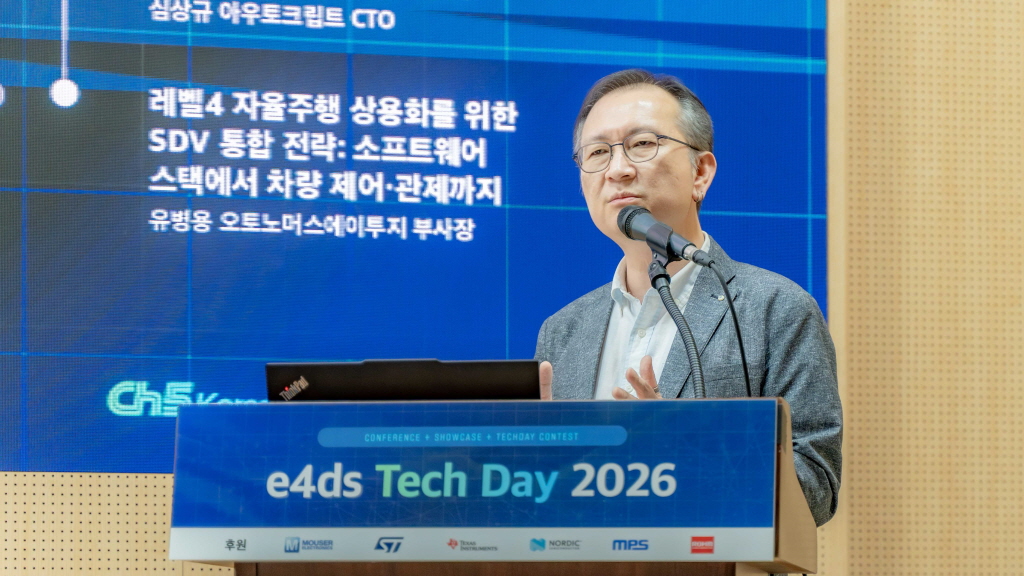
[e4ds Tech Day 2026 ⑨] Sim Sang-gyu, Autocrypt CTO: "In the Physical AI Era, Automotive Security Must Extend Beyond the Vehicle"
At e4ds Tech Day 2026, Sim Sang-gyu, CTO of Autocrypt, explained automotive cybersecurity strategies in the era of Physical AI and SDV (Software-Defined Vehicle). Automobiles are evolving as part of an ecosystem connected to AI, cloud, chargers, IoT, and robots, and he emphasized that the scope of security must expand beyond the vehicle interior to the entire connected environment. In particular, AI model tampering, adversarial attacks, OTA updates, and EV charger hacking were identified as major threats. He explained that response measures require zero trust, AI model integrity protection, intrusion detection, Security by Design and Default, and full lifecycle security management, and that proactive security system establishment beyond regulatory compliance is critical for securing future mobility competitiveness.
2026.10.12by 배종인 기자
NVIDIA to Invest $1 Billion in U.S. Science Over Next Five Years
NVIDIA has announced plans to invest $1 billion over the next five years to strengthen U.S. scientific and technological competitiveness. The company will enhance cutting-edge artificial intelligence research and development capabilities in key areas including quantum computing, healthcare, and energy security, while expanding support for higher education research institutions and cloud service providers. NVIDIA is participating as a major industry partner in the White House Office of Science and Technology Policy's Genesis Mission, and is promoting supercomputer construction in collaboration with national laboratories including Argonne and Los Alamos.
2026.10.12by 배종인 기자











