


Power Scaling, Sequencing, and Analog Implementation
 Published2017.05.19 09:39
전원 시퀀싱은 모든 설계의 필수적인 부분이다. 특히 여러 전원 레일을 활용하는 복잡한 시스템에서는 더욱 중요하다. FPGA, ASIC, PLD, DSP, ADC, 마이크로컨트롤러와 같은 현대의 고성능 프로세싱 디바이스에는 코어, 메모리, I/O와 같은 내부 회로에 전원을 공급하기 위한 여러 전압레일이 있어야 한다. 안정적으로 작동하고 더 높은 효율을 내기 위해서는 특수한 전압 레일 전력 업/다운 시퀀싱이 필요하다.
전압 및 전력 스케일링 기술은 소형의 고밀도 집적 회로에 매우 강력하고 다양한 기능의 전원 관리 시스템을 구현해 전력 손실을 줄이고 디바이스 온도를 최적화하여 시스템의 고성능을 유지한다. AVSO(Adaptive voltage-scaling optimization)는 전압 스케일링 구현 기술 중 하나이다.
AVSO 구현에는 디지털 또는 아날로그 방식 등 다양한 방법이 있다. 가장 많이 이용되는 방식은 PMBus 또는 I2C 인터페이스를 사용하는 것으로 초기 전원 전압을 프로그램하여 적절한 정확도로 ASIC, FPGA 또는 마이크로 프로세서를 작동시킬 수 있다. 프로세서는 부트-업(boot-up) 시퀀스를 완료하면 PMBus 또는 I2C 명령 세트를 통해 전압 레귤레이터와 통신한다. 이러한 통신은 레귤레이터에게 호스트의 성능 요구에 맞추어 출력 전압 레벨을 조절하도록 명령하는 데 있다. 가장 잘 알려진 표준 명령은 VOUT_COMMAND와 VOUT_MARGIN이다. 상호간 데이터 교환을 원활하게 하기 위해 호스트와 전압 레귤레이터는 모두 동일한 디지털 통신 프로토콜을 구현할 필요가 있다.
때때로 디지털 구현은 최종 시스템에서 하드웨어, 소프트웨어 또는 펌웨어의 부족으로 실행 가능한 옵션이 되지 못한다. 여전히 전력 소모를 최적화할 필요가 있는 시스템의 경우에는 레퍼런스 입력(REFIN)을 사용하는 아날로그 전압 레귤레이터를 고려할 수 있다. TI의 TPS548D21는 초소형 5mm x 7mm stacked-clip QFN 패키지에 40A 고성능 동기식 스텝다운 컨버터를 완전 통합하고 AVSO 및 완전 차동 감지를 지원한다. (그림 1 참조).
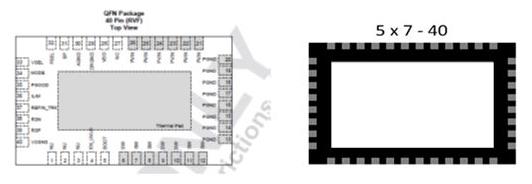

TPS548D21을 사용하면 전압 스케일링과 시퀀싱을 매우 쉽게 관리할 수 있다. TPS548D21는 MODE 핀 스트랩 구성을 통해 트래킹(전압 스케일링) 또는 시퀀싱 모드로 동작할 수 있다.
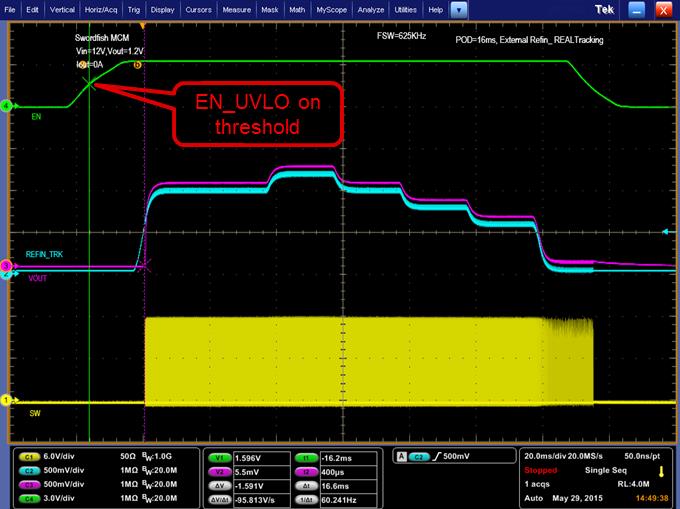
전압 스케일링/트래킹의 경우 레퍼런스 트래킹 입력(REFIN_TRK)은 외부 레퍼런스 전압 소스에서 TPS548D21의 레퍼런스 전압을 설정할 수 있게 한다(그림 2). 입력 임피던스는 100kW보다 훨씬 낮아야 하지만, 이 전압 소스는 0V ~ 1.25V 사이의 어느 전압이나 될 수 있다. 외부 전압 소스가 두 전압 레벨 사이(0.5V ~ 1.25V 사이)에서 위 아래로 변동할 때 슬루율은 1mV/µsec가 넘지 않도록 제어되어야 한다. 트래킹 정확도는 0.5V ~ 1.25V 사이에서 1% 미만까지 가능하다.
TPS548D21의 외부 시퀀싱 기능은 TPS548D21의 REFIN_TRK 핀에 동일한 전압 소스를 인가함으로써 시동 및 셧다운 시 여러 컨버터에 대한 비율계량 방식(ratiometric)의 시퀀싱을 가능하게 한다(그림 3). 외부 트래킹(시퀀싱)을 수행하도록 TPS548D21를 프로그램할 경우, REFIN_TRK 전압은 0V로부터 시작해야 하며 외부에서 인가되는 램프는 파워-온 지연이 완료되면 램프해야 한다. 램프 시간은 지속 시간이 1ms보다 길어야 한다.
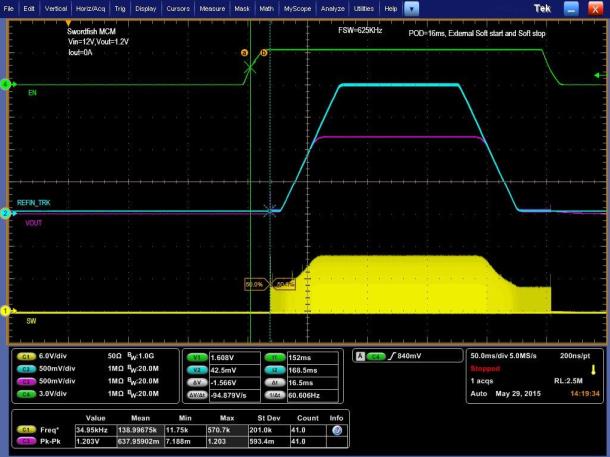
ASIC 또는 FPGA에 전원을 공급할 경우에는 전압 스케일링과 시퀀싱 관리에 완전한 아날로그 방식을 적용할 수 있다.
Comments
Related news
Do you know how to optimize a voltage monitor?
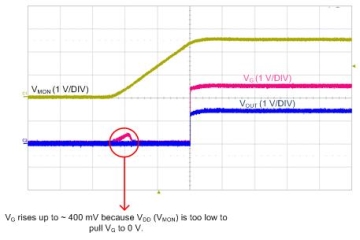
Various applications and systems require voltage supervisors. Voltage supervisors have been monitoring analog voltages in digital circuits. TI's TL7705, the first voltage supervisor released in 1983, consumes 1.8mA, is offered in PDIP (plastic dual-inline package), and is still in use today. Recent products feature diverse characteristics such as ultra-low quiescent current (TPS3839), ultra-compact package (TPS3831), dual channel (TPS3779/80), high accuracy (TPS3702), and multi-channel multi-function power monitoring (TPS386000). By selecting from various product options, voltage supervisor functionality can be optimized with simple circuit additions. Depending on the application, some require wider voltage hysteresis than what standard supervisors provide. One method to increase hysteresis in adjustable supervisors is to add a resistor between the output pin and the input voltage divider.
2017.04.20by 김지혜 기자
Are you worried about IoT usage and security?
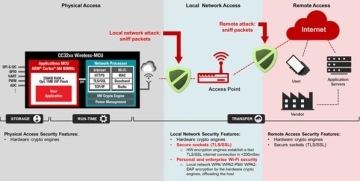
As the Internet of Things (IoT) has become activated, most devices in our surroundings are now connected to the internet. Any and all devices connected to the internet can be subject to local or remote attacks. Attackers can compromise connected devices to steal corporate intellectual property stored in systems, gain access to user data, or maliciously manipulate systems to cause harm to users. Security threats in IoT are a critical issue. We hold several misconceptions about how to address them. As evidenced by the massive distributed denial of service (DDoS) attack that occurred at the end of last year, which experts have called the largest in history, even seemingly innocuous products such as home digital video recorders (DVRs) can be maliciously compromised and used as "botnets" to disrupt the operations of third-party entities. Last year's attack impacted services such as Twitter and PayPal, but similar attacks could be directed at large-scale smart infrastructure technologies such as power grid systems. According to a 2016 survey conducted by Kaspersky Lab, some enterprises and organizations have spent over 1.6 million dollars to address a single DDoS attack.
2017.05.02by 김지혜 기자
Methods to lower industrial system design temperatures
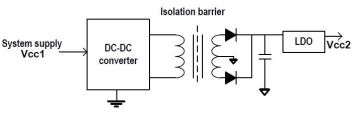
Excessively high temperatures are not only harmful to people. Machines also easily suffer damage from temperatures that are too high. As demand for industrial applications such as factory automation and grid infrastructure equipment increases, there is a growing need to add more functionality to systems. Accordingly, the burden of achieving optimal performance while not raising the temperature of power management systems that supply power to various circuits is increasing. Data isolators can easily provide signal isolation, but data isolation alone is not sufficient. Power must also be isolated together. In some cases, two isolated power supplies are provided to directly supply power to the primary and secondary sides of the isolator, but some applications do not have a secondary power source. In these cases, a secondary power source that is isolated from the primary power must be generated.
2017.05.11by 김지혜 기자

Intel Unveils Next-Generation 'Core Ultra Series 3' and vPro Platform for Enterprise PCs
Intel has officially unveiled the "Intel Core Ultra Series 3" for next-generation enterprise PCs and the latest vPro platform, addressing a wide range of demands from enterprise notebooks to high-performance workstations.
2026.03.26by 배종인 기자
ROHM Launches ESD Protection Diode Compatible with High-Speed Interfaces of 10Gbps or Higher
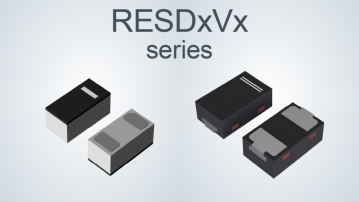
Semiconductor specialist ROHM has developed the 'RESDxVx series' of ESD (electrostatic discharge) protection diodes capable of responding to next-generation high-speed data communication environments exceeding 10Gbps, simultaneously enhancing both signal quality maintenance required in high-speed interfaces and IC protection performance.
2026.03.26by 배종인 기자











