



[Planning-Autonomous Vehicles⑤] 'Running SW' Artificial Intelligence Cars, Software Dominates
 Published2017.05.22 16:03
If there is a technology that best fits the phrase, “dreams become reality,” it would be the self-driving car. When you call a car, it comes to you on its own, and it drives to its destination on its own. Self-driving cars recognize and avoid obstacles while driving, and provide various conveniences and information to the owner. Although it will take some time for fully self-driving cars to be commercialized, the so-called “semi-self-driving car” technology is becoming increasingly sophisticated. Now, it is easy to see advertisements for cars with self-driving functions, and they have become a deep part of our lives. This magazine will serialize the self-driving car project over the next 11 issues. Starting with the self-driving car industry trend, it will cover semiconductor components such as radar, lidar, and camera sensors, communications, precision maps, SW platforms, artificial intelligence, security, and K-City services. We ask for your continued support. <Editor’s Note>
Electrified cars are often referred to as “running semiconductors.” However, as the importance of software to operate these electronic devices grows, we may now be able to call cars “running software.”
While the trend has been to install software (SW) to operate various functions installed in cars for the stability and convenience of cars, cars are increasingly becoming software-based. Vehicle software can be divided into electrical component SW platforms and infotainment platforms.
In the SW platform for electric components, the open automotive standard software AUTOSAR (automotive open system architecture) is at the center. AUTOSAR has about 50 member companies centered around 9 core partners: BMW, Bosch, Continental, Daimler, Ford, GM, Peugeot Citroen, Toyota, Volkswagen, and 7 OEMs and 2 Tier 1 companies. The purpose of AUTOSAR is to solve the problem of increasing software complexity as electronic devices increase and to increase software reusability to reduce costs.
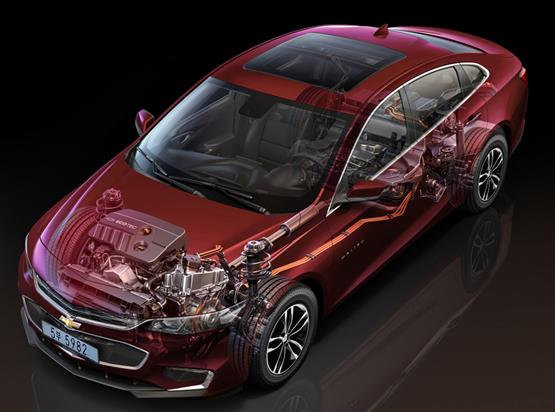
AUTOSAR is a common platform that separates the hardware and application layers and can be used if the hardware meets certain requirements. In simple terms, it can be thought of as an OS like Android or iOS. Gradually, the proportion of AUTOSAR in vehicle ECUs increased, and in 2015, a vehicle that applied AUTOSAR 100% was released. It came at a time when OEMs are actively expanding their demand for ECUs based on AUTOSAR.
AUTOSAR is divided into the Classic Platform, which has the type of data for connecting ECUs inside a vehicle, and the Adaptive Platform, which can create ECUs that connect the inside of a vehicle to the external network, was released last April. Adaptive Auto was created with self-driving cars in mind, with the ability to develop AI based on Linux.
After a self-driving car recognizes its surroundings, the question arises as to how to control it, and at this time, the platform is important. In September of last year, the United States released guidelines for legislation related to self-driving. The guidelines state that self-driving cars must transmit their self-driving records to the cloud and that users must be able to view the records. This means that the car must be connected to an external network. The adaptive platform is needed to connect to an external network. It is the software that serves as the foundation for self-driving cars.
“Adaptive Platform can generate code as open source. Since there are no tools developed yet, the company that develops tools first will take the lead,” said Kim Gap-hyun, CEO of Popcorn, which has an AUTOSAR tool vendor ID.
OEMs, IT companies are rushing to prepare infotainment
Infotainment, which refers to a multimedia system that can be enjoyed in a car, such as music, movies, the Internet, and information, is a field in which software technology has been introduced early on.
Despite the high barriers to entry into the industry, the infotainment sector was a breakthrough that allowed IT companies to easily enter the automotive sector. In particular, as artificial intelligence was fully incorporated into the automotive industry, this sector became the one that IT companies were most interested in. For example, if two-way data with customers is accumulated through artificial intelligence voice recognition, equipment or services that can respond to customer requests can be provided based on this.
Thanks to the active participation of large IT companies, compatibility issues that had been raised as a drawback have also been resolved. In the early market, since each auto OEM developed their own infotainment system with their own OS, the specifications were different for each company. Apple released 'CarPlay', an OS based on iOS, and provided connectivity that could be used in cars, and Google also released 'Auto' based on Android, and development of systems utilizing this followed. Apple and Google are providing the OS to over 40 OEMs for free in exchange for receiving vehicle user data.
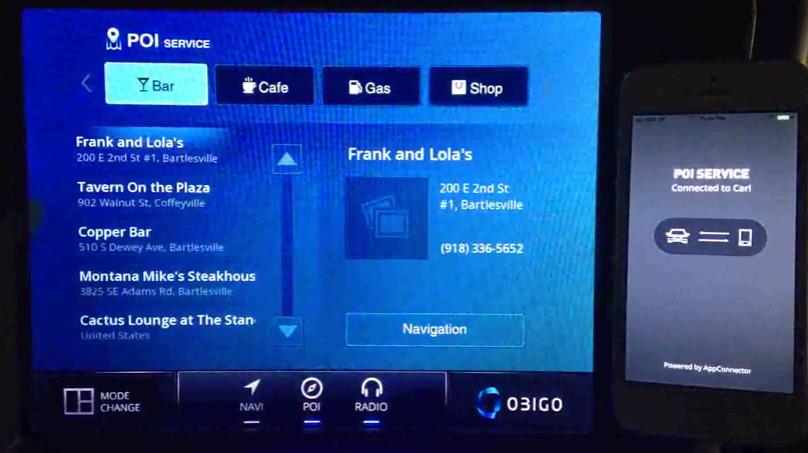
In China, which has the largest automobile market, portal company Baidu developed 'CarLife' tailored to the Chinese market and launched it with the same strategy as Apple and Google. These companies ultimately aim to create value-added businesses based on data collected through embedded vehicle OS.
Alibaba has already commercialized the business model that Google, Apple, and Baidu are drawing up in 2015. It has developed 'WinOS' in cooperation with Shanghai Automotive, and is selling cars in shopping malls and operating them in conjunction with car centers, gas stations, insurance companies, and financial services. It is doing online and offline things that existing automobile OEMs used to do offline.
Automobile OEMs did not stay still either. In order to differentiate themselves from IT companies, they decided to independently develop an OS for vehicles and formed an alliance called GENIVI. GENIVI creates an open source development platform and standards to aid in the development of in-vehicle infotainment (IVI).
Domestic companies also need to prepare for infotainment
In Korea, Obigo (CEO Hwang Do-yeon), which provided mobile web browsers, commercialized a vehicle web browser based on an HTML5 web browser. The vehicle browser plays a role in enabling applications to run on the OS. Since cars have a different format from smartphones, a separate tool such as a browser is required. It is scheduled to be built into BlackBerry QNX's vehicle OS starting in 2018.
In addition, SKT and KT are also responding positively to the entry into the infotainment business. SKT introduced a service that linked its AI speaker, Nugu, with the Kia K5, and KT demonstrated a service that linked Giga Genie with the Hyundai Ioniq.
According to Gartner, the infotainment system market is expected to grow rapidly to a scale of 270 billion dollars (approximately 304 trillion won) in 2020, so cooperation between mobile carriers and automotive electronics companies is also expected.
Kim Min-seok, director of Obigo, said, “What we should pay attention to in the infotainment market recently is artificial intelligence. It is evolving beyond the stage of simply providing music or information in the car to enable services such as car sharing, parking, and home IoT by connecting to external servers,” and predicted the future direction of infotainment development by saying, “Expandable commercialization based on the cloud is in preparation.”
Comments
Related news
[Feature - Autonomous Vehicles ②] Radar IC Market Seeing More 'Players'; Will Competition Heat Up Among Semiconductor Companies?
If there is a technology where the phrase "dreams have become reality" fits best, it would surely be autonomous vehicles. You summon a car and it comes running on its own, then drives to your destination by itself. Autonomous vehicles recognize and avoid obstacles during driving while providing various convenities and information to the owner. While full autonomy commercialization will take some time, so-called "semi-autonomous driving" technology is becoming increasingly sophisticated. Nowadays, advertisements for automobiles equipped with autonomous driving functions are easy to see, bringing the technology deep into our daily lives. This publication will serialize an autonomous vehicle planning series over the course of 11 installments. Beginning with autonomous vehicle industry trends, we will cover semiconductor components such as radar, lidar, and camera sensors, as well as communications, precision mapping, software platforms, artificial intelligence, security, and K-City services. We appreciate your continued support and interest. <Editor's Note> The radar IC market, one of the key sensors for autonomous driving, is heating up increasingly.
2017.04.17by 신윤오 기자
[Planning - Autonomous Vehicles ③] Camera, Lidar “Cars finally have eyes”
As commercialization of Level 3 autonomous driving technology begins, interest in advanced driver assistance systems is also increasing. ADAS systems serve as a foundation for autonomous vehicles, and while they initially primarily functioned to inform drivers of road conditions through notifications, they have recently advanced to the level of automatically controlling the steering wheel, brakes, and other components. The Genesis EQ900 is equipped with advanced driver assistance systems (ADAS) including Advanced Smart Cruise Control (ASCC), Blind Spot Detection (BSD), Autonomous Emergency Braking (AEB), Driver Attention Alert (DAA), Smart High Beam (SHBA), and front seat pre-active seatbelts. The new i30 wagon incorporates ADAS technologies such as Adaptive Cruise Control (ACC), AEB, and Lane Keeping Assist System. For these ADAS systems to operate, detection through cameras, lidar, and radar sensors is essential. When examining ADAS system installation by vehicle type, except for some small vehicles, either cameras alone or a combination of radar and stereo cameras are applied. Cameras can cover a range of up to 100m ahead, surround view, and rear areas. They function in a role that provides intuitive assistance to drivers by enabling actual visual observation. For autonomous driving, a minimum of 5 or more camera sensors per vehicle must be installed to achieve 360-degree full coverage detection.
2017.04.24by 김지혜 기자
[Planning-Autonomous Vehicles④] Free WAVE Communications, Together with Cellular, Takes Responsibility for Vehicle Communications
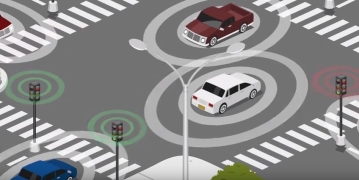
Even if autonomous vehicles are equipped with the most advanced sensor capabilities, ambient environmental information is necessary to handle unexpected situations for complete autonomous driving. Sensors and cameras have limitations when going over hills or crossing bridges with dense fog. This is why vehicle-to-vehicle communication (V2V) as well as vehicle-to-everything communication (V2X) are necessary. Vehicle communication typically uses DSRC, WAVE (802.11p), WLAN (802.11a), and similar standards. DSRC (Dedicated Short Range Communication) is a bidirectional communication method for exchanging various services and information between roadside base stations and vehicle terminals, making it the most suitable communication method for ITS (Intelligent Transport System). WAVE (Wireless Access in Vehicular Environment), known as vehicular wireless communication (IEEE 802.11p), is medium- to short-range wireless data communication that supports public safety and private communication through roadside and inter-vehicle communication. This high-speed vehicular wireless communication technology supports V2V and V2I (vehicle-to-infrastructure) in high-speed driving situations, enabling emergency transmission of hazard information on roads and vehicles ahead, safety services that prevent rear-end collisions, and can be utilized in building various next-generation intelligent transportation systems such as multi-lane non-stop tolling services through vehicle network technology. In February this year, the U.S. National Highway Traffic Safety Administration (NHTSA) made vehicle-to-vehicle communication technology (V2V) mandatory on newly released vehicles. By 2022, all new vehicles in the United States are expected to be equipped with V2V technology. Hyundai Motor announced plans to equip WAVE terminals on three vehicle models by the end of 2019, and the Ministry of Land, Infrastructure and Transport is operating testbeds following the Seoul-Sejong Smart Highway project with a C-ITS (Cooperative Intelligent Transport Systems) project between Daejeon and Sejong.
2017.05.08by 김자영 기자
[e4ds Tech Day 2026 ⑨] Sim Sang-gyu, Autocrypt CTO: "In the Physical AI Era, Automotive Security Must Extend Beyond the Vehicle"
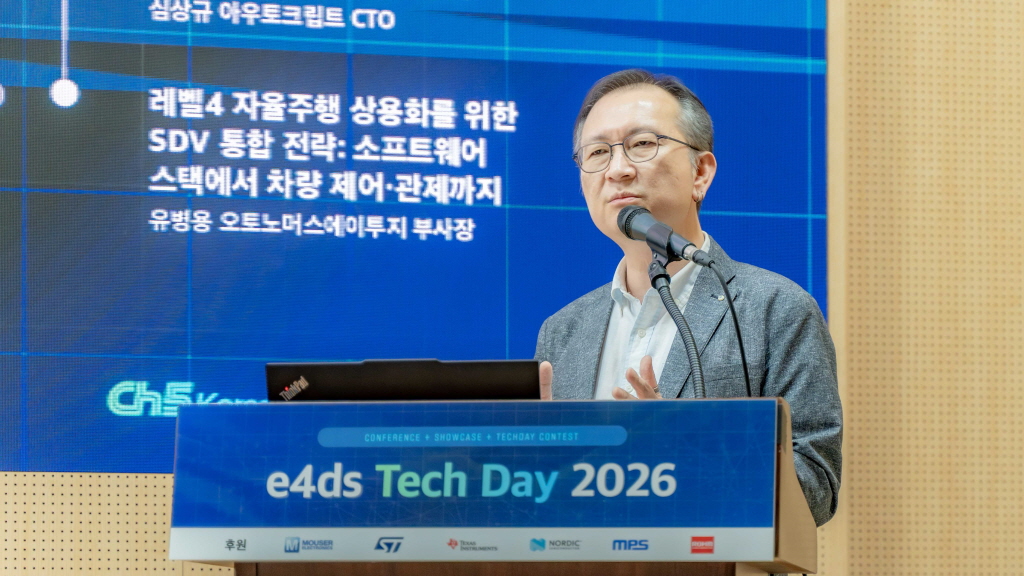
At e4ds Tech Day 2026, Sim Sang-gyu, CTO of Autocrypt, explained automotive cybersecurity strategies in the era of Physical AI and SDV (Software-Defined Vehicle). Automobiles are evolving as part of an ecosystem connected to AI, cloud, chargers, IoT, and robots, and he emphasized that the scope of security must expand beyond the vehicle interior to the entire connected environment. In particular, AI model tampering, adversarial attacks, OTA updates, and EV charger hacking were identified as major threats. He explained that response measures require zero trust, AI model integrity protection, intrusion detection, Security by Design and Default, and full lifecycle security management, and that proactive security system establishment beyond regulatory compliance is critical for securing future mobility competitiveness.
2026.10.12by 배종인 기자

Practical HIL Construction Strategy for Automotive and Off-Highway Controller Validation
As vehicle E/E architecture transitions to zonal structures and shifts to software-defined vehicles (SDV), the number of controllers (ECUs) requiring validation and software complexity are surging dramatically. Meanwhile, real vehicle testing cannot provide repeated verification under identical conditions and entails lead time and safety concerns. This white paper explains the principles of HIL (Hardware-in-the-Loop) validation and the structure of the NI platform composed of PXI, SLSC, and VeriStand, and through two actual implementation cases—Camera Record & Replay HIL for In-Cabin Monitoring Controller (ICMU) and Forklift Controller (VCU) HILS—describes how controller-level regression testing becomes possible. Additionally, it explicitly states application boundaries and limitations, such as lack of A2B support.
2026.10.12by 편집부











