



[Reporter's Notebook] Would you like to place an AI speaker at your father's house?
 Published2017.05.22 17:37
Domestic companies are also actively working. KT and SK have released speakers in the domestic market, while LG, Naver, and KakaoTalk are in the preparation stage. SK announced that NUGU, which began sales in September of last year, has surpassed 100,000 units sold. In June, the company plans to launch Aibril, a Korean version of Watson in collaboration with IBM's Watson. An SK C&C Aibril representative stated, "There were no open API companies in Korea, and Watson has already emerged as a powerhouse in natural language processing. We chose a strategy focused on securing data rather than dedicating time to building a platform."
KT's Giga Genie introduced a speaker integrated with a set-top box to existing Olleh TV customers, and KakaoTalk launched Kakao Brain in February to develop artificial intelligence.
Naver unveiled its artificial intelligence, Clova, before launching its speaker. The speaker, Wave, is scheduled to be released this summer, along with the display-equipped Face. Naver announced that it will differentiate itself beyond its auditory-reliant speakers by leveraging AI technology that leverages all five senses. Furthermore, it plans to open the Clova API SDK. This is a strategy to build an ecosystem based on Clova, just as Amazon attracted third-party companies by releasing the Alexa SDK in 2015, and now has over 10,000 technologies that can be implemented through Alexa.
So why are so many companies rushing to release voice assistant speakers?
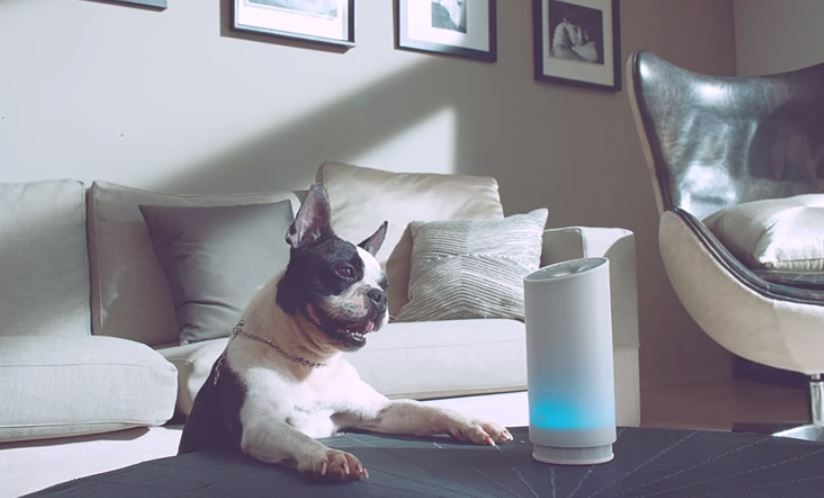
SK NUGU promotional video
Voice assistant speakers are a three-tiered system comprised of a platform API that supports convenient use, customized environment data tailored to the user, and the speaker itself. Built on a single algorithm, voice assistant speakers not only play music and radio, but also recommend books and movies the user might like, and even decide whether to approve credit card transactions—all within the same algorithm.
In the B2B market, call centers can operate in finance, communications, and distribution, producing different outcomes. Conversely, the B2C market is divided into various media within the same algorithm. As more data accumulates, more natural responses become possible. Therefore, companies are developing their own voice input and releasing their own speakers to ensure they don't miss the "starting point" of AI. Ultimately, what these companies want is customer data.
This is confirmed by an industry insider. "Speakers are merely a transitional step toward data accumulation," he said, adding that speakers are currently achieving results simply by eliminating remote controls in the home. The story goes that the voice assistant speaker was created at the intersection of companies' data and customers' curiosity.
The problem is that, when looking at speakers alone, the service offered to customers doesn't differ significantly regardless of which device they choose. The technology is still largely the same, and its uses are limited to audio speakers, limited information, and control. Some argue that it's more important to achieve technological advancements through a common API than for individual companies to develop their own.
What matters is how consumers perceive voice assistant speakers. While it's important for companies to create a market, a market can only be formed if consumer needs are adequately reflected. It's crucial to consider whether the device offers sufficiently "intelligent" functionality in real life, worthy of the label "artificial intelligence." While securing data to expand the potential market is crucial for companies, they must also focus on transforming this consumer curiosity into a true "assistant" that understands users' minds. Mere curiosity doesn't guarantee market survival.
Comments
Related news
KT, now ask GiGA Genie about the stock market
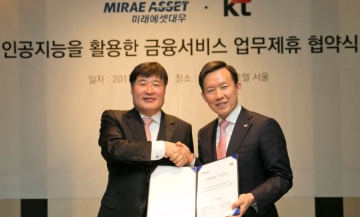
KT announced on the 5th that it has signed a Memorandum of Understanding (MOU) with Mirae Asset Daewoo on "provision of financial services utilizing artificial intelligence." Key officials from both companies, including KT Mass CEO Lim Heon-mun and Mirae Asset Daewoo Vice Chairman Choi Hyun-man, attended the signing ceremony. Through this strategic partnership, the two companies plan to provide new financial services by integrating Mirae Asset Daewoo's financial information with KT's "GiGA Genie" voice recognition and artificial intelligence technology. Services utilizing voice recognition such as ▲stock price and index inquiries, ▲market information, and ▲stock and financial product recommendations are planned for initial implementation, with plans to expand to non-face-to-face account opening services and customer convenience services utilizing digital new technologies.
2017.04.06by 김지혜 기자
Amazon to enable 'full process automation' of clothing from order to production and delivery
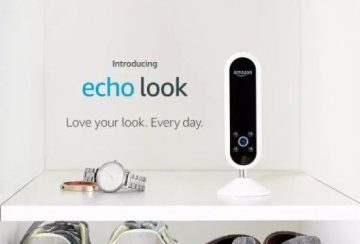
Amazon has unveiled Echo Look, a hands-free camera powered by its AI voice assistant Alexa. Echo Look is an elongated oval-shaped stand-type hands-free camera capable of depth sensing, enabling full-body selfie shots with blurred backgrounds. The camera features four LED lights for shooting, and can capture full-body images or a complete 360-degree view of clothing from front and back. It supports voice commands, and for 360-degree images, users can swipe left and right on the screen to view different angles.
2017.04.28by 김자영 기자
"Who" has surpassed 100,000 units in sales and 100 million conversations.
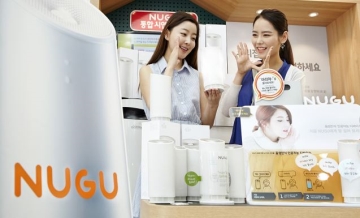
SK Telecom's AI device 'Nugu', launched as the first of its kind in Korea, has exceeded 100 million conversations and is bringing innovation to daily life. In particular, over the past month, users have actively used emotional keywords such as 'sleep well~', 'I love you', 'I'm bored', and 'thank you' when talking to 'Nugu', indicating that 'Nugu' is establishing itself not merely as a voice recognition device but as a friend to users. SK Telecom (CEO and President Park Jeong-ho, www.sktelecom.com) announced on the 3rd that the number of times users have spoken to 'Nugu' has exceeded 100 million over seven months since its launch last September. The average daily conversation count also reached 500,000.
2017.05.04by 신윤오 기자
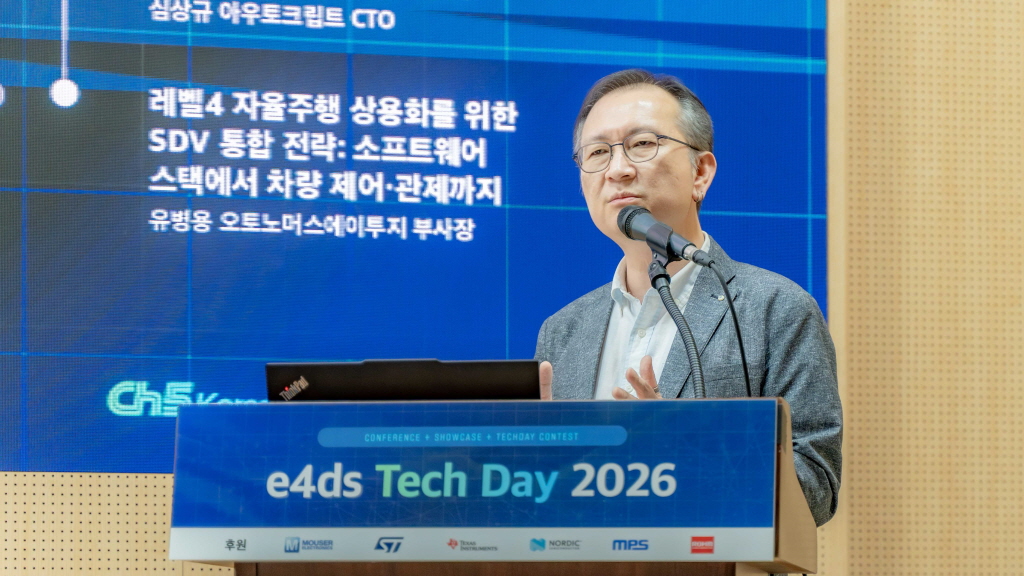
[e4ds Tech Day 2026 ⑨] Sim Sang-gyu, Autocrypt CTO: "In the Physical AI Era, Automotive Security Must Extend Beyond the Vehicle"
At e4ds Tech Day 2026, Sim Sang-gyu, CTO of Autocrypt, explained automotive cybersecurity strategies in the era of Physical AI and SDV (Software-Defined Vehicle). Automobiles are evolving as part of an ecosystem connected to AI, cloud, chargers, IoT, and robots, and he emphasized that the scope of security must expand beyond the vehicle interior to the entire connected environment. In particular, AI model tampering, adversarial attacks, OTA updates, and EV charger hacking were identified as major threats. He explained that response measures require zero trust, AI model integrity protection, intrusion detection, Security by Design and Default, and full lifecycle security management, and that proactive security system establishment beyond regulatory compliance is critical for securing future mobility competitiveness.
2026.10.12by 배종인 기자

NVIDIA to Invest $1 Billion in U.S. Science Over Next Five Years
NVIDIA has announced plans to invest $1 billion over the next five years to strengthen U.S. scientific and technological competitiveness. The company will enhance cutting-edge artificial intelligence research and development capabilities in key areas including quantum computing, healthcare, and energy security, while expanding support for higher education research institutions and cloud service providers. NVIDIA is participating as a major industry partner in the White House Office of Science and Technology Policy's Genesis Mission, and is promoting supercomputer construction in collaboration with national laboratories including Argonne and Los Alamos.
2026.10.12by 배종인 기자











