



Highly likely that the group behind the WannaCry ransomware attack is the same one that attacked Sony Pictures
 Published2017.05.23 17:39
Analysis of the code and infrastructure used in WannaCry confirmed a technical correlation.
Claims have been raised that the 'WannaCry ransomware,' which has recently spread globally, has a high correlation with the cyber attack group Lazarus.
Symantec (www.symantec.co.kr) has analyzed that, following a thorough investigation, the tools and infrastructure used in the WannaCry ransomware attack are significantly similar to the technology used by the Lazarus Group, which carried out the hacking of Sony Pictures and the theft of $81 million from the Central Bank of Bangladesh. Based on this, Symantec is convinced that the attack was carried out by the same group and therefore analyzes that the Lazarus Group is highly likely to be behind the WannaCry attack.
This company first discovered WannaCry on February 10, 2017, and at the time, more than 100 computers in the infected organization were infected within two minutes of the initial infection. According to Symantec's analysis, three of the five malware samples found in the attack were linked to the Lazarus Group.
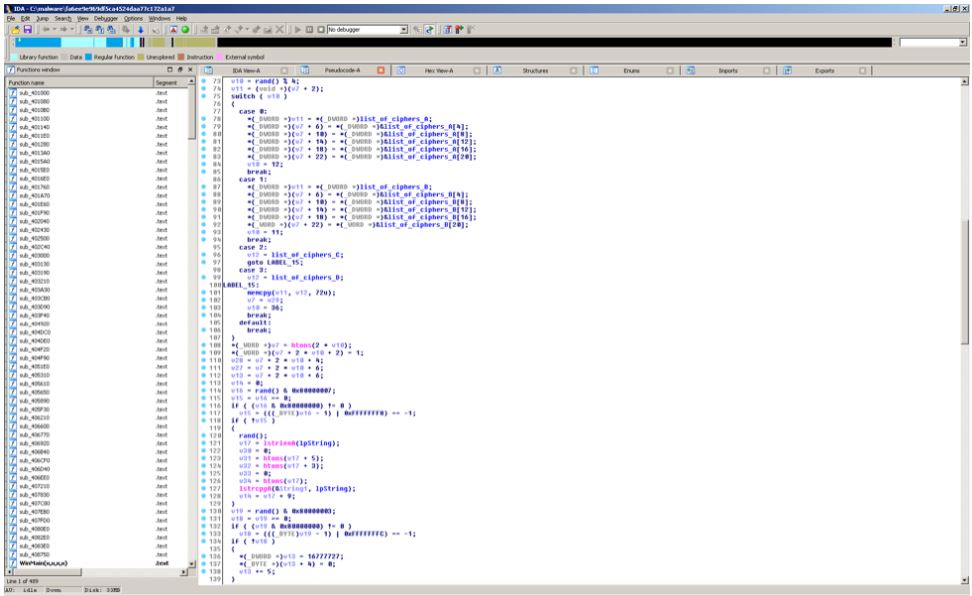
Two of them were identified as variants of Backdoor.Destover used in the attack on Sony Pictures, and the other as Trojan.Volgmer, which the Lazarus Group used in the past when it carried out attacks targeting South Korea. Subsequently, in the second attack in late March where a new version of WannaCry was discovered, information was confirmed that further proved the connection between WannaCry and the attackers behind the Lazarus Group.
While the WannaCry ransomware in the first and second attacks contained malware traditionally used by the Lazarus Group, the third attack on May 12th deployed a more evolved version of WannaCry that incorporated the "EternalBlue" exploit, which utilized SMB vulnerabilities (CVE-2017-0144 and CVE-2017-0145) in the MS Windows operating system. The new version of WannaCry combined ransomware and a worm, spreading rapidly through networks and the internet, primarily targeting unpatched computers, and possessed destructive power as one of the most powerful malware discovered in recent years.
In addition to the similarities in the tools used to spread WannaCry, there are various connections between the WannaCry attack and Lazarus. WannaCry has been confirmed to share malware with Backdoor.Contopee, which was previously linked to Lazarus. In addition, WannaCry uses code obfuscation similar to Infostealer.Fakepude, a malware associated with Lazarus, and the Alphanc Trojan (Trojan.Alphanc) used to spread WannaCry in March and April is also linked to the Lazarus group.
Yoon Kwang-taek, CTO of Symantec Korea, explained, “Analysis of the WannaCry ransomware revealed a significant technical correlation between the code, infrastructure, and technology used and those employed by the Lazarus Group, which previously attacked Sony Pictures and the Bank of Bangladesh. Therefore, we believe the Lazarus Group is behind the WannaCry ransomware.” He added, “However, the WannaCry attack is analyzed as a typical cybercrime campaign carried out purely for financial gain, rather than for political retaliation or regime disruption as seen in past Lazarus Group attacks.”
Comments
Related news
Domestic IT security market growth driven by intelligent and ransomware attack protection solutions
Last year, South Korea's IT security market saw growth driven by endpoint and messaging security solutions. According to the IT security product market report for South Korea released recently by Korea IDC (CEO Hong Yoo-sook), the domestic IT security product market last year was tallied at approximately 658.2 billion won, representing a 3.3% increase compared to the previous year. As the overall IT security product market has reached saturation, there was no significant growth in individual segments. However, endpoint solutions capable of responding to advanced attacks and messaging security solutions addressing the increase in ransomware attacks showed relatively high growth rates and are analyzed to have driven overall growth in the domestic IT security product market.
2017.04.10by 신윤오 기자
Ransomware increased by 36% last year; attacks expected to rise in combination with worms.
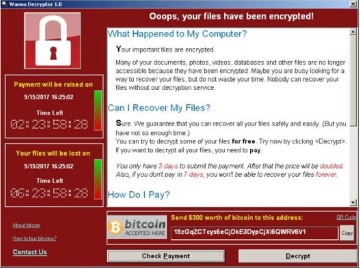
The 'WannaCry ransomware (Ransom.Wannacry),' which encrypts data files and demands a ransom, is spreading widely across the globe, particularly throughout Europe. According to an investigation by Symantec, which emphasized the need for heightened security awareness, the WannaCry ransomware encrypts data files and demands that users pay a ransom of $300 in Bitcoin. The investigation warns that if the ransom is not paid within 3 days, the payment amount doubles, and if payment is not made within 7 days, the encrypted files will be deleted.
2017.05.15by 신윤오 기자

Acronis Provides Ransomware Defense Solutions to Backup Server Customers
Acronis announced today that it will conduct a "Complete Ransomware Defense Campaign" during May and June, providing all customers who purchase Acronis Backup enterprise backup and recovery solution servers with Acronis True Image 2017 New Generation (NG), a personal backup and recovery solution equipped with ransomware defense technology, along with related data management consulting services. Acronis Korea, in response to the rapid global spread of ransomware, urgently requested its headquarters to minimize customer damage from ransomware and decided to provide Acronis True Image 2017 NG, a personal and home backup and recovery solution that includes ransomware prevention functionality, free of charge to enterprise customers. When purchasing Acronis Backup Advanced multiplatform and universal license versions, Acronis True Image 2017 NG, usable by 5 users per server copy, will be provided as a gift. When purchasing standalone server versions such as Acronis Backup for Windows and Linux, Acronis True Image 2017 NG, usable by 3 users per copy, will be provided proportionally to the quantity purchased.
2017.05.16by 김자영 기자
.png)
Databricks Unveils Open AI Security Monitoring 'Lakewatch'
Databricks entered the security market on March 24 by unveiling LakeWatch, an open-source agentic SIEM. The core functionality of this product is to integrate and analyze security, IT, and business data in a single environment to support AI-based threat detection and investigation. The company explained that it reduces the limitations of existing security operations centers, which have had to forgo some data due to high cost structures, and enables large-scale data analysis and automation based on open formats and ecosystems. LakeWatch is currently offered as a private preview, with Adobe and Dropbox mentioned as early customers. Databricks also announced an expanded partnership with Anthropic as well as the acquisition of Antimatter and SiftD.ai.
2026.03.26by 배종인 기자
Kaspersky Unveils Revamped 'NEXT' Combining SOC Integrated Management and AI Analytics
As enterprises increase demand for integrated management and automation in the construction and operation of Security Operations Centers (SOC), Kaspersky has disclosed updates to its B2B security product suite 'Kaspersky Next'. This update expands EPP, EDR, XDR, and SIEM integration through a single console based on OSMP, incorporates AI capabilities such as DLL hijacking detection and suspicious account takeover behavior identification, and includes integration with generative AI assistant tool KIRA. The company stated that in large-scale deployment environments, EDR Expert can reduce resource requirements by up to 30%, and XDR Expert by up to 60%.
2026.03.25by 배종인 기자











