


“Job Concerns in the Fourth Industrial Revolution Era: We Must Prepare for Changes in the Form of Work, Not Just Jobs”
 Published2017.05.29 10:54
Amidst a series of predictions that jobs will decrease as artificial intelligence advances, an analysis suggests that jobs in the Fourth Industrial Revolution involve a change in the form of work rather than the profession itself, and a claim has been raised that startups reflecting this need to be revitalized.
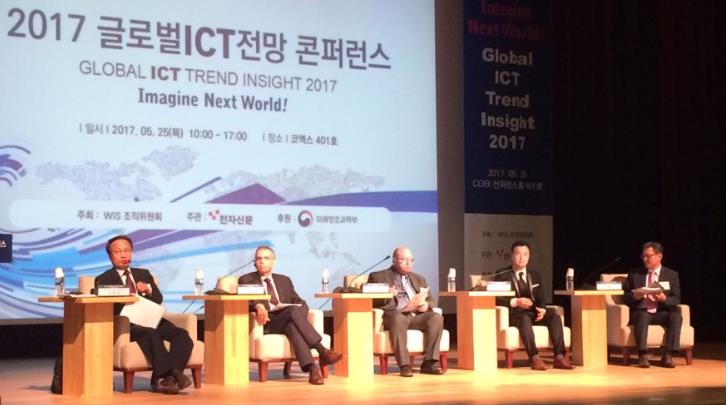
At the 'Global ICT Outlook Conference' held at the COEX Conference Room on the 25th, experts in key fields leading the Fourth Industrial Revolution, such as artificial intelligence (AI), 5G, IoT/wearables, and fintech, were gathered for a discussion under the main theme of 'Imagine Next World'.
Opinions were exchanged regarding the current status of the global ICT industry and what the government needs to prepare for in each sector. The session was moderated by Kim Jeong-eon, Head of the ICT Strategy Research Division at the Korea Information Society Development Institute (Chairperson), and featured Professor Kim Yong-jin from Sogang University Graduate School of Business, AI expert Professor David Hogg from LEEDS University, Professor Ari Pouttu from Oulu University specializing in wireless communication and 5G, and Scott Amix, CEO of Amyx+Mckinsey.
First, it began with a discussion on how the panelists envision the future, focusing on their respective fields of expertise.
Professor David Hogg: Dramatic changes have occurred rapidly over the past two to three years. With the increase in humanoid robots and assistant robots, I believe the vision of the future is a philosophical question. There will be advancements in cognitive aspects.
Professor Ari Pouttu: With the development of wireless communication, the majority of the 7 billion population owns mobile phones and has a rapid replacement cycle. I believe that services related to this will evolve, and revenue will be generated through AI based on 5G technology.
CEO Scott Amix stated, "There has been ongoing discussion about where the future is headed. As technology converges and advances, it is difficult to envision what the world will be like in 15 years. Now is the time to discuss the IoT of Human, that is, the interface between people and objects." Although there is still ethical debate regarding the implantation of devices under the skin or chips in the head, an era will come where all devices are connected to the human body. Things that were previously impossible to realize are now being achieved. We must consider the demands of various aspects that differ from the world we currently live in.
Professor Kim Yong-jin states that ICBM (Internet of Things, Cloud Computing, Big Data, and Mobile) are the new technologies representing the Fourth Industrial Revolution. It is predicted that technological advancements will replace human labor with machines and rational reason with mechanical reason. While there are concerns that this will lead to social polarization and worsening poverty, this is merely the tip of the iceberg. Technological changes are moving in the direction of providing 'on-demand' services. The trend will shift toward the personalization of products and services.
Fourth Industrial Revolution Jobs: Employment Will Decrease, But New Job Concepts Will Emerge
Professor Kim Jeong-eon: The main issue regarding the Fourth Industrial Revolution is that productivity will improve while employment will decrease. What are the panelists' thoughts on this?
Professor David Hogg stated that many fields will be impacted by AI. He believes that as user experience (UX) evolves, complexity will disappear and technology will become invisible. I believe that flexible and agile robotics technology will significantly transform the manufacturing industry.
Professor Ari Pouttu believes that, from an IoT perspective, 5G will serve as the foundation for building fast control systems, enabling increased efficiency across various systems. Future factories will be modularized. For instance, one factory might produce one product for two weeks, and then spend another two weeks producing a different product. Mobile technology will make setting up factories and switching technologies easier. When building a factory, ICT technology will be established first. Big data is also crucial. Even if people collect big data, they often struggle to process it, relying on mechanical algorithms for this part. Only by transforming it into meaningful information can it be used to increase efficiency. Furthermore, change will only occur when connectivity—combining 5G, sensors, IoT, big data, and AI—is integrated.
CEO Scott Amix stated that there is a difference between work and a job. With the advancement of AI, jobs are sometimes taken away and sometimes not. You can view it as the work changing, not the job.
Professor Kim Yong-jin: When considering the future of manufacturing in terms of labor and human rights, it will be divided into complete automation driven by robotic technology and the integration of supply chains.
The industry will likely move toward providing optimal services on demand, leading to rapid advancements in 3D printing technology. Among 3D printing technologies, there is one called 'Clip.' It involves creating any object using liquid without screws, and Adidas is currently using it. It is a technology that is faster than any other manufacturing method and allows for personalized customization. If the manufacturing industry moves in this direction, jobs will decrease. If you look at the Adidas factory now, the workforce has dropped from 600 to around 100 to 130 people.
So, where are jobs heading? We can see this by looking at Uber. Uber drivers provide services only when a request comes in. This creates a job where one can earn money and have flexible hours. This type of work is called on-demand. On-demand jobs will continue to emerge in the future, but the problem is that the concept of permanent employment is being lost and the gap between jobs is widening. A social atmosphere conducive to the establishment of on-demand jobs must be created.
To build a unicorn company, we need a system that leverages our unique strengths.
Professor Kim Jeong-eon mentioned that the number of non-regular workers is increasing while employment is not being converted to regular status, and this requires consideration at the government level. The role of startups is crucial for developing products using ICT technology and applying them to business. If new jobs become on-demand, it seems likely that startups will also contribute to job creation. Our country does not yet have any unicorn companies (unlisted startups with a valuation of over $1 billion). Since we have foreign panelists here, please tell us specifically what the government needs to do to revitalize startups in their respective countries.
Professor David Hogg states that the UK government makes large-scale investments in R&D, focusing on six rapidly growing innovation sectors. These six sectors are robotics, AI, machine learning, health and medical care, automotive, and social services. Another approach is structural change. There have been many changes in universities over the past decade. The government directly funds university research. As a result, the fundamental change is that research outcomes have improved.
A characteristic of startups in the UK is the high number of university spin-offs. I am not sure about the situation in Korea, but they strive for long-term growth by sharing ownership with private companies. Overall, the trend is moving toward fostering ecosystems within universities.
Professor Ari Pouttu: Finland is a technologically oriented nation. It adopted digital technology quickly and is also introducing healthcare systems targeting its aging population faster than other countries. In terms of ICT, frequency is what enables digital transformation, yet it is also what hinders it. Small-scale local business ecosystems—such as those using Wi-Fi, automobiles, and power—also need frequency, but it is unfair that it is allocated only to large corporations. It should be allocated to startups as well.
Many people were worried when Nokia went bankrupt, but it turned out to be a creative opportunity. This is because the engineers who left Nokia filled the ranks with startup companies. We should not try to maintain the status quo but must make efforts to change, and the government needs to support this. Companies are entering universities, the government is shifting toward providing seed funding, and universities are teaching entrepreneurship.
CEO Scott Amix stated, "It may sound contradictory, but based on what I have observed while traveling through various countries, there are very few nations where policies for startups are functioning well. In many cases, the system fails to provide adequate support. This is because, with widening income inequality and growing discontent, there is no room for entrepreneurship to take root. Simply imitating Silicon Valley is not the answer. I believe Korea fails to succeed because, despite possessing the technology and know-how necessary for success, it lacks the necessary methodology. Young people have ideas and intelligence, yet there are no visible results. We excel at areas like social media and delivery networks, but the reason we fail to develop them into global brands is the absence of a proper system."
The government must identify Korea's strengths, place them at the center, and create an ecosystem that is difficult for others to easily replicate. The reason foreign investors are not entering Korea is precisely because we are failing to leverage these strengths.
Professor Kim Jeong-eon, who served as the moderator, concluded the discussion by stating, “We have heard thoughts on the outlook for specialized fields and changes in employment perspectives. The time has come to prepare the role of startups and policy support methods tailored to our environment.”
Comments
Related news
[Planning-Autonomous Vehicles⑤] 'Running SW' Artificial Intelligence Cars, Software Dominates
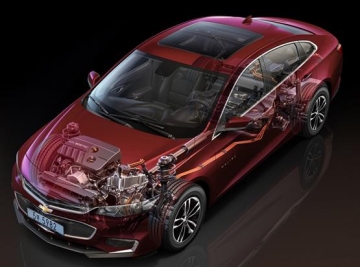
Vehicles with electrified systems are commonly referred to as "running semiconductors." However, as the importance of software that drives these electronic devices grows, it may now be appropriate to call automobiles "running software." Whereas the previous trend was to install various functions for vehicle stability and convenience, with accompanying software (SW) to operate them, automobiles are increasingly becoming software-centric. Vehicle software can be divided into electronic component SW platforms and infotainment platforms. In the electronic component SW platform, AUTOSAR (automotive open system architecture), an open-standard automotive software, is at the center. AUTOSAR comprises 9 core partners with approximately 50 member companies, including BMW, Bosch, Continental, Daimler, Ford, GM, Peugeot Citroën, Toyota, and Volkswagen as core partners, consisting of 7 OEM companies and 2 Tier 1 suppliers. The purpose of AUTOSAR is to address the growing complexity of software as electronic devices increase, and to reduce costs by enhancing software reusability.
2017.05.22by 김지혜 기자
Over 400 people flocked to NVIDIA's Deep Learning Day, demonstrating a surge of interest in AI.
Nvidia (CEO Jensen Huang) held the "NVIDIA DEEP LEARNING DAY 2017 SEOUL" at EL Tower in Yangjae-dong, Seoul on May 25th, successfully concluding the event with the attendance of over 400 domestic software developers, big data experts, and IT industry professionals, the company announced.
2017.05.26by 신윤오 기자
How far should humans go in their efforts for artificial intelligence?
Digiceo released a report on the theme of "Evolution of Crowdsourcing Platforms for Artificial Intelligence." It stated that in the United States, the highest-earning workers are artificial intelligence engineers, machine learning engineers, and data scientists in that order, and that companies are actively engaged in developing algorithms for machine learning targeting unstructured data. The algorithms developed in this manner require extensive additional training to achieve desired results. Similarly, obtaining desired results in any given field depends on the quantity and quality of training data. Tens of millions of vast amounts of data must be individually classified by people, and results necessary for training must be entered manually.
2017.05.26by 김자영 기자

[e4ds Tech Day 2026 ⑨] Sim Sang-gyu, Autocrypt CTO: "In the Physical AI Era, Automotive Security Must Extend Beyond the Vehicle"
At e4ds Tech Day 2026, Sim Sang-gyu, CTO of Autocrypt, explained automotive cybersecurity strategies in the era of Physical AI and SDV (Software-Defined Vehicle). Automobiles are evolving as part of an ecosystem connected to AI, cloud, chargers, IoT, and robots, and he emphasized that the scope of security must expand beyond the vehicle interior to the entire connected environment. In particular, AI model tampering, adversarial attacks, OTA updates, and EV charger hacking were identified as major threats. He explained that response measures require zero trust, AI model integrity protection, intrusion detection, Security by Design and Default, and full lifecycle security management, and that proactive security system establishment beyond regulatory compliance is critical for securing future mobility competitiveness.
2026.10.12by 배종인 기자

NVIDIA to Invest $1 Billion in U.S. Science Over Next Five Years
NVIDIA has announced plans to invest $1 billion over the next five years to strengthen U.S. scientific and technological competitiveness. The company will enhance cutting-edge artificial intelligence research and development capabilities in key areas including quantum computing, healthcare, and energy security, while expanding support for higher education research institutions and cloud service providers. NVIDIA is participating as a major industry partner in the White House Office of Science and Technology Policy's Genesis Mission, and is promoting supercomputer construction in collaboration with national laboratories including Argonne and Los Alamos.
2026.10.12by 배종인 기자











