



Siri and Bixby, what does the future of artificial intelligence hold?
 Published2017.05.30 09:27
An AI form that is raised like a Tamagotchi might emerge.
A report has been released comparing smartphone AI assistants Bixby and Siri and predicting the future of artificial intelligence.
Although the public did not highly regard artificial intelligence at the time of Siri's initial announcement, it produced better results as more data accumulated. According to a DigiEco report, while Apple enabled users to engage in everyday conversations with Siri, such as telling jokes or singing songs, it restricted emotions and responses to prevent continuous and emotional interaction. This can be interpreted as a precaution against the rapid development of artificial intelligence causing user resistance or inducing over-immersion.
In March of this year, Samsung Electronics introduced Bixby, a deep learning-based assistant app. Unlike other competing services, it allows the simultaneous use of various input methods such as touch, voice, and camera shooting. This represents a step forward compared to competing services that remain merely simple 'voice' assistant systems.
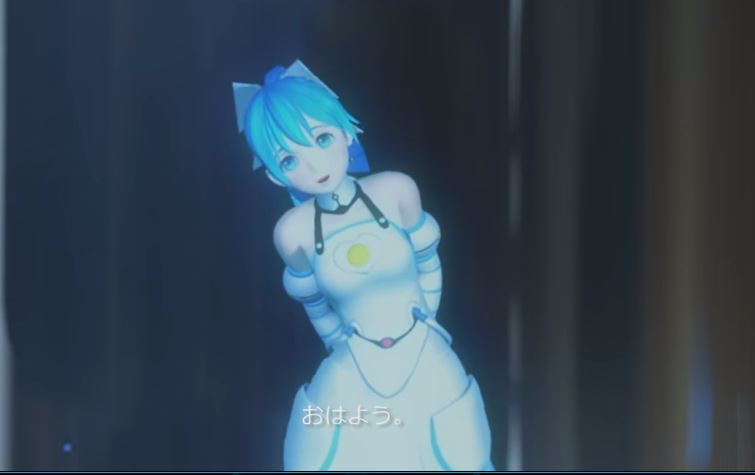
In what direction will smartphone AI services evolve in the future? Is fundamental innovation possible beyond simply improving quality and adding features?
Looking at the example of AI speakers, it is highly likely that they will be developed to a stage where they make suggestions and act autonomously, rather than working according to human commands. Artificial intelligence can be divided into weak AI, which is capable of creating simple characters, and strong AI, which is capable of performing unintended driving or solving quizzes without commands.
Looking at Japan's Gate Box, it wakes you up in the morning with a tone and emotion similar to a human. It greets the user first and searches for weather information in advance. It also proactively tells you to "take your groceries" on your way to work. As AI sentiment increases the use of such services, it can provide a feeling similar to that of a real person. Furthermore, under certain limitations, it is possible for it to search for and provide weather information in the morning or introduce new products from shopping malls in advance, even without a command from the user.
Next, it could evolve into a form where users raise artificial intelligence similar to 'Tamagotchi'. The creature that hatches from the egg will differ depending on how the user cares for it, and its personality will change depending on how it is raised.
DigiEco reported, "Most scientists believe that strong artificial intelligence will emerge within 50 or 100 years. While AI reaching the level of science fiction movies may be a distant future, strong AI services introduced through smartphones are technically fully feasible and are expected to be realized in the near future."
Comments
Related news
Amazon to enable 'full process automation' of clothing from order to production and delivery
Amazon has unveiled Echo Look, a hands-free camera powered by its AI voice assistant Alexa. Echo Look is an elongated oval-shaped stand-type hands-free camera capable of depth sensing, enabling full-body selfie shots with blurred backgrounds. The camera features four LED lights for shooting, and can capture full-body images or a complete 360-degree view of clothing from front and back. It supports voice commands, and for 360-degree images, users can swipe left and right on the screen to view different angles.
2017.04.28by 김자영 기자
[Reporter's Notebook] Would you like to place an AI speaker at your father's house?
Leading companies have all taken on the role of "assistant." With Alexa, Google Assistant, Cortana and others, we now have—and will continue to have—multiple voice assistants to choose from. Amazon, which opened the voice assistant speaker market in 2014 with the Echo, has since launched the Echo Dot and Echo Look, followed by the Echo Show with a touch screen. Domestic companies are also moving actively. In the Korean market, KT and SK have launched speakers, while LG, Naver, and Kakao are in the preparation stage. SK announced that NUGU, which began sales in September of last year, has surpassed 1 million units sold. In June, SK will introduce Aibril, a Korean-type Watson developed in cooperation with IBM's Watson. An SK C&C Aibril official stated, "There were no open-type API companies in Korea, and Watson has already emerged as a strong player in natural language processing. We chose a strategy to secure data rather than allocate time to platform construction." KT's GiGaGenie has presented an integrated speaker with a set-top box to existing Olleh TV customers. Naver disclosed artificial intelligence "Clova" before launching a speaker. Kakao began artificial intelligence development by establishing Kakao Brain in February.
2017.05.22by 김자영 기자
[Reporter's Notebook] How Nvidia Became a Leading AI Company
When was the possibility first discovered that GPUs, which initially emerged to simply assist CPUs in multimedia tasks such as gaming and video editing, could become a cornerstone in the field of artificial intelligence? Mark Hamilton, Vice President of Solution Architecture and Engineering at NVIDIA, says it was eleven years ago when CUDA, a parallel computing architecture that enhances computing performance based on GPU, was first shipped. Upon realizing that GPUs could not only run simple graphics codecs but could also execute general-purpose programs, he says NVIDIA first recognized the need to expand beyond being a graphics card manufacturer into the artificial intelligence field.
2017.05.30by 신윤오 기자
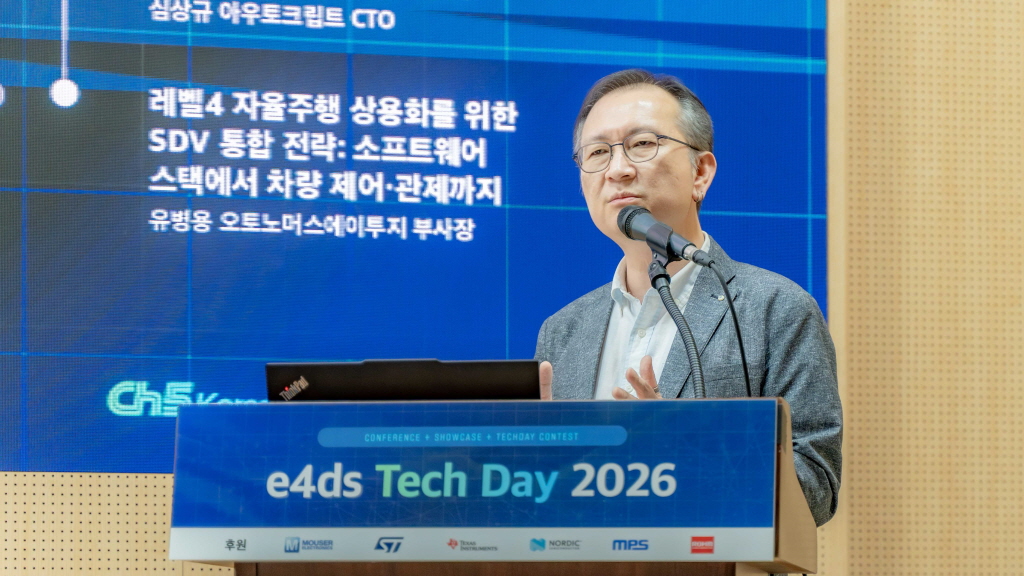
[e4ds Tech Day 2026 ⑨] Sim Sang-gyu, Autocrypt CTO: "In the Physical AI Era, Automotive Security Must Extend Beyond the Vehicle"
At e4ds Tech Day 2026, Sim Sang-gyu, CTO of Autocrypt, explained automotive cybersecurity strategies in the era of Physical AI and SDV (Software-Defined Vehicle). Automobiles are evolving as part of an ecosystem connected to AI, cloud, chargers, IoT, and robots, and he emphasized that the scope of security must expand beyond the vehicle interior to the entire connected environment. In particular, AI model tampering, adversarial attacks, OTA updates, and EV charger hacking were identified as major threats. He explained that response measures require zero trust, AI model integrity protection, intrusion detection, Security by Design and Default, and full lifecycle security management, and that proactive security system establishment beyond regulatory compliance is critical for securing future mobility competitiveness.
2026.10.12by 배종인 기자
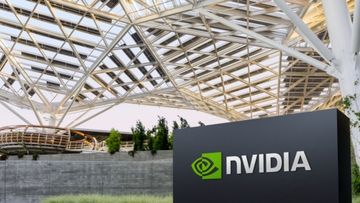
NVIDIA to Invest $1 Billion in U.S. Science Over Next Five Years
NVIDIA has announced plans to invest $1 billion over the next five years to strengthen U.S. scientific and technological competitiveness. The company will enhance cutting-edge artificial intelligence research and development capabilities in key areas including quantum computing, healthcare, and energy security, while expanding support for higher education research institutions and cloud service providers. NVIDIA is participating as a major industry partner in the White House Office of Science and Technology Policy's Genesis Mission, and is promoting supercomputer construction in collaboration with national laboratories including Argonne and Los Alamos.
2026.10.12by 배종인 기자











