


Infineon Implements Post-Quantum Cryptography in Industry's First Contactless Security Chip
 Published2017.06.15 15:22
Attacks using quantum computers against the encryption used today are expected to become a reality within the next 15 to 20 years. When that happens, quantum computers will be able to solve specific calculations much faster than current computers, potentially threatening even the most advanced security algorithms currently known, such as RSA and ECC.
Various internet standards such as TLS (Transport Layer Security), S/MIME, and PGP/GPG use encryption based on RSA or ECC to protect data communication with smart cards, computers, servers, and industrial control systems. Representative examples include online banking on HTTPS sites and instant messaging encryption on mobile phones.

Chip memory size and computation time are critical issues
Infineon's security experts have achieved an innovation that implements post-quantum key exchange on commercial contactless smart card chips. This key exchange can be used to establish an encrypted channel between two parties. The algorithm they implemented is a type called New Hope. New Hope is a quantum defense encryption system that Google successfully tested in a development version of the Chrome browser.
Thomas Pöppelmann of Infineon’s Chip Card and Security division, who also participated in the development of the “New Hope” algorithm, said, “Stored and executed such a complex algorithm on a small chip with limited memory capacity and transaction speeds was a huge challenge.” Thomas Pöppelmann and his fellow researchers were awarded the prestigious 2016 Facebook Internet Defense Prize for their work in developing “New Hope.”
In the era of quantum computing, PQC will provide the same level of security as RSA and ECC with current computing power. However, to withstand quantum computing performance, the key length must be longer than RSA's 2048 bits or ECC's 256 bits. Nevertheless, Infineon researchers have implemented “New Hope” in a commercially released security chip without requiring additional memory space and thus without the need to increase the chip size.
Standardization organizations are expected to reach a consensus on one or more PQC algorithms within the next few years. Subsequently, regulatory bodies and the industry will likely mandate the transition to this approach. Infineon is actively participating in development and standardization efforts to facilitate this transition and address the security challenges that will arise from the advent of quantum computers.
Comments
Related news

Infineon Launches D2PAK 7-pin+ Package MOSFET Family
Infineon Technologies has launched a 40V StrongIRFET™ MOSFET product family offered in a D2PAK 7pin+ package. The new MOSFET product family delivers an extremely low RDS(on) of 0.65mΩ and industry-leading current delivery capacity, enhancing robustness and reliability in high power density applications requiring high efficiency and dependability. Additionally, the surface-mount D2PAK 7pin+ package is well-suited for use in low-voltage drives, battery-powered tools, and lightweight electric vehicles.
2017.04.27by 김지혜 기자
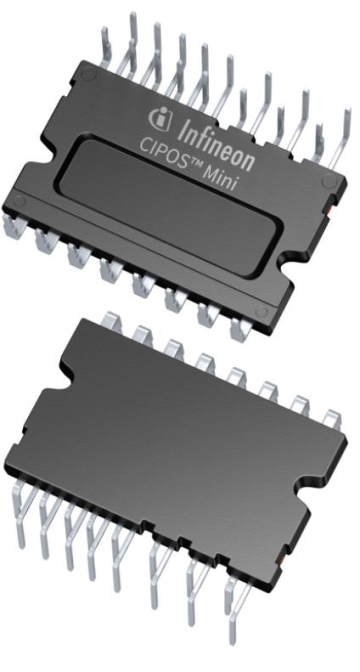
Infineon Launches Intelligent Power Module Integrated into a Single Package
Infineon Technologies announced the launch of a new CIPOS™ Mini with integrated PFC (power factor correction) functionality. These intelligent power modules (IPM) integrate a single-switch boost PFC stage and a three-phase inverter in a single package, reducing system costs and bill of material (BOM). This frees up additional PCB space for integrating additional functions. They are suitable for controlling induction motors and permanent magnet synchronous motors (PMSM) with single-phase PFC in variable speed drives commonly used in air conditioning systems and low-power motor drives with maximum power capacity up to 2kW.
2017.06.01by 김지혜 기자
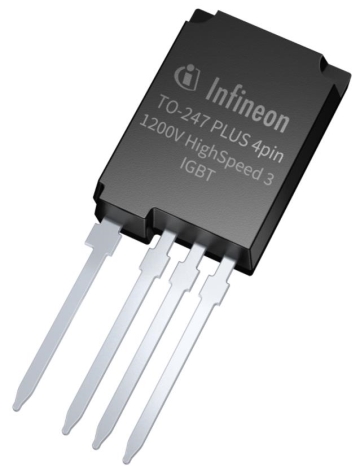
Infineon Launches Discrete IGBT with Integrated Maximum Rated Diode
Infineon Technologies has launched a 75A/1200V discrete IGBT integrating a maximum rated diode in the TO-247PLUS package. The TO-247PLUS 3-pin and 4-pin packages are suitable for applications requiring high power density with 1200V blocking voltage, such as drives, photovoltaic systems, and UPS (uninterruptible power supplies), as well as for battery charging and energy storage systems. Compared to the standard TO-247-3 package, the new TO-247PLUS package can provide double the current rating. By eliminating screw holes, the PLUS package can utilize a wider lead frame area, enabling the mounting of a larger IGBT chip.
2017.06.12by 김지혜 기자
.png)
Databricks Unveils Open AI Security Monitoring 'Lakewatch'
Databricks entered the security market on March 24 by unveiling LakeWatch, an open-source agentic SIEM. The core functionality of this product is to integrate and analyze security, IT, and business data in a single environment to support AI-based threat detection and investigation. The company explained that it reduces the limitations of existing security operations centers, which have had to forgo some data due to high cost structures, and enables large-scale data analysis and automation based on open formats and ecosystems. LakeWatch is currently offered as a private preview, with Adobe and Dropbox mentioned as early customers. Databricks also announced an expanded partnership with Anthropic as well as the acquisition of Antimatter and SiftD.ai.
2026.03.26by 배종인 기자

Kaspersky Unveils Revamped 'NEXT' Combining SOC Integrated Management and AI Analytics
As enterprises increase demand for integrated management and automation in the construction and operation of Security Operations Centers (SOC), Kaspersky has disclosed updates to its B2B security product suite 'Kaspersky Next'. This update expands EPP, EDR, XDR, and SIEM integration through a single console based on OSMP, incorporates AI capabilities such as DLL hijacking detection and suspicious account takeover behavior identification, and includes integration with generative AI assistant tool KIRA. The company stated that in large-scale deployment environments, EDR Expert can reduce resource requirements by up to 30%, and XDR Expert by up to 60%.
2026.03.25by 배종인 기자











