



Cloud Everywhere: The same service everywhere – it’s here with 'technology'.
 Published2017.06.20 15:37
Sharing core cloud utilization technologies, current status, and various case studies in the era of the Fourth Industrial Revolution
KT held the 8th Cloud Frontier at the Grand Intercontinental on Tuesday, the 20th.
Lee Seon-woo, Senior Vice President of KT’s Corporate Services Division, who delivered the welcoming remarks, mentioned the Internet of Things (IoT), Connected Car, and VR/Hologram, which were selected by Gartner as standard technology trends in 2017, and stated that while 5G, cloud, and big data are mentioned as solutions, low latency is necessary to enhance completeness.
As a simple example, to reduce dizziness and enhance realism in VR devices, the image must follow in real time. To this end, they announced plans to realize 'Cloud Everywhere,' which provides the same services in various regions including Seoul and Jeju.
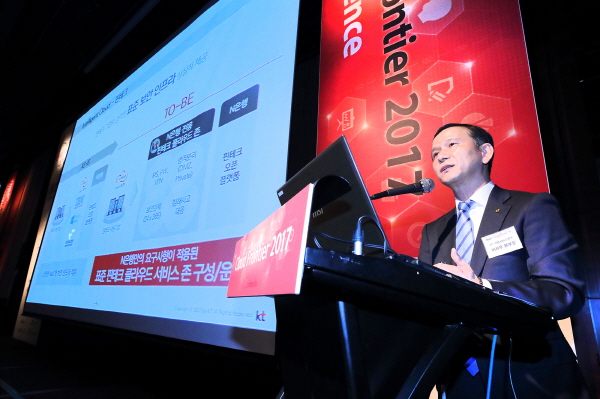
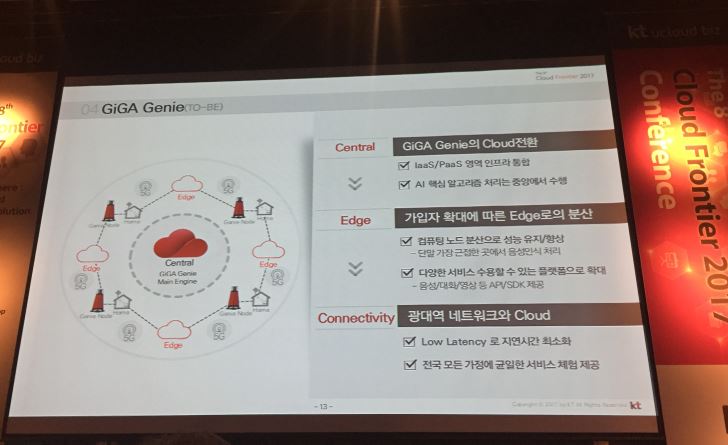
Executive Director Lee further stated that they can provide services that integrate the cloud and GiGA Genie.
Cloud Everywhere means connecting KT's 11 Internet Data Centers (IDCs) nationwide to provide the same services. It has established the K-ICT Alliance with public institutions and is supplying servers, storage, and networks. In addition to this, Manager Kim Jeong-guk of KT’s Public Business Team stated, “To realize Cloud Everywhere, we have combined the IDCs of campuses in the Seoul and Gyeonggi regions so that there are no additional costs regardless of which IDC is used, and we have reduced the costs involved in building dedicated lines.”
Public and private clouds must be implemented in a hybrid form.
Na Seung-ju, Senior Vice President at Intel, spoke on the topic of network innovation for the realization of the Fourth Industrial Revolution, stating that “public and private forms must evolve into a hybrid.” He mentioned the importance of Software Defined Networks (SDN) and Network Function Visualization (NFV), noting that while hardware previously restricted applications, applications and services must now break down hardware boundaries through flexible responses.
He added, “If such a flexible approach is taken, data utilization becomes easier, allowing the process from idea to operation, which typically takes several months, to be reduced to minutes.”
Professor Jun-Hyuk Jang of the Department of Convergence Electronics Engineering at Hanyang University explained the principles of AI voice assistant speakers under the theme of the current status of cloud-based AI voice assistants. He emphasized the importance of fast cloud services, stating, “All processes, from the pre-processing noise/reverberation/echo removal—the principle of AI speakers—to transmission to cloud servers, natural language processing, and character generation based on user requests, must be completed within one second.”
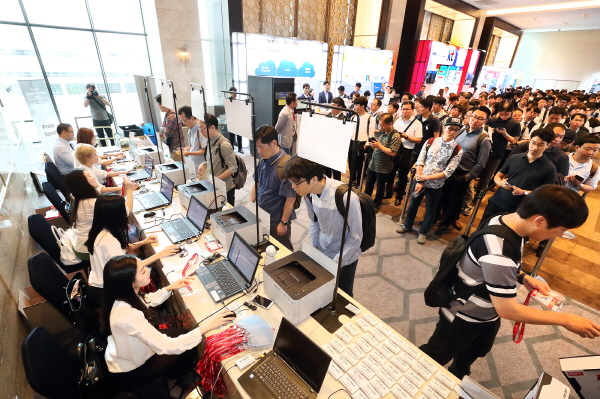
The KT Frontier event featured 24 theoretical and practical lectures, divided into cloud industry, transformation, tech trends, and policy. Approximately 18 related booths were exhibited in the event lobby to welcome visitors.
Comments
Related news
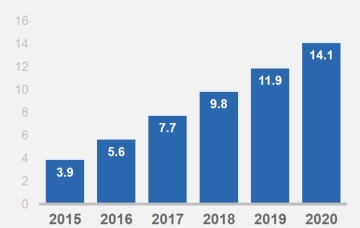
Global cloud traffic increased approximately fourfold in 2020, accounting for 92% of data center traffic.
Cisco has announced "The Cisco Global Cloud Index 2015-2020," which analyzes the growth trends and patterns of global data center and cloud traffic. Through this report, Cisco forecasts that global cloud traffic will increase 3.7-fold from 3.9 zettabytes (ZB) annually in 2015 to 14.1 ZB annually by 2020. Cisco analyzed that migration to cloud architecture has increased because cloud supports more workloads compared to traditional data centers and can scale more rapidly.
2016.12.20by 홍보라 기자
KT Sets Out to Strengthen Enterprise Cloud Services in the Seoul Metropolitan Area
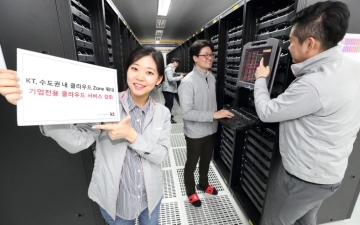
KT announced on the 17th that it has newly constructed 'Seoul-M2 Zone,' an enterprise-exclusive cloud zone, at its Mokdong Cloud Data Center (CDC). KT has been providing cloud services through a total of 4 regions and 6 multi-zones to date, including Cheonan, Gimhae CDC, Seoul Mokdong CDC 1 Center, and US LA CDC. With the additional construction of 'Seoul-M2 Zone' at Mokdong CDC 2 Center, KT will now operate 7 enterprise-exclusive multi-zones based on a total of 5 CDCs. This 'Seoul-M2 Zone' was established as enterprise customers demand higher-performance IT infrastructure to respond to the rapidly changing IT industry. 'Seoul-M2 Zone' was constructed within the capital region where multiple corporate headquarters are concentrated, and has been upgraded with high-performance, high-spec servers differentiated from existing cloud services. The latest CPUs and basic SSD storage have been applied, and the lineup of computing, storage, and security services has been significantly expanded to strengthen product-level connectivity. This enables KT to support customized cloud systems optimized for various industries including finance, healthcare, education, media, and manufacturing. KT plans to apply DCI (Data Center Interconnect) technology centered on Mokdong CDC 1 Center, 2 Center, and Yeouido IDC during the first half of this year. DCI is a network service that interconnects physically separated data centers to enable computing systems to operate on a single network. Once this technology is applied, enterprise customers can easily and economically link IT infrastructure distributed across multiple locations such as IDCs and cloud services, enabling efficient infrastructure operations. In the second half, the company plans to expand to nationwide service through wide-area network configuration. Meanwhile, KT is significantly reducing the usage price of cloud servers (VMs) at 'Seoul-M2 Zone' starting today. This allows any customer using 'Seoul-M2 Zone' to utilize cloud infrastructure that guarantees the highest quality and high performance at costs reduced by up to 18% compared to global service providers. Kim Sun-woo, Senior Executive of KT's Enterprise Services Division, stated, "We are pleased to have constructed 'Seoul-M2 Zone' to enable enterprise customers to rapidly adapt to the rapidly changing domestic IT industry environment," and added, "KT will continue to quickly accommodate industry-specific IT requirements and provide world-class enterprise-exclusive cloud services."
2017.04.17by 김자영 기자
AWS: How Far Has It Come?
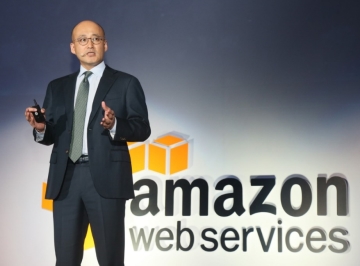
GE, a manufacturer with a 140-year tradition, referred to itself as a "startup." It meant that the company has entered an initial stage by adopting cloud technology. At the AWS Summit keynote speech held on the 19th, CEO Yeom Dong-hoon mentioned DevOps, a hybrid form of development and operations, and said, "Whereas previously it was about purchasing new versions, now we need to think about updates rather than purchases." Additionally, CEO Yeom stated, "Many companies have already finished deliberating and are implementing cloud solutions," and added, "Cloud is no longer something to deliberate about." According to his remarks, GE has migrated 9,000 enterprise workloads to AWS and plans to reduce 34 data centers to 4 within three years. Following AWS migration, current scores show 52% cost reduction compared to the previous baseline, 77% improvement in business application delivery speed, operational deployment cycle shortened from days to hours, and 240% improvement in customer and market responsiveness. Amazon's R&D process undergoes direct simulation within the company. This is how the data lake cloud storage S3 was formed. S3 provides diverse options covering Siemens, Honda, and GE, and can be converted according to convenience. Combined with Amazon's deep learning, it has programming and data algorithms as well as GPU functionality. Samsung SDS's cloud utilization case for SCM (Supply Chain Management) advancement Last year, the U.S. logistics trade publication Journal of Commerce featured a special article on Samsung SDS under the theme of "Companies driving growth in the logistics sector." At the center of Samsung SDS's logistics business is CELLO.
2017.04.24by 김자영 기자
.jpg)
SalePoint Signs Multi-Year Partnership Agreement with AWS… Promoting Identity Security that Integrates Even AI Agents
Sailpoint has entered into a multi-year strategic partnership agreement with AWS and is moving forward with establishing an integrated governance system that manages both human and non-human identities together. The plan is to consistently manage access permissions in an environment where AI agents are increasing as work execution entities, while applying the principle of least privilege and automated policy enforcement. The two companies plan to jointly expand capabilities to manage the identities of various entities, including AI agents, within a single layer in the AWS environment. This collaboration is interpreted as a move to design security and governance together in corporate environments where AI adoption is expanding.
2026.03.26by 배종인 기자
.png)
Databricks Unveils Open AI Security Monitoring 'Lakewatch'
Databricks entered the security market on March 24 by unveiling LakeWatch, an open-source agentic SIEM. The core functionality of this product is to integrate and analyze security, IT, and business data in a single environment to support AI-based threat detection and investigation. The company explained that it reduces the limitations of existing security operations centers, which have had to forgo some data due to high cost structures, and enables large-scale data analysis and automation based on open formats and ecosystems. LakeWatch is currently offered as a private preview, with Adobe and Dropbox mentioned as early customers. Databricks also announced an expanded partnership with Anthropic as well as the acquisition of Antimatter and SiftD.ai.
2026.03.26by 배종인 기자











