


[Discussion] Artificial Intelligence Will Eliminate Jobs? Instead, It Will Increase Jobs
 Published2017.06.26 11:10
Order to serve as government innovation hub to share experiences and data
While the outlook that artificial intelligence will replace human jobs is dominant, the view that it will actually increase jobs has emerged, drawing attention.
Experts gathered at the AI New Industry Convergence Forum held at the Pangyo Startup Campus agreed that the number of jobs created by industrial development using AI will be greater than the number of jobs lost.
Lee Seung-min, a researcher at the Electronics and Telecommunications Research Institute, said, “We need to look at the issue of jobs related to AI objectively. When the Internet came out, for every job lost, 2.6 jobs were created.” He added, “According to a recent report, in the era of data-centric AI, for every data-related job created, three jobs will be created in the BICT (biotechnology, information and communications technology) field.”
The researcher cited the current lack of personnel to manage data as a specific example. “Just as electricity was combined with motors and used in many products, artificial intelligence, when combined with ICT, will permeate all products in terms of hardware and software.” He explained that if they have their own platform technology, there will be no shortage of jobs due to newly emerging industries.
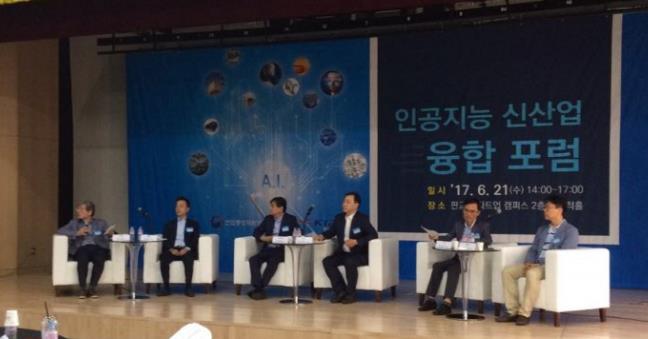
Cho Jin-woo, a nano-fusion PD at the Korea Institute for Advancement of Technology, also said, “New industries that incorporate artificial intelligence will be created. Just because product performance improves, net employment does not increase. “New industries are created and employment increases only when innovative products are developed,” he said, pointing out the current lack of infrastructure and human resources and emphasizing the importance of securing original technology.
Professor Lee Soo-young of KAIST said, “In the future, there will be two types of people: those who use AI and those who cannot. If you are only trying to find the job you have been doing, you should be worried, but if you are ready to follow the new industries that AI will create, you do not have to worry.”
Experts also said that in order to create new industries with AI, the government should act as an innovation hub that can share experiences and data. They said that universities have research personnel but do not know the needs of companies, and companies do not know what kind of technical personnel universities have, making it difficult to create an ecosystem, and they saw the government’s role as filling this gap. They suggested that small and medium-sized enterprises and universities should foster specialized personnel based on economic support and then create and distribute a platform to create jobs.
Comments
Related news
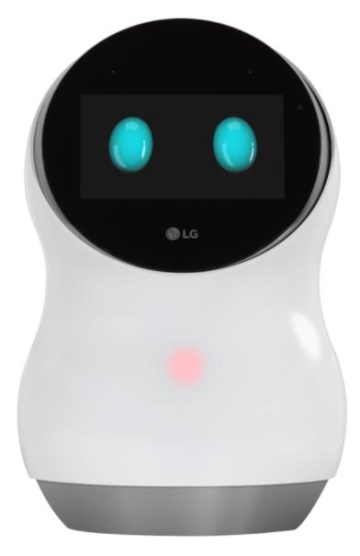
LG Electronics’ swift moves to drastically reorganize its structure for artificial intelligence
LG Electronics has significantly strengthened its research and development capabilities in artificial intelligence to lead the Fourth Industrial Revolution era, implementing an organizational restructuring. Effective June 1st, LG Electronics established the 'Artificial Intelligence Research Institute' and 'Robot Advanced Research Institute' under the CTO (Chief Technology Officer) division. The existing 'Intelligence Research Institute,' which had been conducting research on voice recognition, image recognition, and sensor recognition, has been separated and expanded into the 'Artificial Intelligence Research Institute' dedicated to artificial intelligence and the 'Robot Advanced Research Institute' dedicated to robotics. The 'Artificial Intelligence Research Institute' plans to build an artificial intelligence platform that recognizes, infers, and learns diverse data such as customer product usage information and weather data through voice, image, and sensor inputs, with plans to apply it across all of the company's business areas including smart appliances, mobile devices, TVs, automotive components, and robots.
2017.06.12by 김지혜 기자

[Issue] Healthcare Influence Concentrated on Doctors: Must We Abandon Domestic B2C?
The 'smart healthcare' industry, which is one of the promising businesses in the era of the Fourth Industrial Revolution, remains at a standstill due to constraints from domestic legal systems and inadequate standardization. At a forum on 'Response Strategies for the Healthcare Industry in Preparation for the Fourth Industrial Revolution,' hosted by the Korea u-Health Association and the Korea Institute of Industrial Technology on the 12th, participants voiced unanimous agreement that legal systems need to be improved and the market should expand under private sector leadership to expand smart healthcare services. Prior to the forum, attorney Koo Tae-eon from Tech and Law presented on the current framework of the Health Information Protection Act and issues regarding legal system improvements necessary to expand healthcare services. Professor Shin Su-yong from the Department of Computer Engineering at Kyung Hee University introduced the 'Standardization Roadmap for Healthcare Artificial Intelligence.' At this session, Professor Shin emphasized the importance of standardization, stating, "We need to combine the healthcare data we have, which requires standardization, and we must unify data storage methods and disclose them externally."
2017.06.19by 김지혜 기자
AI chip that replicates the structure of the human brain is coming out
"In the era of artificial intelligence, what matters is the chip. There is no longer any place for research based solely on software." At the 'Artificial Intelligence New Industry Convergence Forum' hosted by the Korea Institute of Industrial Technology, Nefes Chairman Lee Byung-gu stated this as a method for democratization, noting that artificial intelligence is drawing closer to our daily lives. Subsequently, Nefes Executive Director Ahn Jeong-ho introduced the artificial intelligence chip 'NM500,' which will be launched next month, saying "there are many advantages when approaching artificial intelligence from a hardware perspective." Nefes is a semiconductor packaging company that designed a system-on-chip (SoC) implementing artificial intelligence by entering into a neuromorphic architecture license agreement with General Vision (GV), a U.S. semiconductor technology company.
2017.06.23by 김지혜 기자
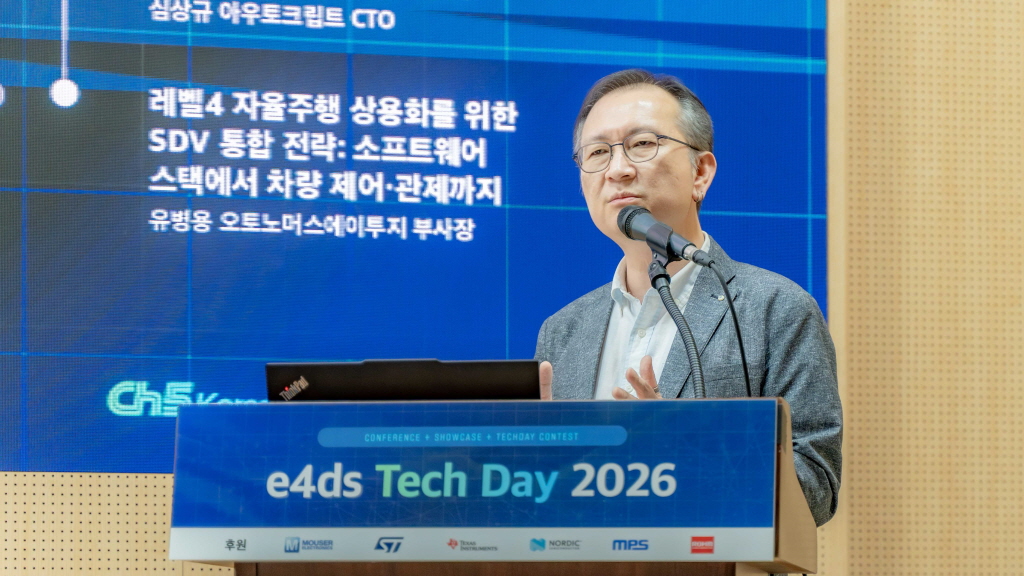
[e4ds Tech Day 2026 ⑨] Sim Sang-gyu, Autocrypt CTO: "In the Physical AI Era, Automotive Security Must Extend Beyond the Vehicle"
At e4ds Tech Day 2026, Sim Sang-gyu, CTO of Autocrypt, explained automotive cybersecurity strategies in the era of Physical AI and SDV (Software-Defined Vehicle). Automobiles are evolving as part of an ecosystem connected to AI, cloud, chargers, IoT, and robots, and he emphasized that the scope of security must expand beyond the vehicle interior to the entire connected environment. In particular, AI model tampering, adversarial attacks, OTA updates, and EV charger hacking were identified as major threats. He explained that response measures require zero trust, AI model integrity protection, intrusion detection, Security by Design and Default, and full lifecycle security management, and that proactive security system establishment beyond regulatory compliance is critical for securing future mobility competitiveness.
2026.10.12by 배종인 기자
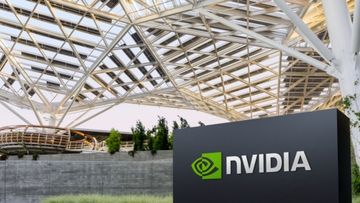
NVIDIA to Invest $1 Billion in U.S. Science Over Next Five Years
NVIDIA has announced plans to invest $1 billion over the next five years to strengthen U.S. scientific and technological competitiveness. The company will enhance cutting-edge artificial intelligence research and development capabilities in key areas including quantum computing, healthcare, and energy security, while expanding support for higher education research institutions and cloud service providers. NVIDIA is participating as a major industry partner in the White House Office of Science and Technology Policy's Genesis Mission, and is promoting supercomputer construction in collaboration with national laboratories including Argonne and Los Alamos.
2026.10.12by 배종인 기자











