


Easy way to turn wired sensors into wireless ones
 Published2017.07.19 11:06
Reduce maintenance costs for battery replacement
Building automation requires attention to changes in environmental factors. Sensors are used to collect environmental data, but adding sensors requires a large amount of cables and wiring to provide power and communication. IoT devices equipped with wireless sensors can solve this wiring problem.
Some applications still require wiring, such as ambient light sensors and door and window sensors. It is not as difficult as you might think to implement existing wired applications wirelessly.
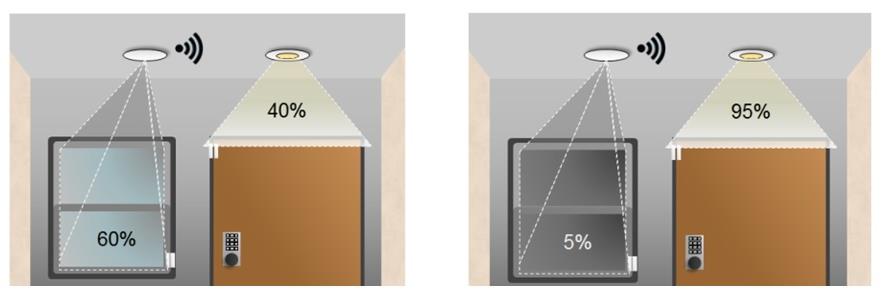
Ambient light sensors used in commercial buildings detect the intensity of light in a specific space and balance the overall ambient light in a given workspace. Typically, light sensors are wired to the lights that are controlled by the sensor. To implement a wireless solution, the lights are connected to a smart controller via wireless connectivity and the wireless light sensors are installed near a window. Wireless sensing nodes also make it easier to build smart systems.
If the sunlight coming in from the window is not enough to illuminate the work area, and you cannot control the light of the indoor lighting when using indoor lighting, the room may be too bright. For example, if 60% of the light comes in through the skylight and windows, the wireless ambient light sensor platform can detect the light intensity and dynamically adjust the artificial light source to produce the remaining 40% of light. Artificial light sources can save energy in buildings because they do not use as much power as natural light does.
Door and window sensors will soon be implemented wirelessly. Currently, many industrial and building automation security systems use sensors to monitor the opening and closing of doors and windows. In the security system, a central monitoring device generates notifications and alarms based on information from multiple door and window sensors. However, this requires a lot of wiring, and if all door and window sensors are converted to battery power, maintenance costs for battery replacement increase.
On the other hand, door and window sensor applications mainly use magnets to detect when a door or window is opened or closed. In a typical configuration, the magnet is embedded in the door or window, and the sensor is attached to the door or window frame. The sensor and magnet are positioned so that they are closer together when the door or window is closed, and farther apart when the window or door is opened. Since these sensors are mainly used in security applications, tampering detection is required. Some configurations use multiple sensors to detect magnetic tampering.
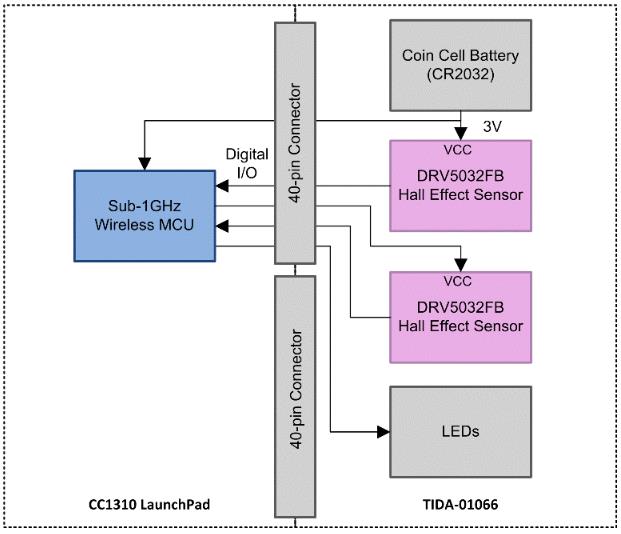
Powered by ultra-low-power digital Hall-effect sensors and the SimpleLink™ wireless microcontroller (MCU) platform, this reference design provides a door and window sensor solution that eliminates wiring and maximizes battery life.
As more and more building automation applications turn to wireless sensor nodes, battery life becomes a critical requirement. TI’s ultra-low power sensors, operational amplifiers and wireless microcontrollers help reduce average current in battery-powered applications.
Comments
Related news
Power Scaling, Sequencing, and Analog Implementation
Power sequencing is an essential part of every design. It becomes even more critical in complex systems that utilize multiple power rails. Modern high-performance processing devices such as FPGAs, ASICs, PLDs, DSPs, ADCs, and microcontrollers require multiple voltage rails to supply power to internal circuits such as cores, memory, and I/O. Specialized voltage rail power up/down sequencing is necessary to operate reliably and achieve higher efficiency. Voltage and power scaling technologies are highly effective for small, high-density integrated circuits, enabling the implementation of diverse power management systems that reduce power loss and optimize device temperature while maintaining high system performance. AVSO (Adaptive voltage-scaling optimization) is one of the voltage scaling implementation techniques. AVSO implementation can be accomplished through various methods, including digital or analog approaches. The most commonly used method is employing a PMBus or I2C interface, which allows initial power supply voltage to be programmed to operate ASICs, FPGAs, or microprocessors with appropriate accuracy. Once the processor completes the boot-up sequence, it communicates with the voltage regulator through PMBus or I2C command sets. This communication instructs the regulator to adjust the output voltage level in accordance with the host's performance requirements. The most well-known standard commands are VOUT_COMMAND and VOUT_MARGIN. To facilitate smooth data exchange between them, both the host and voltage regulator must implement the same digital communication protocol.
2017.05.19by 김지혜 기자
Try using MCU and RF solutions on a single chip.
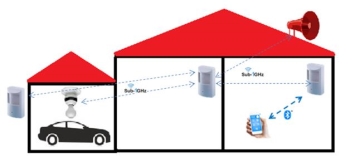
A motion detector is a device that detects and alerts when a person is present in a designated area. It is used in residential homes, office buildings, and other facilities. The detector can transmit notifications via sound, light, or wired/wireless signals to various devices such as control panels, alarm units, and cloud systems. Wireless motion detectors are easy to install and expand because they do not require wiring through walls. Common detection techniques include PIR (passive infrared), ultrasonic emitters, and microwave emitters. Wireless motion detectors installed indoors or outdoors are primarily used in intrusion detection systems. They employ Sub-1GHz wireless technology because of superior radio frequency (RF) performance, low power consumption, and cost-effectiveness. TI's system-on-chip (SoC) Sub-1GHz solution (CC13x0 wireless MCU) integrates a low-power, feature-rich MCU and RF solution on a single chip. In a sensor system (Figure 1), this low-power wireless MCU can operate as the main MCU of the system, interfacing directly with sensors or operating through amplifiers, filters, and comparators. Additionally, the CC1350 and CC1310 wireless MCUs integrate I2C, UART, and SPI for peripheral control, and include an embedded 12-bit analog-to-digital converter (ADC) for analog signal sampling.
2017.05.26by 김지혜 기자

To shorten the charging time of electric vehicle batteries
The greatest concern for electric vehicles is whether they can operate without running out of "fuel" and travel long distances. The fuel for electric vehicles is, of course, electricity. The fuel issue is related to battery capacity and electric charging stations. Electric vehicles have existed since the 1800s in somewhat different form, and they faced problems that are essentially similar to those we encounter today. In fact, in the early 1900s in the United States, one quarter of produced vehicles were electric vehicles. The reason demand decreased was that the supply and distribution of gasoline was easier than electricity. It took 60 years before the necessity of electric vehicles began to emerge due to environmental concerns. Problems that electric vehicles have not yet resolved include improvements in battery capacity, high-efficiency motors, and public awareness regarding environmental pollution. The issue of easy access to public charging stations and the ability to charge quickly remains significant. To meet market needs, charging stations including DC fast chargers must become as ubiquitous as ordinary gas stations. Additionally, all electric vehicles must be compatible at electric vehicle charging stations.
2017.06.02by 김지혜 기자

Intel Unveils Next-Generation 'Core Ultra Series 3' and vPro Platform for Enterprise PCs
Intel has officially unveiled the "Intel Core Ultra Series 3" for next-generation enterprise PCs and the latest vPro platform, addressing a wide range of demands from enterprise notebooks to high-performance workstations.
2026.03.26by 배종인 기자
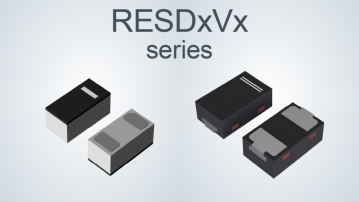
ROHM Launches ESD Protection Diode Compatible with High-Speed Interfaces of 10Gbps or Higher
Semiconductor specialist ROHM has developed the 'RESDxVx series' of ESD (electrostatic discharge) protection diodes capable of responding to next-generation high-speed data communication environments exceeding 10Gbps, simultaneously enhancing both signal quality maintenance required in high-speed interfaces and IC protection performance.
2026.03.26by 배종인 기자











