



[Reporter's Notebook] What is the relationship between quantum communication and Mozi?
 Published2017.07.24 15:59
This is Mozi, the representative of Mohism, who emphasized universal love, which is to love all people. In an era of wars of aggression dominated by the logic of the law of the jungle, the small cry of this philosopher armed with the spirit of humanity could not change the trend of the times, but his spirit was enough to leave a clear mark on later generations.
Could that be the reason? The reason China chose 'Mozi' as the name of the quantum communication satellite it launched last year seems to contain the meaning of opposition to war and peace. The Mozi, which took over 8 years to prepare, is the world's first independently developed quantum satellite by China and flew into space aboard a rocket called 'Long March 2-D'.
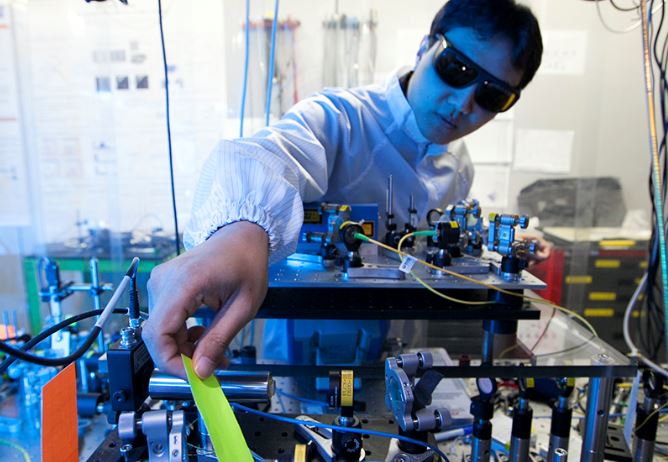
So why did China invest so much time and money? The quantum satellite was launched for the purpose of commercializing quantum communications. Quantum communications are made to utilize quantum mechanics, which has uncertainty, for communications. The biggest advantage of quantum communications is that they are impossible to hack, let alone eavesdrop on. According to quantum mechanics, which has the principle of uncertainty I mentioned earlier, the moment eavesdropping is attempted, the encryption key itself is damaged, making the content of the communication unknowable. In particular, in the era of the Internet of Things (IoT) where information connectivity is a hot topic, the ability to prevent security breaches at the source is the greatest advantage of quantum communication.
This bold challenge from China seems to have borne its first fruit(?) in June. The Chinese Academy of Sciences announced that it had succeeded in an experiment to teleport quantum information 1,200 km away using a quantum communications satellite. The research team generated 6 million pairs of photons per second from the Mozi satellite in an orbit 500 km above the ground and transmitted one of them to the base. This means that the quantum sent from the satellite was teleported to a 1m-sized ground device target. The 'quantum teleportation' used in this experiment is a technology that uses the quantum entanglement state of photons to make quantum information disappear from one place and appear in another place at the same time. (That's why there are talks that human teleportation is possible.)
Countries around the world, recognizing the importance of quantum technology, have been working on developing quantum information and communication technology for over 10 years. Since it is a field that requires astronomical costs from the beginning, development is still being carried out mainly in technologically advanced countries such as the US, Japan, and Europe, but research and development is being expanded to include China, which launched a quantum satellite, and Korea, an IT powerhouse.
The United States has established a national quantum information science vision and announced that it will invest 1 trillion won annually. Europe has been continuously investing in a project called 'Quantum Europe', and Japan built a quantum cryptography test network in Tokyo in 2010. Korea, which established a mid- to long-term quantum information communication strategy in 2014, built the first domestic quantum cryptography communication test network last year and opened a quantum cryptography communication test bed to enable testing and verification. Last June, SK Telecom announced that it had developed the first quantum cryptography communication relay device in Korea and successfully transmitted quantum cryptography keys over a 112 km round trip experimental network from Bundang to Yongin and Suwon.
Quantum technology development and Mozi's secret
However, everything has a bright side and a dark side. Although quantum communication is said to be a technology that is completely unhackable, there are also claims that it is still just a theory. There is no perfect spear or shield. Also, although it is a technology that is absolutely necessary for secure communication, it also carries the risk that it can be diverted for military purposes. A clear example is that North Korea’s quantum cryptography technology has recently been revealed to be at a considerable level. Unlike advanced countries that have stepped forward to use it in the information and communication field, North Korea’s use is very likely to be military.
Let's go back to the story of Mozi. In the classic [Mozi], there is a section called "Non-aggression" that says that one should not attack others and wage war. In the great state of Chu, the famous engineer Gong Su-ban developed a new siege weapon called the "cloud ladder" and was planning to attack the weak state of Song. When Mozi heard the news, he rushed to Chu and requested that they stop the attack, but the king of Chu did not give up his will to invade. In front of the king of Chu, Mozi fought a mock war with Gong Su-ban and blocked all of the mock cloud ladder attacks, so the king gave up his plan to attack Song.
This anecdote tells us that Mozi was a practical philosopher who stood up to invaders with his bare body for the peace of all mankind, leaving aside the peace of an individual. This is why history calls the era of Mozi the era of human discovery and human awakening. Now that the quantum communication satellite Mozi, named after the ancient pacifist, is floating in space, we are once again reminded of the relationship between cutting-edge technology and peace.
Comments
Related news
Infineon Implements Post-Quantum Cryptography in Industry's First Contactless Security Chip
Infineon Technologies has completed preparations to transition security protocols to next-generation post quantum cryptography (PQC). As an industry first, Infineon has successfully implemented PQC in commercial contactless security chips, such as those used in electronic ID cards. Attacks using quantum computers against encryption methods used today are expected to become reality within the next 15 to 20 years. When that occurs, quantum computers will be able to solve certain calculations much faster than current computers, and therefore could pose a threat even to currently recognized superior security algorithms such as RSA and ECC. Various internet standards such as TLS (Transport Layer Security), S/MIME, and PGP/GPG protect data communication with smart cards, computers, servers, and industrial control systems by using encryption based on RSA or ECC. Representative examples include online banking on HTTPS sites and instant messaging encryption on mobile phones.
2017.06.15by 김자영 기자
SKT Successfully Transmits and Receives Quantum Cryptographic Keys on Experimental Network 112km Round Trip Between Bundang and Suwon
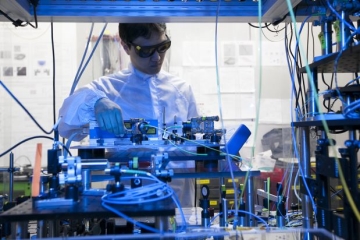
SK Telecom has developed a dedicated quantum key distribution repeater and announced that it successfully transmitted quantum cryptographic keys over a 112 km round-trip experimental network spanning from Bundang to Yongin and Suwon. By connecting multiple units of the newly developed quantum key distribution dedicated repeater, quantum cryptographic communication can be transmitted over hundreds to thousands of kilometers. Since quantum key distribution uses extremely weak signals at the single quantum level, quantum cryptographic key transmission was only possible up to approximately 80 km prior to the development of the dedicated repeater. Despite its excellent security performance, the 'distance limitation' has been a major obstacle to the commercialization of quantum key distribution. To overcome this, SK Telecom developed a dedicated quantum key distribution repeater (Trusted Repeater) and enabled transmission of quantum cryptographic keys beyond 80 km. For example, considering that the distance from Seoul to Busan is approximately 460 km, if five dedicated repeaters are installed, quantum cryptographic keys transmitted from Seoul can be received in Busan. SK Telecom plans to apply the dedicated repeater to its commercial network in part by the end of this year and gradually expand the coverage of quantum key distribution services.
2017.06.19by 김자영 기자
SKT to Commercialize 'Quantum Cryptography' That Cannot Be Broken Even by Supercomputers
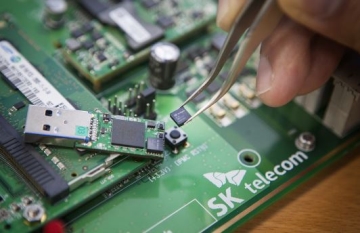
There are growing concerns that if quantum computers capable of factoring large integers become commercialized, existing cryptographic systems will collapse. SK Telecom announced on the 23rd that it has developed a Quantum Random Number Generator (QRNG) and a quantum cryptographic communication security system as security solutions for quantum computers. Existing optical communication contains innumerable photons, so even if some keys are eavesdropped on or duplicated, it cannot be detected, resulting in high hacking threats. This is also why existing cryptographic systems are expected to collapse when quantum computers are developed. However, quantum cryptographic keys consist of single photons. When A transmits information to B, the information becomes meaningless except for transmission through the 'normal channel'. If a hacker intervenes in the middle to measure the information and retransmit it to B, the hacker cannot obtain the information due to the uncertainty principle and the no-cloning theorem, while B detects the eavesdropping as errors are amplified.
2017.07.24by 김자영 기자
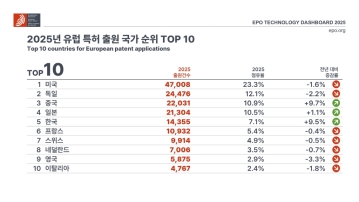
European Patent Applications Surpass 200,000 for the First Time… South Korea Maintains 5th Place, Led by Batteries and Telecommunications
According to the European Patent Office (EPO)'s 'Technology Dashboard 2025', European patent applications last year reached 201,974, surpassing 200,000 for the first time. Korean companies and inventors filed 14,355 applications, representing a 9.5% increase from the previous year and maintaining 5th place by country. Battery, digital communication, and semiconductor technologies led the growth, with Samsung ranking as the top EPO applicant for the second consecutive year and LG reaching 3rd place. The presence of major domestic cities such as Seoul, Suwon, and Yongin was also confirmed. It was also revealed that Korea's European patent strategy is expanding beyond individual technologies to span the entire industry.
2026.03.24by 명세환 기자

SK Telecom First Applies AI-Based Network Operations at Gwanghwamun K-Pop Concert
SK Telecom announced that it applied an AI-based network operation system for the first time at a large-scale K-pop concert held in the Gwanghwamun area of Seoul on March 21st, managing communication quality throughout the event. Mobile data usage during the three hours before and after the concert reached 12.15TB, approximately doubling compared to the same time slot the previous weekend. SK Telecom monitored traffic using the AI system 'A-One' in five-minute and 50-meter units to respond to potential overload situations, while also operating temporary communication facilities and on-site personnel in parallel. This case is interpreted as confirmation of the practical applicability of AI-based autonomous network operation in an environment where demand from dense events and foreign users increases simultaneously.
2026.03.23by 명세환 기자











