



Electronic fuses provide complete protection of downstream circuits
 Published2017.07.27 12:06
Self-healing properties automatically recover when 'broken'
When buying a TV, the brand is one of the important choices. The brand affects the reliability of the product. Since different manufacturers have different quality standards, there are bound to be brands that break down more frequently.
When a product breaks down, the manufacturer must spend time and money to repair it. Finding and replacing the defective part in the TV and recording the root cause of the failure takes a considerable amount of time, and it costs replacement costs and labor costs to restore it to its original state.
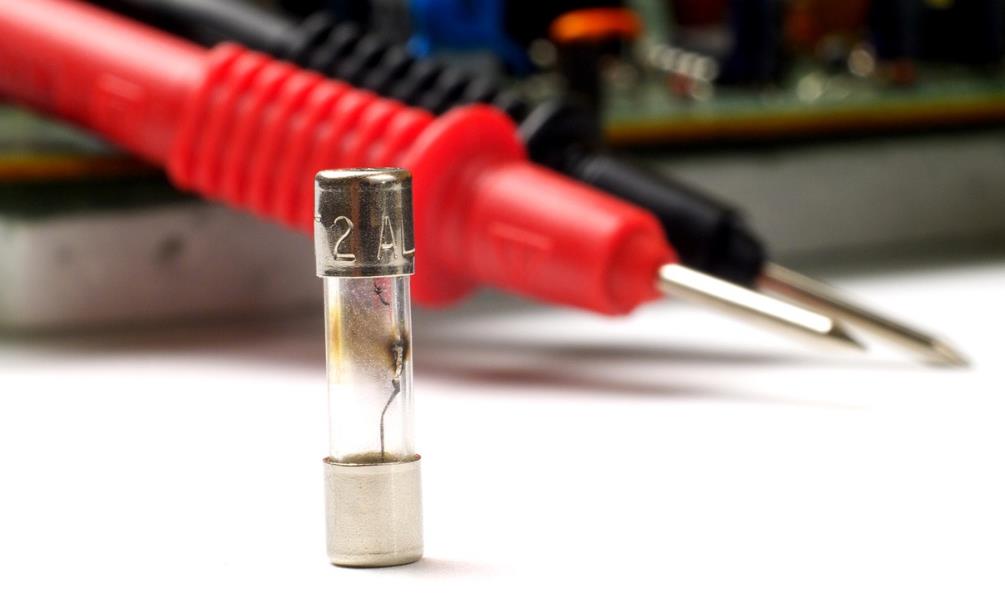
One of the most common components to fail in an electronic system is the input fuse. TVs often use mechanical fuses (or “melting fuses”). Manufacturers often rely on mechanical fuses to protect their systems instead of more expensive options because of their low cost. Unfortunately, mechanical fuses must be physically replaced every time they fail because they melt and become damaged and inoperable. Additionally, each fuse has a current rating and trip point, so they should be stored and managed carefully.
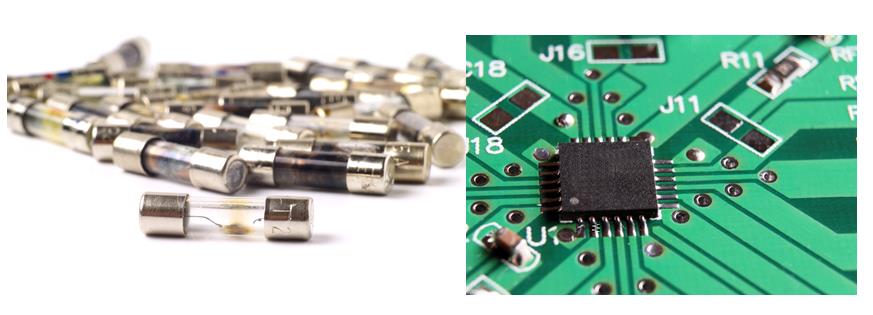
The operating characteristics of mechanical fuses contrast sharply with electronic fuses, also known as eFuses. Semiconductor devices such as the TI TPS25921A in Figure 2 have “self-healing” characteristics, meaning that when a fuse “blows,” it can automatically recover and reconfigure the circuit.
eFuses detect overload events and protect downstream circuits by limiting current, clamping output voltage, and, if necessary, shutting off power to the eFuse output. Each eFuse offers a variable current limit setting with an external resistor, simplifying inventory management by reducing the number of unique parts that manufacturers need to stock compared to mechanical fuses.
Some eFuses can also protect against reverse current by adding an external blocking FET (TPS25924) or integrating back-to-back FETs (TPS25940). In simple terms, the role of the eFuse is to ensure that the downstream circuitry is fully protected against any overcurrent or overvoltage transient conditions.
Compared to mechanical fuses, eFuses are more effective at preventing damage to downstream components. In the time it takes for a mechanical fuse to heat up and “melt,” an eFuse already protects the circuit. This time difference means that a system designed with an eFuse will not be damaged by temporary overcurrent or overvoltage events and will return to normal operation once the problem is resolved. In contrast, the same system designed with a mechanical fuse will have to be returned to the manufacturer for replacement if the fuse blows.
Using eFuses instead of mechanical fuses in your TV can reduce the risk of product failure.
Comments
Related news
Try using MCU and RF solutions on a single chip.
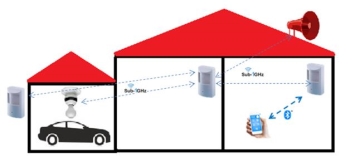
A motion detector is a device that detects and alerts when a person is present in a designated area. It is used in residential homes, office buildings, and other facilities. The detector can transmit notifications via sound, light, or wired/wireless signals to various devices such as control panels, alarm units, and cloud systems. Wireless motion detectors are easy to install and expand because they do not require wiring through walls. Common detection techniques include PIR (passive infrared), ultrasonic emitters, and microwave emitters. Wireless motion detectors installed indoors or outdoors are primarily used in intrusion detection systems. They employ Sub-1GHz wireless technology because of superior radio frequency (RF) performance, low power consumption, and cost-effectiveness. TI's system-on-chip (SoC) Sub-1GHz solution (CC13x0 wireless MCU) integrates a low-power, feature-rich MCU and RF solution on a single chip. In a sensor system (Figure 1), this low-power wireless MCU can operate as the main MCU of the system, interfacing directly with sensors or operating through amplifiers, filters, and comparators. Additionally, the CC1350 and CC1310 wireless MCUs integrate I2C, UART, and SPI for peripheral control, and include an embedded 12-bit analog-to-digital converter (ADC) for analog signal sampling.
2017.05.26by 김지혜 기자
To shorten the charging time of electric vehicle batteries
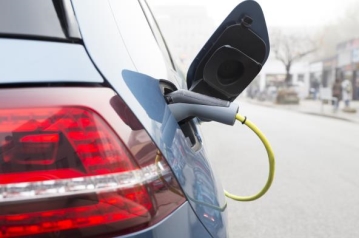
The greatest concern for electric vehicles is whether they can operate without running out of "fuel" and travel long distances. The fuel for electric vehicles is, of course, electricity. The fuel issue is related to battery capacity and electric charging stations. Electric vehicles have existed since the 1800s in somewhat different form, and they faced problems that are essentially similar to those we encounter today. In fact, in the early 1900s in the United States, one quarter of produced vehicles were electric vehicles. The reason demand decreased was that the supply and distribution of gasoline was easier than electricity. It took 60 years before the necessity of electric vehicles began to emerge due to environmental concerns. Problems that electric vehicles have not yet resolved include improvements in battery capacity, high-efficiency motors, and public awareness regarding environmental pollution. The issue of easy access to public charging stations and the ability to charge quickly remains significant. To meet market needs, charging stations including DC fast chargers must become as ubiquitous as ordinary gas stations. Additionally, all electric vehicles must be compatible at electric vehicle charging stations.
2017.06.02by 김지혜 기자
Easy way to turn wired sensors into wireless ones
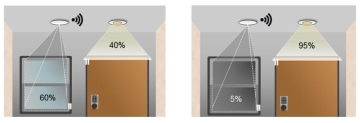
For building automation, attention must be paid to changes in surrounding environmental factors. Sensors are used to collect environmental data, but adding sensors creates a problem: extensive cables and wiring are required to provide power and communication. Internet of Things (IoT) devices equipped with wireless sensors can solve this wiring problem. Some applications still require wiring, such as ambient light sensors and door and window sensors. Implementing existing wired applications wirelessly is not as difficult as one might think. Ambient light sensors used in commercial buildings detect the intensity of light in a specific space and maintain balance of the overall ambient light in a given work area. Typically, light sensors are connected by wire to lighting controlled by the sensor. To implement a wireless solution, connect the lighting to a smart controller through wireless connectivity and install a wireless light sensor near the window. Additionally, wireless sensing nodes make it easier to build smarter systems.
2017.07.19by 김지혜 기자

Intel Unveils Next-Generation 'Core Ultra Series 3' and vPro Platform for Enterprise PCs
Intel has officially unveiled the "Intel Core Ultra Series 3" for next-generation enterprise PCs and the latest vPro platform, addressing a wide range of demands from enterprise notebooks to high-performance workstations.
2026.03.26by 배종인 기자

ROHM Launches ESD Protection Diode Compatible with High-Speed Interfaces of 10Gbps or Higher
Semiconductor specialist ROHM has developed the 'RESDxVx series' of ESD (electrostatic discharge) protection diodes capable of responding to next-generation high-speed data communication environments exceeding 10Gbps, simultaneously enhancing both signal quality maintenance required in high-speed interfaces and IC protection performance.
2026.03.26by 배종인 기자











