


Reasons to Register IoT Patents in Korea, According to a Patent Expert
 Published2017.07.28 14:20
As patent disputes, which were primarily focused on smartphones, expand into the Internet of Things (IoT) sector, arguments have been raised that domestic patent registration should be prioritized.
Kang Jeong-bin, a patent attorney at IPIST Patent Law Firm who attended the Internet of Things technology seminar held at Songdo Convention Center on the 25th, said, “Although the amount of damages in patent disputes is small, it is possible to claim an injunction against patent infringement, which can prevent copying by subcontractors, outsourcing companies, and competitors,” adding, “In addition, (domestic patent registration) is an important factor in securing national or public/private business contracts.”
Patent Attorney Kang continued, “U.S. patents based on Korean patents can hold significant economic value. As the global trend shifts toward patent protection, the domestic market is also facing pressure.” He added, “Due to the nature of IoT, it is easier to obtain patents with more comprehensive coverage than in other fields. If companies secure patents comprehensively, patent infringement lawsuits become inevitable,” emphasizing that patent protection can be a competitive advantage for small and medium-sized enterprises.
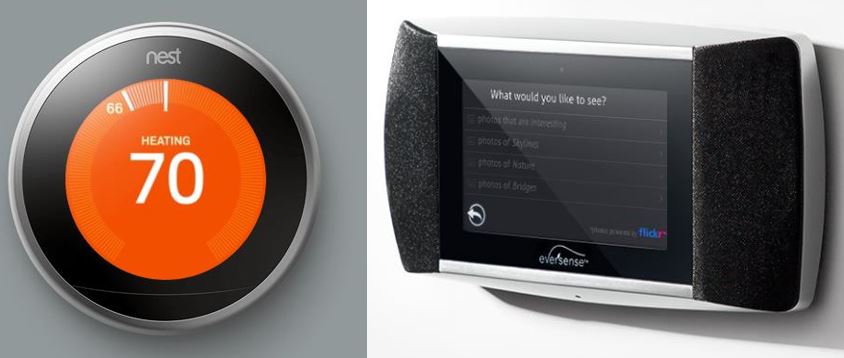
In his presentation that day, Patent Attorney Kang introduced the case of Nest Labs, acquired by Google, and Allure Energy, a former startup, as an example of an IoT patent dispute. Allure Energy patented technology that automatically adjusts heating and cooling based on the user's location. This later became a problem when the technology was applied to IoT products released by Nest Labs.
He said, “Allure Energy patented the technology in advance, predicting that its product would fail and be applied, while Nest Labs succeeded with the product using that technology. However, it was Allure Energy that gained a positive outcome from the lawsuit. For small and medium-sized enterprises to compete with large corporations and grow, it is important to hold patent rights.”
There are no such dispute cases in Korea. Since the average amount of damages from domestic patent infringement is less than 100 million won, litigation costs are burdensome, resulting in fewer than 100 infringement lawsuits filed annually. Under these circumstances, foreign companies do not file for patents in Korea, and even large domestic corporations tend to file for patents overseas rather than domestically. However, it was emphasized that small and medium-sized enterprises (SMEs) must prioritize domestic patent registration to benefit in the long run.
Patent Attorney Kang further explained that in securing patent rights, one should focus on 'where and which patents to file to maximize profits,' such as patents regarding features that IoT devices must commonly possess, patents regarding functions that will inevitably arise due to changes in the technological environment, patents regarding core purposes that can be realized by integrating IoT into devices, patents regarding what will be clearly and essentially used from a user's perspective (UI), and patents from a different angle regarding features currently used as essentials.
Comments
Related news
Easy and fast connectivity is key to IoT healthcare as well; how is standardization progressing?
A discussion on smart healthcare was held on the 18th at the Science and Technology Hall. At the event "Healthcare Internet of Things Technology for the Fourth Industrial Revolution," hosted by the Ministry of Food and Drug Safety and organized by the Electronics and Telecommunications Research Institute, participants discussed △cloud for healthcare IoT application development △healthcare IoT device development processes and Web RTC technology for remote healthcare services △OCF standards △healthcare patent trends and demonstration project status.
2017.07.18by 김자영 기자
When it comes to IoT business, LPWA technology is essential.
Internet of Things (IoT) has now expanded beyond home IoT to take on an important role in industrial applications such as smart cities and smart farms. As smartphone technology has become increasingly sophisticated, the market has reached saturation, and the Internet of Things has emerged as a successor technology. In home IoT, services could be provided using short-range wireless communications such as Bluetooth or Wi-Fi, but as the service range expands, there is a need to go beyond 'short-range'. It is not sufficient merely to have high speed and extend beyond short-range; the cost of communication chips and modules must be low. Additionally, power consumption must be minimized. As a solution to these challenges, Low-Power Wide Area (LPWA) Internet of Small Things (IoST) technology utilizing Long Term Evolution (LTE) frequencies is emerging. This concept stems from the recognition that there is no need to transmit data at high speeds or in large volumes. By providing small quantities of data across a wide area, it is applied to remote metering, street lights, vending machine tracking, sensing, and meter reading.
2017.07.26by 김지혜 기자
KT Giga IoT Air Doctor and other home IoT devices. Receive security certificates.
KT announced on the 26th that it has received the 'IoT Security Test Certificate for Home Appliances' from the Korea Internet & Security Agency (KISA) for three types of home IoT terminals (Giga IoT AirDoctor/Plug/Multi-tap) for the first time in Korea. At the security test certificate presentation ceremony held at the KISA Startup Campus located in Pangyo, Seongnam-si, Gyeonggi Province, attendees including Kim Chang-yoo, Executive Director of KT SCM Strategy Office, as well as representatives from KT partner companies Innopia Tech (Giga IoT AirDoctor) and Dawon DNS (Giga IoT Plug, Giga IoT Multi-tap) received the 'IoT Security Test Certificate for Home Appliances'.
2017.07.26by 신윤오 기자
Nvidia invests $5 billion in Intel
NVIDIA and Intel, leaders in global AI computing technology, are now forging ahead in providing cutting-edge solutions through NVLink-based architecture integration. NVIDIA and Intel have officially announced a strategic partnership and stated that they will jointly develop customized data center and personal computing products to accelerate diverse applications and workloads ranging from hyperscale to enterprise and consumer markets, thereby laying the foundation for the next generation computing era.
2025.09.22by 배종인 기자
.jpg)
Applied Materials Launches Environmental Protection Campaign to Mark World Cleanup Day
Applied Materials Korea (CEO Park Kwang-seon) is carrying out environmental cleanup activities with employees and their families around the Dongtan Sinricheon area on the occasion of World Cleanup Day, evolving into a company that engages with the local community beyond technological innovation.
2025.09.22by 명세환 기자











