



Controversy over Haeundae vacationer count, big data technology identifies duration of stay
 Published2017.08.02 11:06
피서객 유입 경로·주요 동선 파악해 부산시 교통 대책 및 재난 등에 활용
흔히 뉴스에서 기준으로 삼는 피서객들의 수는 얼마나 정확히 매겨지는 것일까.
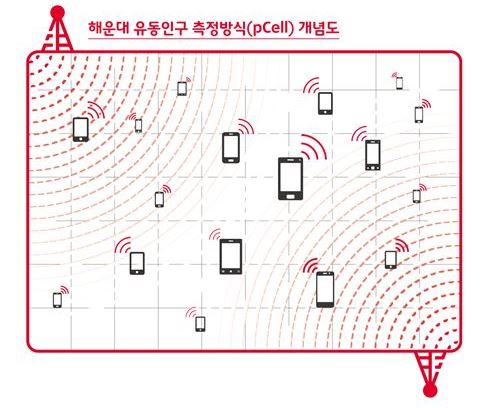
지금까지 국내 해수욕장의 ‘메카’로 불리는 부산 해수욕장의 피서객 집계가 논란이 되어 왔다. 하지만 올해부터 해운대구가 휴대폰의 위치정보를 이용한 빅데이터 분석 기법을 활용해 피서객 수를 집계하기로 하면서 이같은 논란이 해결될 전망이다.
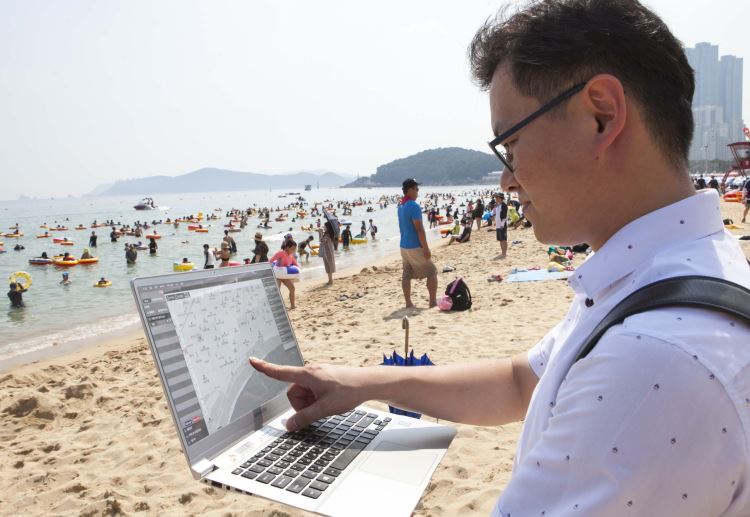

휴가철 성수기 첫 주말, 해운대·송정 해수욕장 피서객 67만
Comments
Related news
ESP32 Development Environment Selection and GPS Application Implementation
The ESP32 is a microcontroller that integrates Wi-Fi, Bluetooth, 12-bit ADC, capacitive touch, PWM, DAC, and UART in a single SoC. However, the abundance of features does not by itself solve the designer's problems. The real challenges lie in selecting the appropriate development environment, determining which pins can be used and which must be avoided, and converting raw data from modules into usable information. This document addresses ESP32 peripheral constraints (ADC2 and Wi-Fi coexistence limitation, UART1 occupancy, ADC non-linear regions), the trade-offs between Arduino IDE and ESP-IDF, and the process from connecting NEO-6M/NEO-M8N GPS modules to UART2, parsing NMEA sentences, and visualizing routes in Google Earth, all organized based on documented references.
2026.10.12by 편집부
MIPI CSI-2, DSI-2, C-PHY, D-PHY Test Solution Technical White Paper
The MIPI interface adopts a burst mode that transitions between low-power (LP) and high-speed (HS) states for low-power consumption, and in return, strict timing rules are imposed on state transitions. Additionally, the high-speed section operates as a packet-based protocol with headers, ECC, and CRC, so verification engineers must handle waveforms and protocols simultaneously. Traditional configurations combining general-purpose oscilloscopes and AWGs reveal limitations in setup complexity, measurement uncertainty, and lack of reproducibility when faced with these requirements. This white paper, based on webinar materials, organizes the structure of this problem and describes how the SV5C-DPTXCPTX generator for receiver testing and SV5C-DPRXCPRX analyzer for transmitter testing integrate state transition testing, stressed eye testing, and protocol analysis into a single bench, along with their application boundaries.
2026.10.12by 편집부
NVIDIA to Invest $1 Billion in U.S. Science Over Next Five Years
NVIDIA has announced plans to invest $1 billion over the next five years to strengthen U.S. scientific and technological competitiveness. The company will enhance cutting-edge artificial intelligence research and development capabilities in key areas including quantum computing, healthcare, and energy security, while expanding support for higher education research institutions and cloud service providers. NVIDIA is participating as a major industry partner in the White House Office of Science and Technology Policy's Genesis Mission, and is promoting supercomputer construction in collaboration with national laboratories including Argonne and Los Alamos.
2026.10.12by 배종인 기자

Advanced Capacitive Sensing Technology for Moisture-Resistant Touch and Digital Level Sensing
Capacitive sensing is replacing mechanical buttons and contact-type water level sensors by virtue of its non-contact and movable-part-free characteristics. However, water and frequently changing ground conditions directly disturb its measurement principle. Based on Microchip webinar materials, this white paper describes the principles, configuration, and performance basis of Digital Level Sensing (DLS), which reports water level regardless of ground conditions, and Impulse Touch Sensing (ITS), which eliminates the effect of water at the moment of signal acquisition. Furthermore, it specifies application boundaries that designers should be aware of, including recommended mechanical stack-up below 5mm, inapplicability to metal containers, and the necessity of validation for media other than water.
2026.10.12by 편집부
ElevenLabs Achieves $22 Billion Valuation...Completes $300 Million Employee Tender Offer
ElevenLabs completed a $300 million employee tender offer based on a $22 billion corporate valuation, driven by expanding demand for enterprise conversational AI agents.
2026.10.12by 배종인 기자











