



Payment Complete with a Single QR Code: How China Became a Mobile Finance Powerhouse
 Published2017.08.18 06:48
Seeking cooperation with China, home to the world's No. 1 fintech company
China is now entering an era where neither cash nor credit cards are needed.
Chairman Oh Jeong-geun, who led members of the Korea Financial IC Convergence Society to China last July to tour the country's mobile finance and fintech industries, attended the 'Seminar on Trends in China's Mobile Finance and Fintech Industries' and described China as follows.
Even without Chairman Oh’s remark expressing surprise at the fact that the majority of Chinese people use WeChat QR codes to make very convenient payments when purchasing goods in stores, various figures represent the advanced(?) mobile financial industry of China.
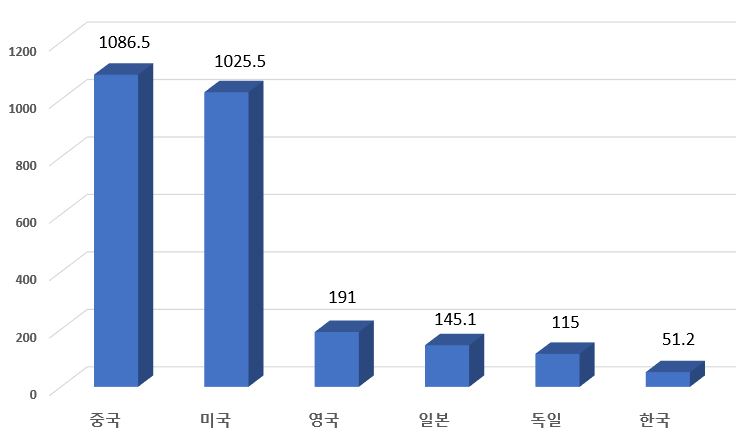
According to the '2016 Global Fintech Report' recently released by KPMG, eight Chinese companies were included among the top 50 fintech firms. This ranks second, following the United States, which had 18 companies. For reference, the UK had four companies on the list. However, a closer look reveals even more surprising results. Among the top five companies, China ranked first with four firms, including Ant Financial, the world's leading fintech company, while the United States ranked second with just one. It is no exaggeration to say that China is effectively leading the global fintech industry.

Ant Financial is the financial holding company of Alibaba Group. Alibaba Group, which was launched in 1999 when Jack Ma established an e-commerce company, founded the payment service Alipay in 2004 and was listed on the New York Stock Exchange in September 2014. Since then, Alibaba has grown into a massive mobile financial group with a sprawling portfolio of mobile finance and fintech companies covering lending, deposits, asset management, insurance, and credit analysis, eventually becoming the world's leading fintech company.
Regarding this, Chairman Oh stated, “When a customer applies for a loan remotely, Ant Financial utilizes a credit analysis system based on a vast amount of big data—approximately 100,000 pieces—to determine and notify the loan eligibility and interest rate level within three minutes, and executes the loan within one minute. At the same time, by operating a risk management system utilizing artificial intelligence deep learning, we maintain a low default rate of 2.4%.” He further emphasized, “This is possible because we operate an AI-based risk management system grounded in massive big data, utilizing not only data accumulated from e-commerce but also statistics from various government public institutions, such as the National Police Agency.”
Negative regulation is a key factor behind the rapid development of China's mobile finance.
China is creating synergy by allowing industrial capital in the form of e-commerce companies to enter the financial industry, as well as permitting diversified financial operations that enable them to engage in anything necessary, such as deposits, loans, asset management, insurance, and credit analysis. Ant Financial's MyBank recorded a cumulative loan amount of 49.2 billion yuan (approximately 8.2 trillion won) within just one year of launching operations. Furthermore, P2P (Peer-to-Peer) lending and crowdfunding are also developing rapidly in China. Antshares, a cryptocurrency issued by Onchain, a blockchain and cryptocurrency development company founded in 2014, ranks 7th in the world in terms of trading volume.
Regarding China's mobile finance and fintech industries, Chairman Oh pointed out, "Negative regulation is a key factor behind China's rapid development," adding, "On the other hand, Korea is just taking its first steps, and it is regrettable that various regulations are hindering its development." This means that innovation in financial services in Korea is effectively blocked due to various regulatory barriers, such as the overly strict and outdated separation of banking and commerce and excessive personal data protection.
Meanwhile, the seminar, held to actively respond to mobile finance and the global fintech industry and to explore ways to develop the future financial industry, was co-hosted by Representative Kim Jong-seok of the National Assembly's Political Affairs Committee and the Korea Financial ICT Convergence Society.
Korea has excessively strict, outdated separation of banking and commerce and excessive personal information protection, etc.
Financial service innovation is virtually blocked due to various regulatory barriers
In his opening remarks, Rep. Kim stated, “Considering the rapid development of China’s mobile finance and fintech industries, Korea must also abolish regulations in the financial industry, such as the separation of banking and commerce, and change its regulatory system to a negative regulation system.” He added, “Furthermore, relevant laws that excessively restrict the use of big data, such as the Personal Information Protection Act and the Electronic Financial Transactions Act, must be amended to enable credit analysis based on big data.”
The event, chaired by Professor Lee Byung-hye of the Department of Digital Media at Myongji University, featured presentations on the current status and prospects of the Chinese fintech industry (Professor Moon Jong-jin, Myongji University), the current status and prospects of the Chinese mobile financial industry (Professor Kim Yang-woo, University of Suwon), and the current status and prospects of the Korean mobile financial industry (Professor Choi Kyung-kyu, Dongguk University), as well as in-depth paper presentations on cooperation strategies for the mobile financial and fintech industries in Korea and China and directions for legislative reform.
Comments
Related news

LG Electronics President Jo Jun-ho: "We Will Expand Our Value-Oriented Product Lineup with LG Pay Next Year"
LG Electronics' MC Business Division President Jo Jun-ho demonstrated confidence in LG Pay, the company's offline payment service for smartphones, during a meeting with customers. LG Electronics held an 'LG Mobile Products Briefing Session' on the 30th of last month at LG Twin Towers in Yeouido, Seoul, and had an opportunity to hear the voices of LG smartphone customers. The event, which proceeded for approximately 80 minutes, was attended by MC Business Division management including MC Business Division President Jo Jun-ho, MC Terminal Business Division Executive Vice President Jung Ho-jung, and SW Platform Division Executive Vice President Kim Ki-young, as well as approximately 50 netizens including LG G6 pre-experience group members and power bloggers.
2017.07.05by 신윤오 기자

Samsung Pay, you can also pay with PayPal account
Samsung Electronics' mobile payment service 'Samsung Pay' has entered into a strategic partnership with 'PayPal', an online payment platform used by over 200 million people worldwide. Through this, Samsung Pay users can now make payments with their PayPal account on Samsung Pay. Once a user registers their PayPal account on Samsung Pay, they can make offline and online payments as easily and conveniently as with existing credit cards or debit cards. For offline payments, when users swipe up from the bottom of the screen on their smartphone's lock screen or home screen, Samsung Pay is launched, and they can select and use either the registered card or PayPal as their payment method.
2017.07.19by 김자영 기자
[Country Analysis] Fintech Overseas Expansion: Which Countries Are Advantageous?
A venue has been established to support domestic fintech companies' expansion into overseas markets. The Fintech Security/Authentication Technology Support Center of the Korea Internet & Security Agency analyzes market conditions in target countries for overseas expansion, recruits companies seeking to enter these markets, and provides both pre-entry and on-site support. On the 31st, a session was organized to share fintech status analysis information for Vietnam, Indonesia, Thailand, the Philippines, and Myanmar to support market entry into Southeast Asia. Companies seeking to expand among the five Southeast Asian countries will select two countries. Regarding the selection of Vietnam, Indonesia, Thailand, the Philippines, and Myanmar as candidate countries, Jin-heon Choi, Executive Director of Bridging Group Korea, stated, "We replaced Malaysia with Myanmar among the five Southeast Asian countries," and explained, "Malaysia is an Islamic country where the financial system differs from ours. Domestic companies are also excluding Malaysia." He provided explanations on the fintech industry status, government policies, major players, and market entry strategies for each country.
2017.08.02by 김지혜 기자
What blockchain needs to be applied to the financial industry
A forum has been prepared to discuss how blockchain, a technology gaining worldwide attention, is being applied to the financial industry and how it will be applied to the domestic financial industry. The Ministry of Science and ICT and the Korea Information Society Development Institute (NIA) hosted the 'Blockchain Technology and the Future of the Financial Industry Workshop' on the 9th at Sangam Nuri Dream Square. Lee Hyun-dong, team leader of the ICT Convergence Division at the Korea Information Society Development Institute, said, "The value of hyper-distribution and connectivity of blockchain aligns with the IoT activation foundation-building project that has been ongoing since 2015." The event proceeded with topics including cryptocurrency market prospects and legal status, the future of blockchain technology and the financial industry, and IoT pilot projects utilizing blockchain technology.
2017.08.10by 김지혜 기자

3 Legal Issues Arising from the Application of Cryptocurrency to the Financial Industry
When 'Bitcoin,' a virtual currency based on blockchain technology, emerged in 2009, over 800 types of virtual currencies appeared by August 2017. While existing currencies could be controlled through governments and central banks, with forgery prevention and enforcement capabilities, virtual currencies allow anyone to acquire currency through mining without a central server. Transaction records are disclosed transparently while anonymity is guaranteed. Even when attacked by ransomware, attackers demanded Bitcoin. Because transaction anonymity is guaranteed, there is concern that it could become a means for money laundering and tax evasion. Governments of various countries are attempting to regulate virtual currencies, but no definitive policy has yet been established. Cryptocurrencies are a new type of 'entity' with mixed legal characteristics—serving as a means of payment, medium of circulation, target of transactions and investment, and store of value. Currently, the prevailing view treats them as investment targets for assets or commodities, but due to the difficulty of legal determination, there is still no concrete definition.
2017.08.14by 김지혜 기자











