


At the center of the picture quality war, Samsung Electronics' winning strategy led by HDR 10 Plus
 Published2017.08.21 18:03
Collaborating with companies to expand the HDR10 Plus ecosystem
“If the focus was previously on the quantitative expansion of the screen, we must now pay attention to the qualitative expansion of pixels. We must provide benefits to consumers by broadening the range that pixels can display. HDR (High Dynamic Range) 10 offers a high degree of freedom in the mapping that converts light into code, enabling it to deliver the optimal image quality of the content.”
Lim Kyung-won, Senior Vice President of the Development Team at Samsung Electronics’ VD Business Division, introduced HDR10 Plus at the HDR Media Day held on the 21st, stating, “We are collaborating with content providers and display manufacturers to expand the HDR10 Plus ecosystem. There will be an official announcement at a major global exhibition to be held soon.”
HDR is a UHD video technology that enhances the three-dimensionality of an image by making bright areas brighter and dark areas darker, creating a screen that is as similar as possible to what the human eye sees. For HDR video, the same HDR technology must be applied from the production stage to the display device. Currently, the most widely used technology is 'HDR10'.
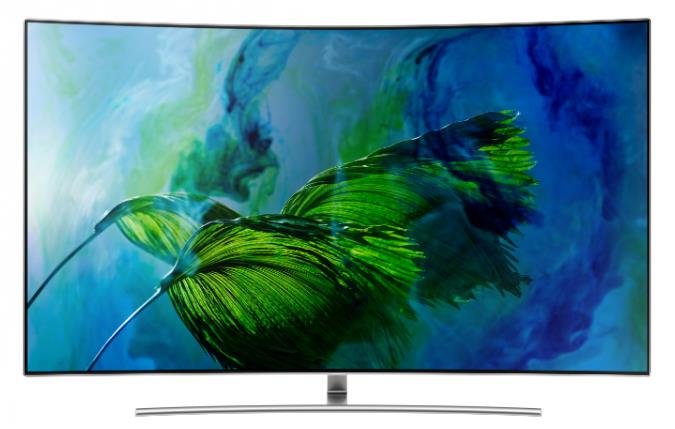
Samsung Electronics introduced the next level of evolution, 'HDR10 Plus,' this year. While HDR10 fixed brightness, HDR10 Plus does not, allowing the brightness to be increased or decreased. This allows for a diverse range of content creation environments, making it possible to produce optimal image quality.
Another feature is the ability to apply HDR effects tailored to individual scenes within the content. Previously, brightness and detail were mapped using a single method depending on the scene, resulting in parts that were darker or brighter than the original, which often led to a lack of detail. By dividing the mapping into scenes, it is now possible to depict the content more closely to the original.
Samsung Electronics, Dolby, Technicolor, Philips, and others are competing over HDR technology standard specifications. In response, Samsung Electronics plans to expand the ecosystem by releasing HDR10 Plus technology, adopted as a standard by the UHD Alliance, as open source. While Dolby Vision is sold to content creators for a fee, Samsung Electronics has released its technology for free, allowing anyone to use it.
Samsung Electronics agreed to provide streaming services based on HDR10 Plus in cooperation with Amazon in April of this year and to provide videos with HDR10 Plus applied to users worldwide through the video streaming app 'Amazon Prime Video' within this year.
Executive Director Lim stated, “For HDR to work, hardware must keep pace with software. The color range of pixels in the display must also be expanded, and we have the technology to do so,” predicting that it will spread not only to TVs but also to monitors, tablets, and smartphones.
Comments
Related news
Samsung Electronics expands premium market with launch of 88-inch QLED TV
Samsung Electronics announced that it will launch the QLED TV 88-inch model in earnest this month across Korea, North America, and Southeast Asian markets, and will sequentially expand the launch countries. With this, the QLED TV lineup will be completed by adding the 88-inch model to the existing 55-inch/65-inch/75-inch offerings, and Samsung plans to accelerate its expansion into the premium market. Samsung Electronics recently launched the MU8000, a 'Premium UHD TV,' alongside the QLED TV 75-inch model in response to the recent trend of larger TV sizes. The QLED TV 88-inch model unveiled this time retains all the advantages of Samsung Electronics' top-tier Q9 lineup, delivering the highest level of picture quality and usability as well as refined design that takes into consideration consumers' living spaces and lifestyles. The manufacturer's suggested retail price is 33 million won.
2017.08.02by 김지혜 기자
Samsung Electronics to Supply QLED Monitors for Tekken World Tour
Samsung Electronics will participate as an official sponsor at the 'TEKKEN WORLD TOUR KOREA,' a fighting game tournament to be held at 11 a.m. on the 6th at the JBK Convention Hall located in Samseong-dong, Gangnam-gu, Seoul, by supplying QLED TVs and QLED gaming monitors. 'TEKKEN WORLD TOUR' is an international gaming tournament conducted through a partnership between Twitch, a global game live streaming platform, and Bandai Namco Entertainment, the publisher of the TEKKEN series, to commemorate the release of 'TEKKEN 7' for PlayStation 4 (PS4), Xbox One, and Steam. Starting with the tournament in Thailand on the 1st of last month, it is scheduled to be held sequentially in countries around the world through November, including Korea this month, with total prize money exceeding $200,000 (approximately 224.6 million Korean won).
2017.08.03by 김지혜 기자
Samsung Electronics Wins 41 Products at International Design Competition
Samsung Electronics won a total of 7 awards at the prestigious international design competition 'IDEA (International Design Excellence Awards) 2017', including 2 gold awards, 3 silver awards, and 2 bronze awards. Samsung Electronics has earned the honor of being the '#1 company in cumulative awards over 5 years' with a cumulative total of 32 awards from 2013 through this year. This year, a total of 41 products were awarded, including those winning major awards such as smartphones, refrigerators, and air purifiers. The 'QLED TV (Q9)', which won the gold award, features a transparent optical cable that connects TV peripherals in one integrated system, and allows consumers to select stands as options according to their preferences, including an easel-type studio in addition to the basic stand and a gravity stand with outstanding sculptural aesthetics.
2017.08.21by 김지혜 기자
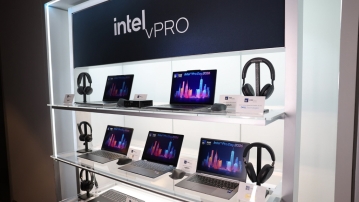
Intel Unveils Next-Generation 'Core Ultra Series 3' and vPro Platform for Enterprise PCs
Intel has officially unveiled the "Intel Core Ultra Series 3" for next-generation enterprise PCs and the latest vPro platform, addressing a wide range of demands from enterprise notebooks to high-performance workstations.
2026.03.26by 배종인 기자
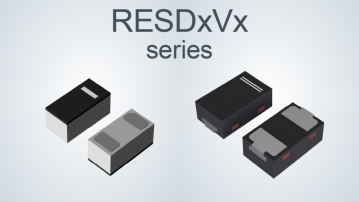
ROHM Launches ESD Protection Diode Compatible with High-Speed Interfaces of 10Gbps or Higher
Semiconductor specialist ROHM has developed the 'RESDxVx series' of ESD (electrostatic discharge) protection diodes capable of responding to next-generation high-speed data communication environments exceeding 10Gbps, simultaneously enhancing both signal quality maintenance required in high-speed interfaces and IC protection performance.
2026.03.26by 배종인 기자











