


Overcome Existing CPU Limitations, Growing Adoption of Accelerated Computing
 Published2017.08.25 10:35
Expected to Impact Virtually All Workloads
According to recent research and analysis by IDC (www.idc.com), the position of accelerated computing is strengthening to overcome the limitations of conventional CPUs, and adoption by enterprises is increasing.
IDC recently announced a classification system for accelerated computing to help enterprises understand the field that accelerated computing occupies in the computing platform sector and to support deployment strategies.
Accelerated computing is a function that accelerates applications and workloads by allocating portions of processes to silicon subsystems such as graphics processing units (GPUs) or FPGAs. It is gaining attention from enterprises seeking to overcome the limitations of central processing units (CPUs) in workloads that require data processing acceleration.
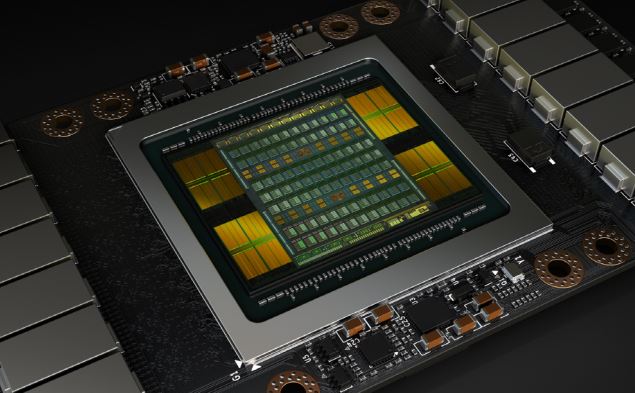
Accelerated computing is used in cognitive computing, deep learning, artificial intelligence, machine learning and similar types of applications, data analytics workloads including visual analytics, scientific and technical workloads, cloud computing and acceleration as a service, and unstructured data management workloads including edge computing. Accelerated computing is expected to impact virtually all workloads.
Peter Rutten, Senior Research Director at IDC's Server and Computing Platform research division, stated, "As current acceleration technologies such as GPUs and FPGAs begin to transform server infrastructure to meet workload performance requirements including cognitive and AI applications, future computing will look different from today," and explained that the fields in which accelerated computing will be utilized are limitless due to the capabilities and technical characteristics of acceleration devices that can be deployed to suit workloads.
According to IDC's recent survey results, when asked what attributes are important in deploying infrastructure related to mission-critical workloads within enterprises, approximately three-quarters of respondents answered single or multiple GPUs. GPUs are particularly attractive to enterprises because they use standard-type libraries that can be easily integrated with applications and can be purchased in commodity form. However, other technologies that potentially provide higher performance per watt, such as FPGAs, multi-core processors, and application-specific integrated circuits (ASICs), are also beginning to receive attention.
Kwon Sang-jun, Senior Research Director at Korea IDC, stated, "Robotics, cognitive systems, IoT, virtual reality, and augmented reality, which are drawing attention in digital transformation, require the swift and accurate analysis of vast amounts of unstructured data to derive optimal results above all else," adding, "Accelerated computing is a key technology that can drive digital innovation and is expected to become an essential element in strengthening enterprise capabilities."
Comments
Related news

Xilinx and IBM Partner to Accelerate Data Center Applications
Xilinx announced that it has established a multi-year strategic partnership with IBM to develop energy-efficient, high-performance data center applications leveraging Xilinx FPGA workload acceleration technology on IBM POWER-based systems.
2015.11.19by 신윤오 기자
Lattice Semiconductor Expands Connectivity and Acceleration Products
Lattice Semiconductor, a leading provider of customized smart connectivity solutions, has announced an expansion of its ECP5™ connectivity and acceleration FPGA product family, which is characterized by low power consumption and small form factor. These new products are pin-compatible with ECP5 FPGAs, enabling OEMs to seamlessly update existing designs to meet continuously evolving interface requirements in industrial, communications, and consumer markets.
2016.02.25by

Xilinx Invests in DeePhi Tech, Machine Learning Specialist
Xilinx announced its investment in DeePhi Tech, a leading player in the machine learning field specializing in deep compression, compiling toolchain, and system-level optimization. DeePhi provides an inference platform for next-generation AI products and services across the industry from edge to cloud by leveraging the structural advantages of Xilinx® devices in machine learning. DeePhi Tech was founded by researchers from Tsinghua University and Stanford University, leading institutions in machine learning research, and has published numerous papers at the world's top AI conferences. Recently, DeePhi Tech members received the best paper award at FPGA 2017 for their research on a high-efficiency FPGA-accelerated speech recognition engine that achieved 43x performance per watt and 40x performance compared to CPU, and 3x performance and 11x performance compared to GPU.
2017.07.06by 김지혜 기자
.jpg)
SalePoint Signs Multi-Year Partnership Agreement with AWS… Promoting Identity Security that Integrates Even AI Agents
Sailpoint has entered into a multi-year strategic partnership agreement with AWS and is moving forward with establishing an integrated governance system that manages both human and non-human identities together. The plan is to consistently manage access permissions in an environment where AI agents are increasing as work execution entities, while applying the principle of least privilege and automated policy enforcement. The two companies plan to jointly expand capabilities to manage the identities of various entities, including AI agents, within a single layer in the AWS environment. This collaboration is interpreted as a move to design security and governance together in corporate environments where AI adoption is expanding.
2026.03.26by 배종인 기자
.png)
Databricks Unveils Open AI Security Monitoring 'Lakewatch'
Databricks entered the security market on March 24 by unveiling LakeWatch, an open-source agentic SIEM. The core functionality of this product is to integrate and analyze security, IT, and business data in a single environment to support AI-based threat detection and investigation. The company explained that it reduces the limitations of existing security operations centers, which have had to forgo some data due to high cost structures, and enables large-scale data analysis and automation based on open formats and ecosystems. LakeWatch is currently offered as a private preview, with Adobe and Dropbox mentioned as early customers. Databricks also announced an expanded partnership with Anthropic as well as the acquisition of Antimatter and SiftD.ai.
2026.03.26by 배종인 기자











