



[Reporter's Notebook] Activating Domestic Fintech: Which Comes First, the Chicken or the Egg?
 Published2017.08.28 14:27
In other words, is making someone write more important, or is writing more important? That is the question.
China is hailed as an advanced nation in the mobile financial industry. This is understandable, as Chinese companies, including Ant Financial, occupy the top spot among global fintech firms, with four of the top five companies positioned there. China has the world's largest digital fintech user population (69%), accounting for over 700 million people (even more surprising is that half of the population makes up that number). With 470 million people using mobile online payments, China ranks first in four of the five major fintech sectors: remittance/payment, financial planning, savings/investment, loans, and insurance.
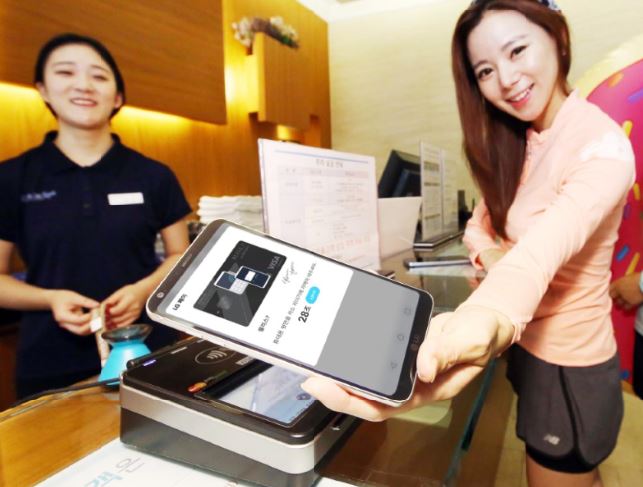
What about Korea? In terms of digital demographics using fintech, Korea records 32%, which is below the average of 21 countries (33%). With the usage rate of smartphone banking increasing, there was a significant rise in 2016 amidst the fintech craze, and with the successive launches of K Bank and Kakao Bank this year, the mobile financial industry is once again facing a boom(?).
However, government regulations are cited as the biggest reason for the continued sluggishness of mobile finance in Korea. For example, around 1998, PayGate and Interpay were launched domestically alongside overseas competitors such as PayPal and Stripe, and around 2006–2007, Lending Club was launched overseas and Money Auction in Korea at similar times, but they failed to commercialize their services domestically due to conservative financial regulations.
In contrast, the reasons for China's emergence as a world-class nation in the mobile financial industry are often sought in various aspects, including talent, capital, policy, and demand. Among these, the Chinese government actively promotes innovative systems. Although regulatory authorities have recently been gradually tightening regulations, they have consistently implemented favorable regulations. Analysis suggests that China was able to develop primarily through comprehensive policies restricting foreign competition and investment, which supported the formation of its vast e-commerce market and digital economy; furthermore, by establishing a low corporate tax rate (15%) for new fintech companies and startups, as well as innovation funds for emerging industries.
There is much debate on this matter as well. It is said that the financial environments and legal systems of China and Korea are different. As a prime example, China employs a "negative regulation" approach where regulations dictate "do not do this," which, conversely, implies that everything is permitted "except for that." In contrast, Korea follows the opposite "do only this" regulation, deeming everything else illegal. Therefore, the logic is that regulations must be loosened through a forward-looking shift in thinking to outperform China.
Reasons why fintech services are not frequently used even when they exist
It is pointed out that the differences in the financial environments of the two countries have also contributed to the current situation. Although China is moving toward a cashless and credit card-free society, its credit card issuance standards are so strict to begin with that the issuance rate falls short of 10%, and even ATMs and banks are unable to distinguish between counterfeit and genuine yuan. This contrasts with our situation, where banks are readily available just outside one's doorstep in most cities, and one can obtain a credit card if they so desire. The argument is that for countries with vast lands like China or those with underdeveloped financial systems, transitioning directly to a mobile financial environment may actually be easier.
The CEO of a domestic fintech company pointed out that a characteristic of our mobile finance is that even when services exist, they are not widely used. In one survey, the most common reason cited for avoiding mobile finance was security concerns. This implies that instead of merely creating regulations, we must ensure that services can be used safely in practice. This is because once widespread use occurs, the market is bound to expand. In other words, the goal is to make it easy and convenient for anyone to use; the argument is that, for instance, places like department stores should proactively ask customers about their fintech payment methods, and the government should provide tax benefits to such companies.
If the law is completely overhauled to force people to use mobile finance more, will usage increase, or will encouraging people to use it on their own lead to an increase in users and naturally result in amending the law? It is not easy to judge which comes first, but I believe the most important factor is the user. The recent sensation created by Kakao Bank can be cited as an example demonstrating what domestic mobile finance consumers want. Kakao Bank announced that as of the 23rd, its deposits and loans had surpassed 3 trillion won, with a total of 2.91 million new accounts opened. Government authorities and fintech companies should take deep thought to the reasons why so many customers have chosen Kakao Bank less than a month after its launch.
Comments
Related news

KT to turn online registered credit, membership, and transportation cards into offline 'real cards'
KT announced on the 13th the launch of 'CLiP CARD (Clip Card)', an ALL-In-One Smart Card Device that enables users to use credit/debit cards, membership cards, and transportation cards all on a single card. CLiP CARD was launched in consideration of the fact that most card users perceive convenient payment methods as supplementary payment means compared to physical cards, as well as the activation of the fintech market. 'CLiP CARD', which is the same size as existing credit cards, can accommodate a total of 21 payment methods on a single card, including 10 credit/debit cards, 10 membership cards, and 1 prepaid transportation card. Offline merchant payments are possible without dependence on networks, smartphone app operation, specific manufacturers' terminals, OS, or telecommunications carriers. Additionally, with a 1.3-inch display, users can check at a glance the balance of their registered transportation card, membership barcode number, and the type of card to be used for payment. A single charge enables approximately 3 to 4 weeks of usage.
2017.06.13by 김자영 기자
[Country Analysis] Fintech Overseas Expansion: Which Countries Are Advantageous?
A venue has been established to support domestic fintech companies' expansion into overseas markets. The Fintech Security/Authentication Technology Support Center of the Korea Internet & Security Agency analyzes market conditions in target countries for overseas expansion, recruits companies seeking to enter these markets, and provides both pre-entry and on-site support. On the 31st, a session was organized to share fintech status analysis information for Vietnam, Indonesia, Thailand, the Philippines, and Myanmar to support market entry into Southeast Asia. Companies seeking to expand among the five Southeast Asian countries will select two countries. Regarding the selection of Vietnam, Indonesia, Thailand, the Philippines, and Myanmar as candidate countries, Jin-heon Choi, Executive Director of Bridging Group Korea, stated, "We replaced Malaysia with Myanmar among the five Southeast Asian countries," and explained, "Malaysia is an Islamic country where the financial system differs from ours. Domestic companies are also excluding Malaysia." He provided explanations on the fintech industry status, government policies, major players, and market entry strategies for each country.
2017.08.02by 김지혜 기자

Payment Complete with a Single QR Code: How China Became a Mobile Finance Powerhouse
According to KPMG's recently released "2016 Global Fintech Report," eight Chinese companies are included among the top 50 fintech firms. This places China in second position, following the United States with 18 companies. For reference, the United Kingdom had four companies. However, a closer look reveals even more remarkable results. Among the top five companies, China ranks first with four firms, including Ant Financial, the world's number-one fintech company, while the United States ranks second with one company. It is hardly an overstatement to say that China is essentially leading the global fintech industry.
2017.08.18by 신윤오 기자

The financial services industry is the most active in adopting hybrid cloud.
Nutanix announced the cloud adoption status and outlook for the financial services industry through its Enterprise Cloud Index report. According to a survey of current hybrid cloud adoption rates by industry, the financial services industry's hybrid cloud adoption rate was 21%, which was higher than the industry average of 18.5%. Financial services companies are facing the challenge of providing differentiated experiences to customers through methods such as leveraging emerging technologies like blockchain, while simultaneously simplifying operations.
2019.04.02by 이수민 기자

IBM Blockchain World Wire… Real-time global financial payment network expands to over 50 countries worldwide
IBM announced on the 19th the expansion of IBM Blockchain World Wire, a real-time global financial settlement network for financial institutions. World Wire was developed to accelerate and optimize foreign exchange transactions and cross-border payment and remittance speeds. Additionally, it integrates payment message transmission, clearing, and settlement procedures into a single network while supporting network participants in selecting various types of digital assets for settlement. Starting from the 19th, the payment service area will be expanded to 72 countries, including 47 global currencies and 44 financial endpoints. Busan Bank became the first domestic bank to join World Wire.
2019.03.19by 이수민 기자











