



Intel to Support 5G Mobile Trial Platform Starting Q4
 Published2017.09.08 14:41
Intel Announces Plans to Support 5G Mobile Trial Platform Based on NR Standards
(This is a story from Asha Keddy, Intel’s Vice President of Internet of Things Business and Architecture.)
It is very surprising to see how fast the entire industry is moving toward 5G today.
Even as you read this, we are rapidly approaching the first 5G NR (New Radio) milestone. 5G NR is a wireless standard, comparable to LTE in the 4G era. In December 2017, the standardization work for 5G non-standalone NR was completed with the goal of commercial 5G pilot services and deployment, and the final non-standalone 5G NR standard is scheduled to be developed alongside it. This is a significant move toward 5G that will energize technology and services across the board and act as a catalyst.
The days of waiting a year, or even up to a year and a half, with a single semiconductor chip to test the latest technology specifications are over. Talented researchers and engineers have already entered the prototype development phase. And much of their testing and development is being conducted based on the Intel 5G Mobile Trial Platform. I am pleased to announce today that the Intel 5G Mobile Trial Platform not only supports the new non-standalone NR standard but will also be put into actual live testing and trials starting in the fourth quarter of this year.
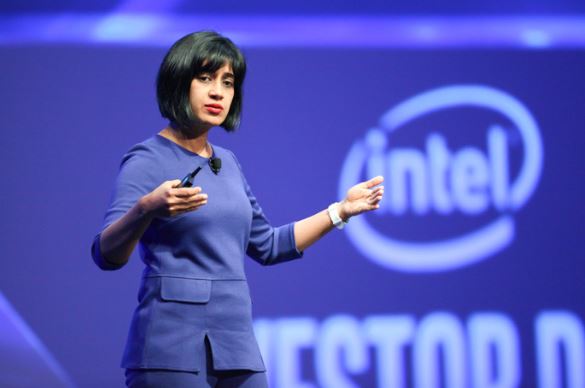
Vice President Asha Cady (Photo source: Intel Newsroom)
When the establishment of specific specifications for non-standalone NR enters its final stage, Intel will already be ready to begin collaborating with industry-leading Telecommunications Equipment Manufacturers (TEMs) to verify that wireless access networks and equipment operate successfully within the initial NR standards. In addition, Intel will collaborate with carriers to test non-standalone NR in the real world outside of research labs.
The Intel 5G Mobile Trial Platform features high-performance Intel FPGAs and Intel Core processors to shorten the time required for 5G development. Consequently, telecommunications equipment manufacturers can now test equipment interoperability earlier, carriers can bring platforms to market more quickly, and standards bodies can collect data for final specification determination more rapidly.
However, our work does not end here. We will continue testing, produce results, and lead innovation to establish the full standalone 5G NR standard scheduled for the end of 2018.
However, we must not forget that 5G is more than just wireless communication. For 5G to become a reality, network transformation must accompany it. In other words, static and fixed-function equipment must be replaced by virtualized and software-defined networks. Fortunately, network transformation is already underway. Industry leaders are currently looking toward virtualizing nearly 50% of their infrastructure, realizing total operational cost reductions and faster service innovation and deployment.
5G is possible when networks, the cloud, and devices all come together as a powerful end-to-end solution. Intel possesses the capability to provide solutions in all these areas, and this is what makes Intel special in the industry.
In reality, implementing 5G is not a sprint, but a marathon. A few years from now—when cars are equipped with full autonomous driving capabilities and smart homes make our lives more convenient—we may feel a sense of nostalgia as we look at smartphones and applications. We might feel this nostalgia as we look at the apps and devices that changed our world back then. And by then, there will undoubtedly be yet another wave of new technological innovations racing toward us.
Comments
Related news
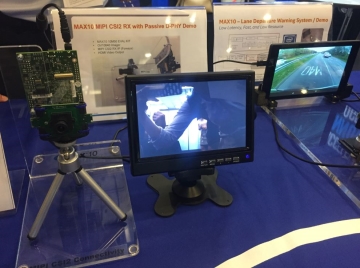
[Automotive Video Coverage] Intel's Integrated System Reduces Board Size and Design Flexibility
Intel participated in Automotive Innovation Day 2017 and demonstrated a lane tracker and object recognition demo using the MAX 10 series for autonomous driving applications. Intel's MAX 10 FPGA provides an integrated system. It features an integrated analog block with analog-to-digital converter (ADC) and temperature sensor that provides flexible sample sequencing and reduces board space. Dual flash enables thousands of reprogramming cycles, allowing for immediate program processing.
2017.07.17by 김자영 기자
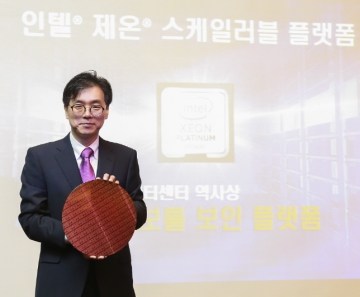
Intel Provides Security and Agility with 'Xeon Processors'
We have entered an era where data from artificial intelligence to data from numerous IoT terminals are being connected to the cloud. Intel, which has played a pivotal role in the cloud market moving toward hybrid forms regardless of public or private, has unveiled its next-generation processor products. Intel Korea held a launch event for the 'Xeon Scalable processor' on the 17th at the Conrad Hotel in Yeouido. Nam Seung-joo, executive vice president of Intel Data Center Group Korea Sales, stated, "The new mesh architecture core addresses the efficiency degradation that occurred in the existing ring architecture as core counts increased, and improves transmission speed. In server platforms utilizing many cores, all cores simultaneously utilize memory and IO."
2017.07.17by 김지혜 기자
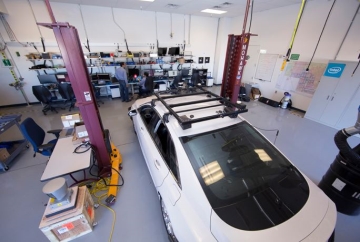
Intel, BMW to Begin Joint Development of Fiat Chrysler Autonomous Driving Platform
The BMW Group, Intel and Mobileye have signed a memorandum of understanding with Fiat Chrysler Automobiles (FCA) for the joint development of an autonomous driving platform. With the signing of the memorandum of understanding, FCA has become the first automaker to jointly develop an autonomous driving platform. The companies participating in the development plan to leverage each company's strengths, capabilities and resources to enhance platform technology, increase development efficiency and shorten product time-to-market. One of the key drivers enabling this is the establishment of a collaborative working environment for engineers located in Germany and other countries. Under this agreement, FCA will provide engineering and other technical expertise and knowledge, and will share its substantial sales volume in the North American automotive market, geographic positioning and know-how gained through long-standing experience already possessed by the company.
2017.08.17by 김자영 기자

[e4ds Tech Day 2026 ⑨] Sim Sang-gyu, Autocrypt CTO: "In the Physical AI Era, Automotive Security Must Extend Beyond the Vehicle"
At e4ds Tech Day 2026, Sim Sang-gyu, CTO of Autocrypt, explained automotive cybersecurity strategies in the era of Physical AI and SDV (Software-Defined Vehicle). Automobiles are evolving as part of an ecosystem connected to AI, cloud, chargers, IoT, and robots, and he emphasized that the scope of security must expand beyond the vehicle interior to the entire connected environment. In particular, AI model tampering, adversarial attacks, OTA updates, and EV charger hacking were identified as major threats. He explained that response measures require zero trust, AI model integrity protection, intrusion detection, Security by Design and Default, and full lifecycle security management, and that proactive security system establishment beyond regulatory compliance is critical for securing future mobility competitiveness.
2026.10.12by 배종인 기자
NVIDIA to Invest $1 Billion in U.S. Science Over Next Five Years
NVIDIA has announced plans to invest $1 billion over the next five years to strengthen U.S. scientific and technological competitiveness. The company will enhance cutting-edge artificial intelligence research and development capabilities in key areas including quantum computing, healthcare, and energy security, while expanding support for higher education research institutions and cloud service providers. NVIDIA is participating as a major industry partner in the White House Office of Science and Technology Policy's Genesis Mission, and is promoting supercomputer construction in collaboration with national laboratories including Argonne and Los Alamos.
2026.10.12by 배종인 기자











