



NVIDIA is applying AI to industries that use data analytics.
 Published2017.09.08 15:15
NVIDIA announced a collaboration with GE Ventures' Avitas Systems. Through this collaboration, the two companies will apply cutting-edge AI computing technologies to industrial equipment defect detection and inspection robots that utilize advanced data analytics.
Avitas Systems can target specific points for inspection and develop image and video data collection paths applicable to various robotics such as drones, crawler robots, and autonomous underwater vehicles (AUVs).
Driven by 3D modeling, these paths are repeatable at the same angle and location. Based on this repeatability, a wide range of images captured over time are input into Avitas Systems' cloud-based platform, where advanced image analysis is performed to measure precise defects in industrial equipment, such as cracks and corrosion.
The platform assesses the severity of even the most subtle defects, often difficult to detect with the human eye, helping customers determine when equipment needs to be replaced and address potential issues early.
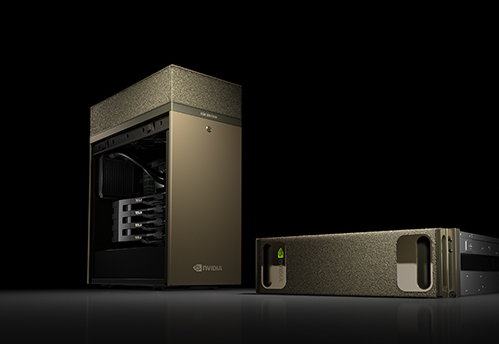
Avitas Systems is leveraging NVIDIA DGX-1 and DGX Station to train artificial intelligence for automated defect detection. Avitas Systems data scientists built generative adversarial networks (GANs) to minimize the labeling work of captured images and convolutional neural networks (CNNs) for image classification.
Avitas Systems stores deep learning models within its innovative AI Workbench solution, which processes the data in real time and allows the models to be retrained and applied to new use cases.
“Our collaboration with NVIDIA has enabled us to fully commercialize our state-of-the-art, self-service AI Workbench, and we look forward to expanding its capabilities with the new NVIDIA DGX Stations based on Volta,” said Alex Tepper, founder and president of Avitas Systems. “With Workbench, Avitas engineers can easily develop and deploy new deep learning models to train software that automatically recognizes defects in inspection sites.”
Comments
Related news

NVIDIA Provides Gaming Recording Feature to 'Battlegrounds'
NVIDIA announced a partnership with Bluehole, a domestic game development company. Advanced PC features including NVIDIA® ShadowPlay Highlights and other cutting-edge PC capabilities will be added to Bluehole's PlayerUnknown's Battlegrounds (PUBG), delivering an enhanced gaming experience on GeForce GTX PCs. Using NVIDIA ShadowPlay Highlights, gamers can capture gaming moments in video and screenshot formats and share them.
2017.08.22by 김자영 기자
Nvidia Concludes Successful Third T Hackathon from IoT to AI
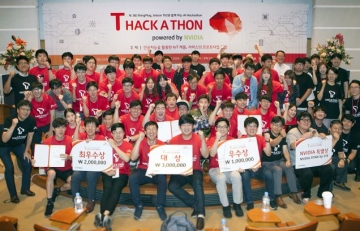
Nvidia, in collaboration with SK Telecom (CEO and President Park Jung-ho), successfully held the Third T Hackathon on August 26–27 at SK Telecom's headquarters in Eulji-ro. Marking the third edition since 2015, this year's T Hackathon's most distinctive feature was the expansion of themes from the existing Internet of Things (IoT) to Artificial Intelligence (AI). The 12 participating teams comprising 60 total participants, based on Nvidia's compact supercomputer board "Jetson TX2" that was provided, showcased various AI-driven services including ▲'a deep learning model that identifies optimal discount rates in real time' ▲'a gesture-based interface system that controls IoT devices in the home according to hand gestures' ▲'a classroom management system utilizing face recognition technology' and others.
2017.08.28by 신윤오 기자
NVIDIA Provides NVIDIA DGX Systems to General Hospital Research Lab
NVIDIA announced that it has provided the NVIDIA DGX system, the world's first artificial intelligence supercomputer based on the NVIDIA Volta architecture, to the Center for Clinical Data Science, a research institute at Massachusetts General Hospital in the United States. The new DGX-1 based on the Volta architecture provided this time delivers groundbreaking artificial intelligence computing performance that is three times faster than the previous generation DGX, and provides a maximum of 800 CPU performance in a single system. The new NVIDIA DGX Station is the world's first personal supercomputer for artificial intelligence development, equipped with the computational capability of 400 CPUs but with approximately 40 times lower power consumption and a form factor that fits well in a corner of a desk.
2017.09.07by 김자영 기자
[e4ds Tech Day 2026 ⑨] Sim Sang-gyu, Autocrypt CTO: "In the Physical AI Era, Automotive Security Must Extend Beyond the Vehicle"
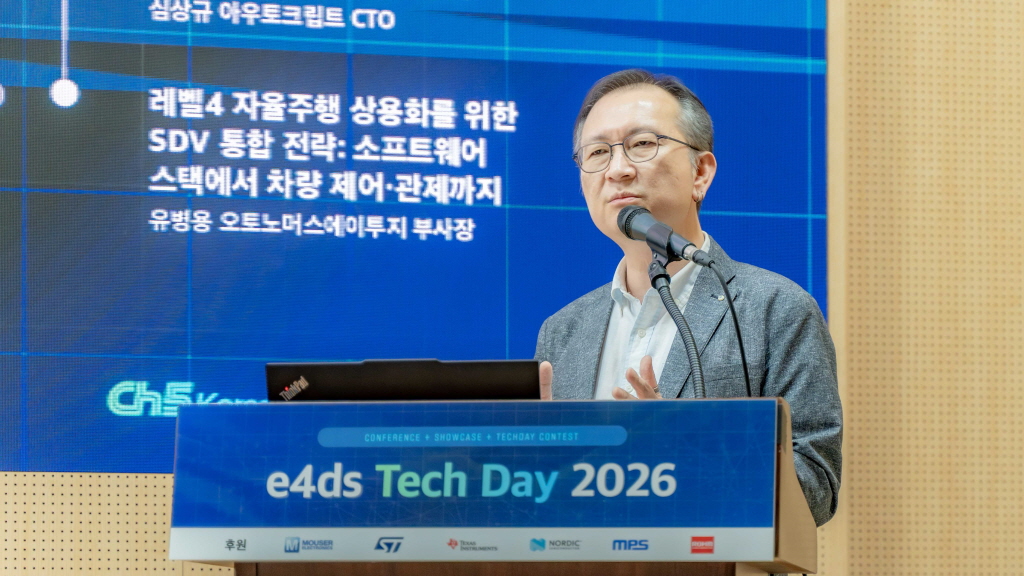
At e4ds Tech Day 2026, Sim Sang-gyu, CTO of Autocrypt, explained automotive cybersecurity strategies in the era of Physical AI and SDV (Software-Defined Vehicle). Automobiles are evolving as part of an ecosystem connected to AI, cloud, chargers, IoT, and robots, and he emphasized that the scope of security must expand beyond the vehicle interior to the entire connected environment. In particular, AI model tampering, adversarial attacks, OTA updates, and EV charger hacking were identified as major threats. He explained that response measures require zero trust, AI model integrity protection, intrusion detection, Security by Design and Default, and full lifecycle security management, and that proactive security system establishment beyond regulatory compliance is critical for securing future mobility competitiveness.
2026.10.12by 배종인 기자
NVIDIA to Invest $1 Billion in U.S. Science Over Next Five Years
NVIDIA has announced plans to invest $1 billion over the next five years to strengthen U.S. scientific and technological competitiveness. The company will enhance cutting-edge artificial intelligence research and development capabilities in key areas including quantum computing, healthcare, and energy security, while expanding support for higher education research institutions and cloud service providers. NVIDIA is participating as a major industry partner in the White House Office of Science and Technology Policy's Genesis Mission, and is promoting supercomputer construction in collaboration with national laboratories including Argonne and Los Alamos.
2026.10.12by 배종인 기자











