


[Reporter's Notebook] Why the Robotics Industry, Which Has Received Enough Investment, is Having a Hard Time
 Published2017.09.11 15:40
The star of this industry, adorned with such a dazzling adjective, is none other than "robots." Where does the robotics industry stand today, in which the government has invested approximately 1 trillion won over the past decade? A government official in charge of the domestic robotics industry provided a brief explanation.
This year, 69.9 billion won will be invested in the machinery industry, a market worth 103 trillion won, while 88.4 billion won will be invested in the robotics industry, a market worth 4 trillion won. This investment represents not only this year's investment, but a sustained effort over the past decade. The only visible results are "guide robots" in large shopping malls, a self-deprecating assessment.
Of course, they wouldn't have invested a huge amount of money over ten years to build a single guide robot for that shopping mall. Funding would have been spent (or so I believe) on a variety of unseen areas, from component development to software development and even supporting the technological development of robotics companies. These government officials' complaints likely stem from the complaints of robotics companies, who claim the government is working on it, but in reality, they're "overworked." The problem is that industrial development is not proportional to the amount of support.
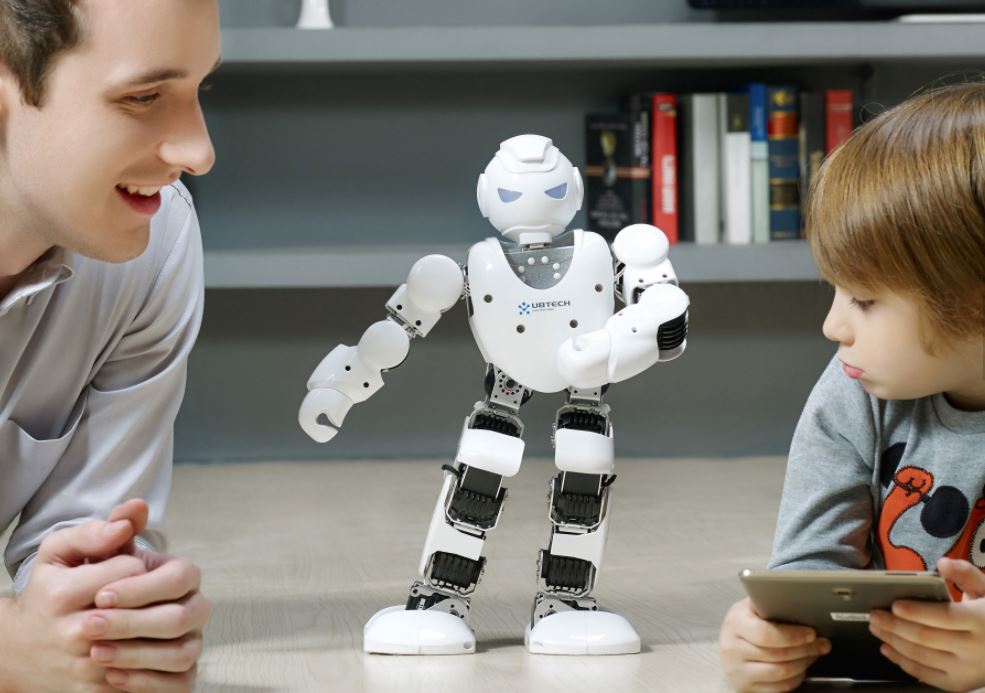
The Korean robotics industry has clearly experienced growth, even in terms of external factors. In 2015, the market grew by 30-35% year-on-year, making it the world's second-largest robotics market. This growth was driven by the automotive, electronics, and battery industries. Domestic robot production grew by 19%, while exports (based on volume) decreased by 44%, while imports increased by 44%. Imports were 1.7 times higher than domestic production, and added value increased by 4.5 times.
Manufacturing robots account for the largest share of the robot market, with the electrical and electronics industry accounting for 49% of the domestic industrial robot supply. Among these, the semiconductor/LCD/LED sectors are the most important. According to research, the domestic robot industry has achieved high growth, averaging 21% annually over the past six years.
However, small and medium-sized enterprises (SMEs), which account for 93% of domestic robotics companies, still say that it is 'difficult to do robotics business' in Korea. There is no small business that doesn't struggle, but Korean robotics companies, despite receiving a lot of support, are once again hurt by being treated like whiny children.
So why is the Korean robotics industry struggling? While Korea excels at manufacturing industrial robots, maintaining a close technological lead over advanced nations, its market size remains a weakness. As of 2014, the manufacturing robot market was worth 2.1 trillion won, but it needs to grow tenfold to achieve significant growth. This small market also hinders the competitiveness of companies responding to its growth. The lack of mid-sized companies capable of responding to global competition underscores this.
The issue of funding for R&D is also a concern. While the government has invested nearly 1 trillion won to date, this represents only a tenth of the scale of robotics investment in advanced countries. The production environment also needs to change. We need to shift from mass production to small-batch, high-quality production. Future business models must also shift toward selling collaborative robot solutions and systems.
Beyond silk manufacturing robots, attention should also be paid to the service robot market, which is befitting the age of intelligence. The applications of robots are expanding across diverse sectors, from educational service robots, cleaning robots, and humanoid service robots to medical, military, and agricultural service robots. However, most of these markets are dominated by foreign companies.
Lee San Solution CEO Jeong Won-min said, “In order to develop the domestic service robot industry, a new national robot strategy is needed for the Republic of Korea,” adding, “We must participate in the competition for leadership in the International Robot Olympics and plan and implement a strategy to promote the robot culture industry.” He emphasized, “In particular, we need to create an investment fund for the development of the robot industry.”
The industry that will transform our lives and culture, a true digital convergence product... The robotics industry, the most representative industry that could be the "subject" of these sentences, is struggling. Now, more than ever, we need support and encouragement to ensure that the domestic robotics industry, which will lead the future paradigm shift, can take pride in its position.
Comments
Related news
[Promising Future Technologies⑥] Korea is strong in robot vacuum cleaners, the US in manufacturing, and Japan in personal robots.
An era is approaching where intelligent robots that perceive external environments, independently assess situations, and act autonomously are becoming commonplace. This is because intelligent robot technology is evolving alongside artificial intelligence development, progressing toward forms that support collaborative work with humans or provide highly specialized services.
2017.02.06by 신윤오 기자
[Promising Future Technology ⑦] Drones, with their autonomous flight systems gaining increasing attention, are evolving into practical robots.
Drones, currently represented by unmanned aerial photography and parcel delivery services, will henceforth take on responsibilities spanning field surveys across diverse sectors as well as big data collection functions through inter-road networks. A drone refers to an unmanned aerial vehicle manufactured similarly to fixed-wing or rotary-wing aircraft. In terminology, it is used under the names UAV (Unmanned Aerial Vehicle) or UA (Unmanned Aircraft), and is commonly referred to as 'Drone'. With active technology development in ground control and command systems, there has been a recent surge in interest regarding autonomous flight technology.
2017.02.27by 신윤오 기자

From casual chatter to expert information, I talk to chatbots.
On a busy commute, if you type "Tell me today's weather" or "Tell me when the bus arrives" on KakaoTalk, it provides hourly weather information in text form and real-time bus arrival information. An era has come where information that previously required opening an app to search for is now accessible with just a simple text input on a messenger. A chatbot is a compound word combining "chatting" and "robot," and conversational interface services—chatbot services—that operate in messenger environments (KakaoTalk, LINE, etc.) are expanding.
2017.03.06by 김지혜 기자
“Collaborative Robot Market Dominating”: Universal Robots Grows 62% Year-on-Year
Universal Robots announced that it achieved revenue of approximately 662 million Danish kroner (approximately 106.4 billion won) and operating profit of 92 million Danish kroner (approximately 14.7 billion won) last year. Universal Robots, which operated in 5 countries in 2015, is currently present in a total of 11 countries including South Korea, the United States, Spain, Germany, Italy, Czech Republic, China, Singapore, India, Japan, and Taiwan. Before collaborative robots were invented, flexible operations had to rely on manual labor. After the development of collaborative robots, industrial robots can now be flexibly applied to a wider variety of tasks.
2017.03.20by 김자영 기자
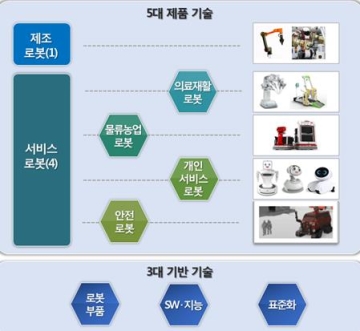
Where to focus robotics technology, find a technology roadmap
The Ministry of Trade, Industry and Energy held a public hearing on the "Republic of Korea Robotics Industry Technology Roadmap" at El Tower in Yangjaedong. The Republic of Korea Robotics Industry Technology Roadmap is a follow-up measure to the "Robotics Industry Development Plan" decided by the Robotics Industry Policy Council. The Ministry of Trade, Industry and Energy, six major robotics research institutes, universities, and approximately 80 experts from demand-side companies prepared a draft roadmap through the operation of subcommittees by field. The technology roadmap categorizes core robotics technologies into "eight key sectors" and presents five product technologies and components in manufacturing, logistics/agriculture, medical/rehabilitation, and safety personal services, as well as three foundational technologies in software/intelligence and standardization.
2017.06.09by 김지혜 기자











