



[Smart Farm] "We will make farming a happy experience for those returning to the countryside" through agricultural standardization.
 Published2017.09.20 06:37
Sensor companies are discussing cooperation and effective data utilization methods.
There's a joke that goes, "If there are 45 million farmers, there are 45 million farming methods." This demonstrates how unique each farmer's method is. It's for this same reason that urban farmers who dream of farming often face challenges when settling down in rural areas.
Park Heun-dong, director of Farmcloud's research lab, stated, "We will standardize farming methods so that even returning farmers can easily settle down." This was a conference on the IoT Open Platform-based Development Verification Support Infrastructure Construction Project, hosted by the Ministry of Science and ICT on the 19th.
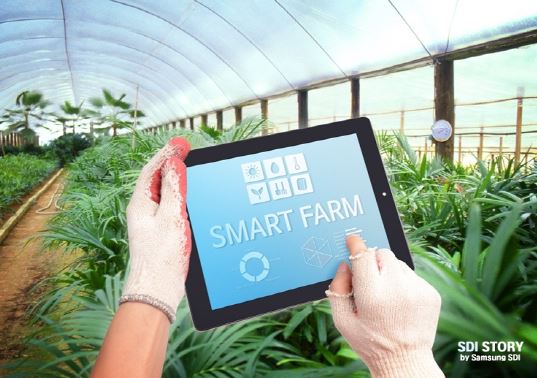
The Rural Development Administration's current ICT-integrated Korean smart farm development strategy consists of three generations: 1st, 2nd, and 3rd. The 1st generation connects sensors and smartphones to allow farmers to "view" greenhouses from outside. The sensors and controllers are displayed in video. Rather than focusing on increasing productivity, the strategy focuses on facilitating farmers' convenience. The 2nd generation builds on the 1st generation's farming technology by adding big data analysis to provide intelligent prescriptions. It measures the indoor and outdoor atmospheric conditions of greenhouses and applies intelligent control algorithms to control the complex environment. Cloud services support decision-making, contributing to productivity. The 3rd generation standardizes components through integrated energy management and the introduction of robots. This is the stage where the goal is to enter the global market with the platform in the future.
Source: Samsung SDI
According to Director Park, the first-generation system penetration rate is approximately 700 farms, and while the second-generation system penetration rate is still low, it is increasing by 200 farms annually. This is because, while installation costs are approximately 7 million won and 20 million won, respectively, the Ministry of Agriculture, Food and Rural Affairs (MAFRA) is currently subsidizing 50% of the cost, thereby increasing the penetration rate.
Director Park stated that, rather than expecting productivity gains from analytics, the current agricultural landscape "still has a strong demand for first-generation technology." For farmers, sunset is the time they close their greenhouses, making them sensitive to temperature fluctuations. For small farms, even a first-generation device capable of monitoring temperatures on a mobile device could significantly reduce the need for farming.
The second generation is being built and operated by a large-scale farm, which previously used a solution from a foreign company (PRIVA). PRIVA's primary function is to automatically open and close doors by monitoring indoor and outdoor temperatures through a circuit board installed in a greenhouse. This circuit board, which must be replaced every three years, costs approximately 30 million won. By comparison, solutions provided by domestic telecommunications companies can be implemented as cloud services at a lower cost.
Director Park pointed to the lack of interoperability and non-standardization among providers as ongoing problems. Replacing sensors or uploading records to the cloud is complicated and requires retraining each time.
“In the United States, they are working towards standardization under the specific slogan of ‘prescription agriculture.’ “We are also working with three major domestic sensor companies that handle soil, carbon dioxide, etc. to provide compatible SDKs and connect them to the cloud.”
The Rural Development Administration plans to register company-specific standards in the cloud by next year and provide business support services and services that connect hardware and software. Director Park added that while previously they were focused on reducing costs, they are now focusing on minimizing devices.
"Our current goal is to provide intuitive access to the necessary information in the cloud. Furthermore, if startups and companies can develop a methodology that effectively utilizes the data collected by crop and season, we believe it will have market value."
Comments
Related news
If Electronics Realizes Agricultural IoT with 'Smart Greenhouse'
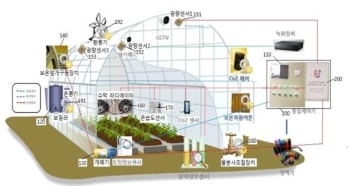
With the development of Home IoT technology, it is now possible to control home lighting, gas valves, and other devices remotely from outside. What would it look like if such IoT technology were applied to agriculture? As the population of single-person farmers increases and cultivation of small-scale high-value crops expands, demand for 'smart greenhouses' is also growing. A 'smart greenhouse' refers to an advanced greenhouse that enables remote control of greenhouse windows, sprinkler operation, nutrient solution supply, and other functions through devices such as smartphones. Ifelectronics is a company with technology to control facility equipment within smart greenhouses. The company has developed set-top devices based on mobile communication technology, electronic component modules for interfacing with facility equipment, sensor boards with light intensity sensors, and a remote control application.
2017.06.12by 김지혜 기자
KT Supports Smart Farms to Make Mushroom Cultivation Easier for Beginner Farmers
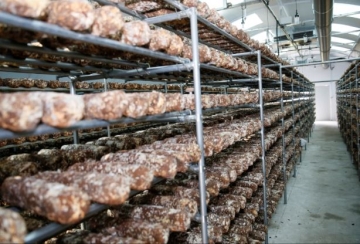
KT announced on the 15th that it has jointly developed a specialized smart farm total solution for mushroom cultivation with Green Maritime, a small and medium-sized enterprise, and opened a demonstration complex for a 'mushroom cultivation dome house smart farm' in Joseong-myeon, Boseong-gun, Jeollanam-do. The 'mushroom cultivation dome house smart farm' demonstration complex is the result of joint development by KT and Green Maritime over the past two years through a win-win cooperation program of the Small Business Administration. By combining KT's GiGA smart farm solution utilizing IoT/big data technology with Green Maritime's smart farm hardware technology, Korea's first dome house-type smart farm total solution optimized for mushroom cultivation has been implemented.
2017.06.15by 김자영 기자
[Photo News] Park Chairs Transform into Solar-Powered Smart Benches
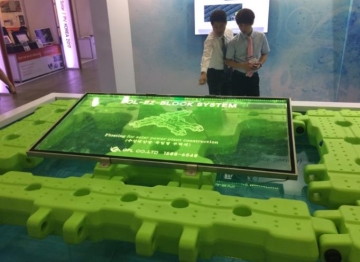
From September 6 to 8, the '2017 World Solar Energy Expo' was held at the First Exhibition Hall of KINTEX in Ilsan, where the latest photovoltaic technologies and trends could be comprehensively reviewed. Over 220 companies from 25 countries worldwide participated in this exhibition.
2017.09.07by 김지혜 기자
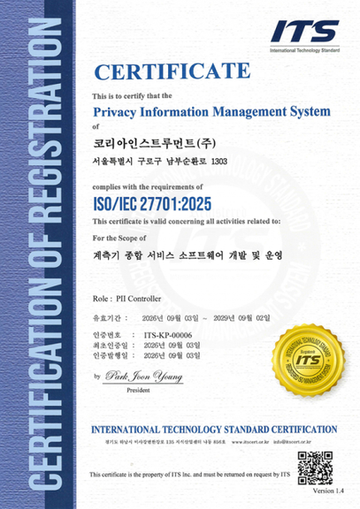
Korea Instrument, KOLAS Accredited Calibration Agency First to Simultaneously Acquire ISO/IEC 27,001·27,701
Korea Instrument has become the first among KOLAS accredited calibration agencies to simultaneously acquire ISO/IEC 27,001 and ISO/IEC 27,701 certifications. Through its proprietary platforms CWIZ Enterprise and CWIZ Partners, the company has embedded information security and personal data protection requirements across all business processes including customer information, equipment data, and calibration reports, with plans to continuously advance its management system through regular audits and security inspections.
2026.10.12by 배종인 기자
TeamViewer One, IT Incident Automation Workflow and Resolution Center Enhanced
TeamViewer has added IT incident automation capabilities and an advanced Resolution Center to its integrated digital workplace management platform 'TeamViewer ONE'. Recurrent service disruptions, configuration errors, and capacity shortages are automatically handled according to preset policies, and device status verification through script deployment can be managed in a unified interface, significantly reducing repetitive tasks for IT teams.
2026.10.12by 배종인 기자











