



Semiconductor Technology Trends and Display Changes in One Place
 Published2017.10.17 17:22
An opportunity has been provided to take a comprehensive look at cutting-edge semiconductor technology and equipment, as well as the latest display technology.
The Semiconductor Exhibition (SEDEX) and the Display Industry Exhibition (IMID 2017) are being held simultaneously at COEX in Samseong-dong, Seoul, from the 17th to the 20th. Approximately 180 companies from all sectors of the semiconductor industry, including semiconductor equipment, materials, components, design, materials, and facilities companies, are participating, while about 150 companies, including Samsung Display and LG Display, are participating in the display exhibition.
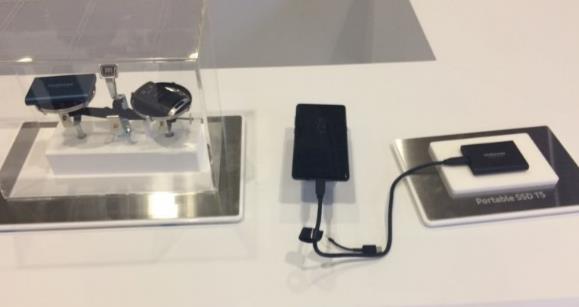
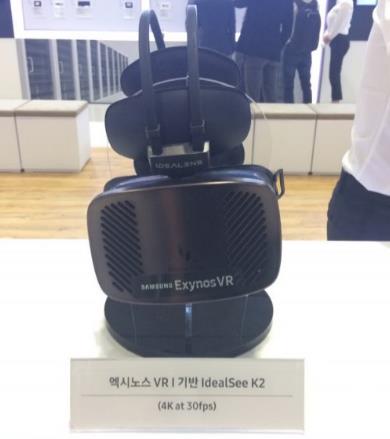
Samsung Electronics unveiled the SSD T5, which is faster and more stable than an external hard drive, utilizing 4th generation V-NAND. A demonstration followed to showcase its speed and stability. The 'Exynos 9,' manufactured using a 10nm FinFET process, was also on display. The Exynos 9 demonstrates high performance in mobile applications and more than double the power consumption of previous models. In addition to mobile, models suitable for VR, wearables, IoT, and automotive applications were also presented.
SK Hynix set up a booth based on the concept of a data center server room. It attracted visitors with a variety of attractions, including IoT, VR experiences, AR shooting games, and semiconductor quizzes. In the center, the latest server DRAM, NAND flash, SSD, UFS 2.1, etc. were displayed.
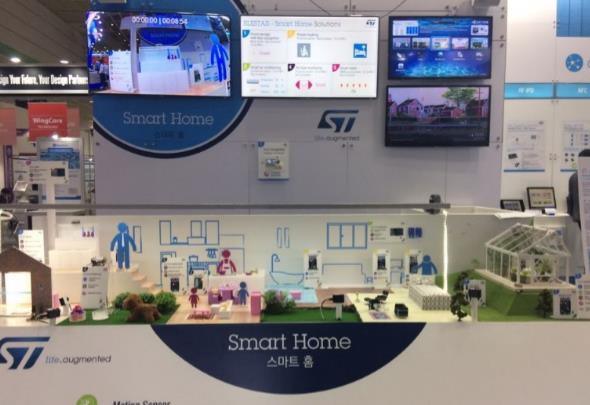
STMicroelectronics demonstrated networking and integrated management and control of home devices and facilities using 32-bit MCUs and STM32 Nucleo. A facial recognition system can unlock bathroom shelves by identifying a user's face, and a tablet equipped with wireless technology can be used to remotely control the front door. In addition, a distance sensor based on TOF technology detects human movement, and a temperature and humidity sensor allows for remote control of an air conditioner. The ToF distance sensor can also transmit information on available parking spaces via long-distance wireless communication.
In addition, global foundry company Fujitsu and AD Technology, the only company in Korea providing TSMC design services, are participating with medium to large booths. Six domestic and international semiconductor IP companies—Wingco, Leo LSI, C-Size, Taiwan's Avant, Andes, and Hoi—are exhibiting in a joint pavilion called the IP Pavilion.
Semiconductor ventures, startups, and VCs are also participating in large numbers. A Startup Showcase, a joint special pavilion designed to support the growth of semiconductor ventures and startups through technology promotion, investment attraction, and marketing, will be operated at the exhibition hall. Ten semiconductor startups, including Pado, Fine Solution, Teams, Senvis, and C-MOSTECH, are participating.
On the 18th, a semiconductor IR conference will be held featuring 15 semiconductor SMEs, ventures, and startups, including Differ-i, Beyond Eyes, UB Materials, and E-Cell Electronics. Venture capital firms (VCs), new technology investment firms, and private equity funds (PEFs) will attend to conduct investment consultations with the participating companies. Have a networking session.
New forms of displays emerge with flexible and OLED technologies
Samsung Display unveiled a massive 98-inch 8K (7680x4320) resolution LCD. With a resolution four times higher than UHD, it provides clear and sharp image quality even at close viewing distances. It also showcased a 65-inch curved LCD with a thin frame.

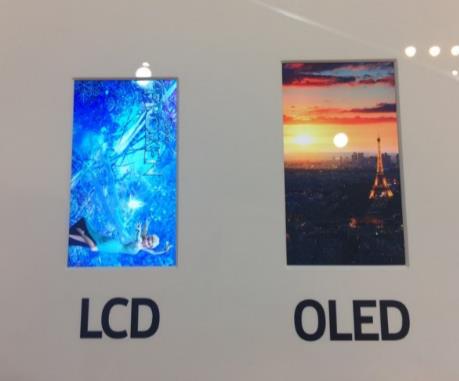
By applying a glass LGP instead of the conventional plastic LGP, the thickness of the LCD module has been reduced to 4.9mm, and the LGP plays the role of evenly diffusing the LCD backlight across the entire screen. Glass LGP is thinner than plastic LGP and is also more heat-resistant, allowing for a smaller heat dissipation space and thus enabling a slim design. Since quantum dot coating can be applied directly to the glass LGP, the thickness can be reduced without attaching a separate quantum dot sheet.
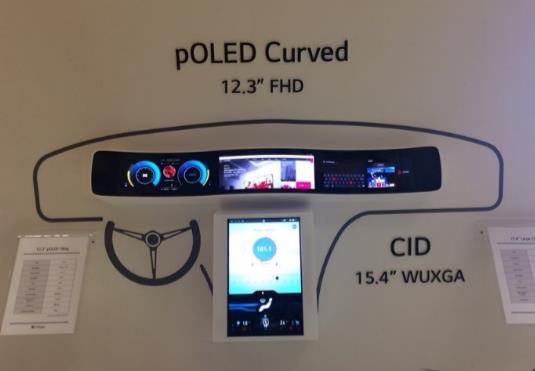
LG Display emphasized its OLED technology. It showcased products made possible by OLED, such as a 65-inch UHD Crystal Sound OLED where the entire screen acts as a diaphragm to produce sound, and a 77-inch Wallpaper that adheres perfectly to the wall. Products showcasing free designs using flexible OLED were also exhibited, such as a 12.3-inch instrument panel display that enhances the car interior effect by implementing the vehicle's curved surface, and a 6-inch QHD+ full screen with an 18:9 aspect ratio.
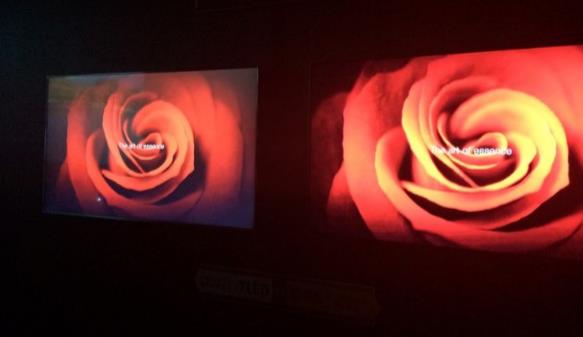
DowDuPont's Display business unit exhibited in four zones: OLED, flexible displays, cadmium-free quantum dots, and high-performance display materials. In the OLED zone, OLED materials were unveiled, including red host, green host, blue host, prime, and buffer layers for OLED deposition, as well as solutions for inkjet processes. In the flexible display zone, a diverse range of transparent polyimide products stood out. The film-type products maintain high transmittance and low haze characteristics even after one million bends.
In the Cadmium-Free Quantum Dot Zone, you can see quantum dot solutions and quantum dot films that allow you to experience color-changing effects. They achieve richer and more vivid colors compared to existing ones without using cadmium. In the high-performance display materials zone, one can find photosensitive materials for organic insulating layers (high-speed positive type and high-resolution negative type photosensitive materials) that contribute to yield improvement, increased pixel size due to larger TVs, and parasitic voltage in the fabrication of TFTs driving LCDs; photosensitive organic electronic materials (photosensitive materials for column spacers for high resolution and lower-temperature curable overcoating materials) suitable for various applications of LCD displays; as well as materials for forming light-resistant PDLs (pixel define layers) used in OLEDs.
Comments
Related news
KETI Provides Technological Support to SMEs with Core Advanced Electronic Materials Technologies
The Electronics and Telecommunications Research Institute (KETI) has arranged an event to introduce core technologies in advanced electronic materials and components, including smart patches used in body-wearable devices and photonic sintering inks capable of printing circuits for smart devices. On the 28th, KETI held a 'Technology Innovation Matchmaking' event at the Korea Semiconductor Industry Association building in Pangyo. As part of its corporate collaboration platform, the institute is promoting commercialization of public technologies through discovery of demand-driven companies, technology transfer, and commercialization support. This marks the 20th session of the periodically held event. Director Park Chung-won stated, "I hope companies that genuinely need technologies will participate and find this helpful. KETI not only develops technologies for next-generation growth drivers but also secures core technologies in advanced electronic materials and components necessary to realize them. We will focus on providing technical support to help our small and medium-sized enterprises secure technological competitiveness and grow into global specialized companies."
2017.10.10by 김지혜 기자
Xperi Korea Demonstrates Mobile and Automotive Electronics Technologies at Korea Electronics Show
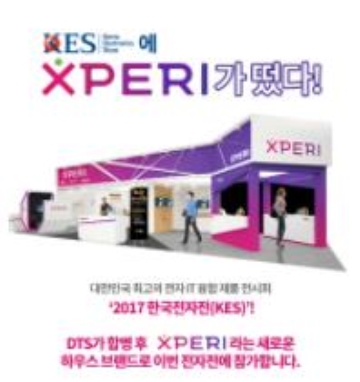
Xperi Korea will participate in the 'Korea Electronics Show 2017' held from the 17th to 20th at COEX in Samseong-dong, Seoul, and will demonstrate key technologies from DTS and Fotonation for mobile, smart home appliances, and automotive electrical system solutions. Xperi Korea will establish DTS and Fotonation experience zones at booth C170 in the Korea Electronics Show venue, and will showcase various technologies including mobile audio technology and automotive electrical system solutions for virtual reality and autonomous driving era. Xperi, which is expanding its business into mobile and automotive electrical system fields, will notably present for the first time at this KES the DMS (Driver Monitoring System) technology from Fotonation, which possesses the highest technological capabilities in iris, body, and facial recognition fields. In the DTS experience zone, ▲DTS Headphone:X™, a DTS surround sound technology applied to the latest LG Electronics Gram laptop series, ▲'DTS Play-Fi™', a high-quality streaming platform, and ▲DTS Connected Radio™ technology for automobiles will be demonstrated. Additionally, in the Fotonation zone, ▲DMS (Driver Monitoring System), a driver monitoring system using facial and iris recognition, ▲ElS (Electronic Image Stabilization), which stably implements images on digital displays without shake, and ▲IPU 2.0 (Image Processing Unit) technology, which precisely recognizes people and images, will be showcased.
2017.10.10by 김지혜 기자
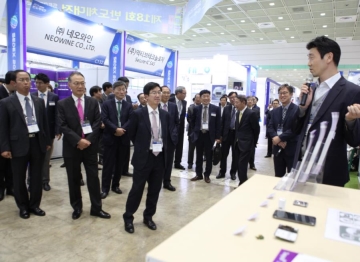
A glance at the latest semiconductor technology trends
A showcase presenting the latest semiconductor technology trends at a glance is being held. The Korea Semiconductor Industry Association announced on the 17th that it will host the "19th Semiconductor Exhibition (SEDEX, SEmiconDuctor EXhibition)" at Seoul COEX. The Semiconductor Exhibition (SEDEX) is an event organized by the Korea Semiconductor Industry Association and is held during the same period as the Korea Electronics Exhibition and Korea Display Industry Exhibition under the collective title "Korea Electronics Industry Exhibition." The Semiconductor Exhibition will feature 180 companies across all sectors comprising the semiconductor industry ecosystem, including semiconductor equipment, materials, components, design, materials, and facilities companies, led by Samsung Electronics and SK Hynix, participating with 517 booths. This is the largest scale in history. In advance of the opening of the Semiconductor Exhibition, the Korea Semiconductor Industry Association has presented five key viewing points for this year's Semiconductor Exhibition to help exhibition organizers and visitors understand the event.
2017.10.16by 김지혜 기자
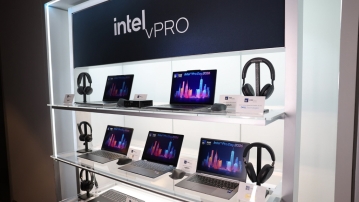
Intel Unveils Next-Generation 'Core Ultra Series 3' and vPro Platform for Enterprise PCs
Intel has officially unveiled the "Intel Core Ultra Series 3" for next-generation enterprise PCs and the latest vPro platform, addressing a wide range of demands from enterprise notebooks to high-performance workstations.
2026.03.26by 배종인 기자
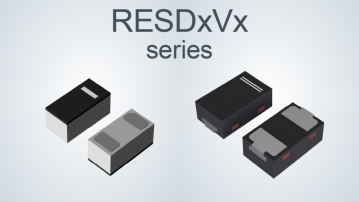
ROHM Launches ESD Protection Diode Compatible with High-Speed Interfaces of 10Gbps or Higher
Semiconductor specialist ROHM has developed the 'RESDxVx series' of ESD (electrostatic discharge) protection diodes capable of responding to next-generation high-speed data communication environments exceeding 10Gbps, simultaneously enhancing both signal quality maintenance required in high-speed interfaces and IC protection performance.
2026.03.26by 배종인 기자











