


Advancement of Deep Learning Technology Brings Artificial Intelligence to Reality
 Published2017.11.01 07:23
AI robots will be realized through the advancement of deep learning
Since the emergence of AlphaGo, Artificial Intelligence (AI) has come much closer to us. From IBM Watson’s cancer treatment to AI speakers, AI, which was once thought of only as robots, is being applied in various fields. A venue was arranged to discuss what new changes AI will bring to computing, mobile robots, and the like.
NVIDIA held 'Deep Learning Day 2017' at the InterContinental Seoul COEX on the 31st and presented the history and direction of artificial intelligence. Approximately 1,500 participants from academia and industry interested in AI, autonomous driving, and healthcare attended the event.
"AI can play various roles such as helper, protector, creator, and teacher," said Yoo Eung-joon, CEO of NVIDIA Korea's Enterprise Business Division. "I hope this conference will be a venue to share various use cases."
Professor Jang Byung-tak of the Department of Computer Science at Seoul National University, who attended as a speaker, said, “It has been 60 years since artificial intelligence began. AI, which started with the idea of machines that think and move like humans, has recently overcome a hurdle that was thought to be difficult to solve through AlphaGo,” adding, “If AlphaGo could only think and not move, then robot technology focused on movement, like Google’s Atlas, is also very close.”
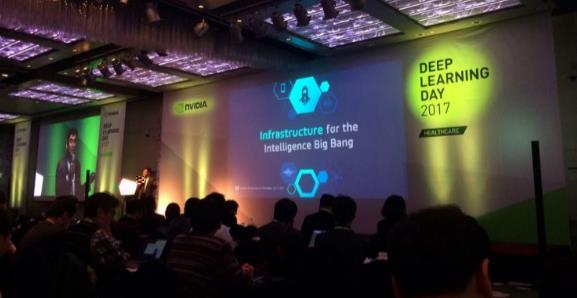
He continued, “If the robot’s body is the device, then the mind is software and data.” He explained that the technologies to implement AI robots have been prepared, stating, "Artificial intelligence started as software and is now merging with the body."
He predicted that as we transition into the IoT era, a big data era incomparable to the present will arrive, making data processing difficult with current programming methods. He anticipated that artificial intelligence would be applied to various fields as a new industry, as parallel processing becomes possible through GPUs. Professor Jang emphasized, "To become AI robots or autonomous vehicles, there must be advancements that combine existing AI with deep learning. As technology advances, the impact will be incomparably greater."
Following him, Lee Dong-myeon, Director of the KT Convergence Technology Institute, stated, “There was criticism that generational changes driven by ICT were not influencing global development, but such criticism has been disappearing for the past four to five years,” adding, “This is because we have passed a tipping point due to advancements in computers and memory where algorithms and logic can be manifested.” He conveyed that we have entered an era where the technological revolution of ICT manifests as social results.
This event was held as part of the GPU Technology Conference (GTC) taking place in major cities around the world this year, featuring lectures by experts on five tracks of the greatest interest to domestic industry stakeholders: deep learning, AI city, autonomous vehicles, healthcare, and AI startups.
The 'GTC 2017 World Tour' provides GPU developers worldwide with sessions on the latest technologies in the computing industry, such as artificial intelligence, deep learning, autonomous vehicles, and virtual reality (VR), as well as expert lectures, developer training, hands-on sessions, and various business opportunities. Starting with Beijing, China (September 25–27) last September, it is scheduled to take place in a total of six cities, including Munich, Germany (October 10–12), Tel Aviv, Israel (October 18), Taipei, Taiwan (October 26), Washington D.C., USA (November 1–2), and Tokyo, Japan (December 12–13).
Comments
Related news
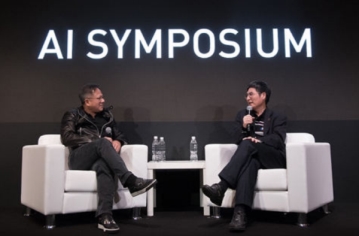
NVIDIA and the Taiwanese government are working together to accelerate AI development.
Nvidia announced that it will accelerate artificial intelligence development in Taiwan's commercial sector together with Taiwan's Ministry of Science and Technology (MOST). This initiative is being undertaken in support of the Ministry of Science and Technology's recently announced "Grand Plan for AI Industry Development."
2017.10.30by 명세환 기자
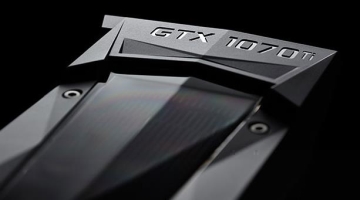
NVIDIA Launches Pascal-Based GPU Line 'GTX 1070 Ti'
Nvidia has announced the launch of the GeForce GTX 1070 Ti, adding it to its Pascal-based gaming GPU lineup. The GeForce GTX 1070 Ti, which will be positioned between the GeForce GTX 1080 and 1070 GPUs that have garnered high praise among gamers, will launch globally on November 2nd and is currently available for pre-order. The estimated consumer price for the GeForce GTX 1070 Ti is $449 USD. Based on the Pascal GPU architecture recognized for its excellence through numerous awards, the GeForce GTX 1070 Ti is equipped with 2,432 cores and 8GB of memory, delivering speeds of 8Gbps (gigabits per second), with total memory bandwidth reaching 256GB per second. This represents roughly twice the performance of the legendary GeForce GTX 970.
2017.10.30by 김지혜 기자
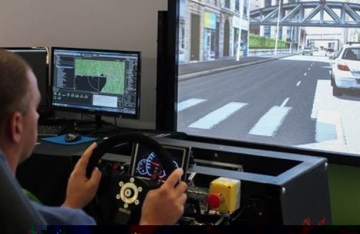
NVIDIA Enhances Autonomous Driving Safety with GPU-Powered Road Driving Simulation
Nvidia has announced that it is enhancing the safety of autonomous vehicles by testing various driving environments through simulations utilizing its GPUs. In the development process of autonomous vehicles, simulation testing can be more effective than actual testing due to its higher flexibility and adaptability, particularly when testing hazardous or uncommon driving conditions. Simulations also enable the testing of multiple scenarios in a short timeframe. During the opening keynote address at GTC Europe held in Munich, Nvidia CEO Jensen Huang announced that through real-time simulation via Nvidia DGX and the new TensorRT 3, engineers can conduct driving simulations of 300,000 miles (approximately 480,000 kilometers) in just 5 hours. This means that all roads within the United States can be simulated in just two days.
2017.10.31by 김지혜 기자
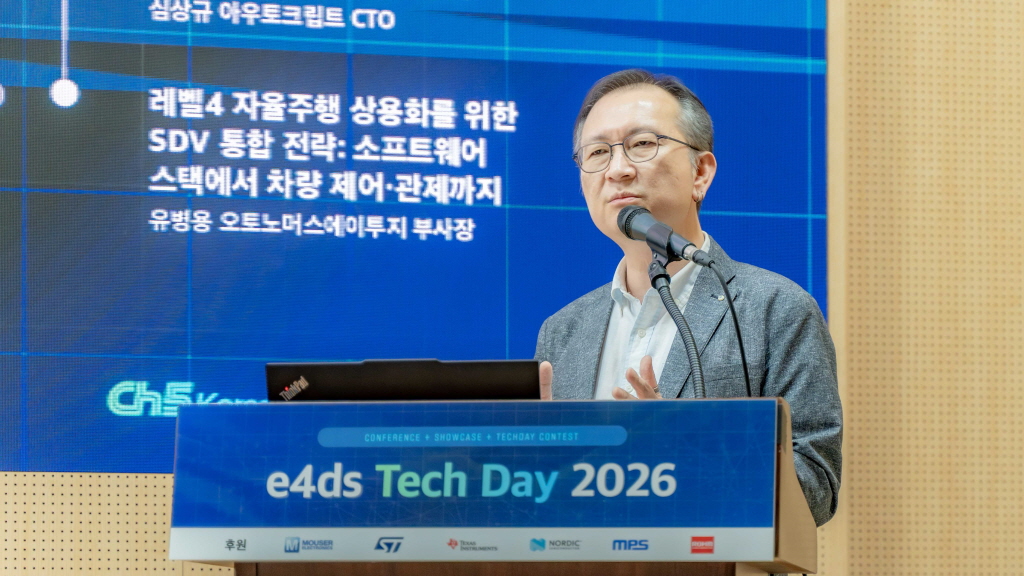
[e4ds Tech Day 2026 ⑨] Sim Sang-gyu, Autocrypt CTO: "In the Physical AI Era, Automotive Security Must Extend Beyond the Vehicle"
At e4ds Tech Day 2026, Sim Sang-gyu, CTO of Autocrypt, explained automotive cybersecurity strategies in the era of Physical AI and SDV (Software-Defined Vehicle). Automobiles are evolving as part of an ecosystem connected to AI, cloud, chargers, IoT, and robots, and he emphasized that the scope of security must expand beyond the vehicle interior to the entire connected environment. In particular, AI model tampering, adversarial attacks, OTA updates, and EV charger hacking were identified as major threats. He explained that response measures require zero trust, AI model integrity protection, intrusion detection, Security by Design and Default, and full lifecycle security management, and that proactive security system establishment beyond regulatory compliance is critical for securing future mobility competitiveness.
2026.10.12by 배종인 기자

Practical HIL Construction Strategy for Automotive and Off-Highway Controller Validation
As vehicle E/E architecture transitions to zonal structures and shifts to software-defined vehicles (SDV), the number of controllers (ECUs) requiring validation and software complexity are surging dramatically. Meanwhile, real vehicle testing cannot provide repeated verification under identical conditions and entails lead time and safety concerns. This white paper explains the principles of HIL (Hardware-in-the-Loop) validation and the structure of the NI platform composed of PXI, SLSC, and VeriStand, and through two actual implementation cases—Camera Record & Replay HIL for In-Cabin Monitoring Controller (ICMU) and Forklift Controller (VCU) HILS—describes how controller-level regression testing becomes possible. Additionally, it explicitly states application boundaries and limitations, such as lack of A2B support.
2026.10.12by 편집부











