


Gartner: "Asia-Pacific CIOs Actively Adopt Digital Innovation Technologies"
 Published2017.11.15 09:58
According to an annual survey of Chief Information Officers (CIOs) conducted by Gartner, CIOs in the Asia-Pacific region were found to be more likely to adopt innovative technologies, such as the Internet of Things (IoT) and Artificial Intelligence (AI), as well as conversational interfaces, compared to CIOs in other regions.
Gartner announced these survey results at the recent Gartner Symposium/ITxpo held in Australia. The 2018 Gartner CIO Agenda Survey was conducted among 3,160 CIOs worldwide, including 537 CIOs from 17 countries in the Asia-Pacific region; the revenue and public sector budgets of the companies participating in the survey amounted to $3.4 trillion, and IT spending reached $49 billion.
According to this survey, 43% of respondents in the Asia-Pacific region (37% globally) stated that they have either completed IoT adoption or plan to do so soon, while for AI, the figure was 37% (25% globally). Those who responded that they have invested in conversational interfaces, as well as in virtual reality (VR) and augmented reality (AR), accounted for 28% and 20%, respectively (21% and 17% globally). 13% of respondents stated that they are utilizing blockchain or distributed ledger technology, a figure higher than the global average of 9%.
Andy Rowsell-Jones, Senior Vice President and Senior Research Analyst at Gartner, said, “The Asia-Pacific region is a very successful site for digital business. "Furthermore, the manufacturing, financial services, mining, government agencies, and educational facility construction sectors are also very robust, further promoting the utilization of technology," he said.
The CIO role has been restructured due to digitalization.
95% of CIOs surveyed predicted that their roles would change or be restructured due to digitalization. With the implementation of world-class IT delivery capabilities, the time CIOs spend on this is expected to gradually decrease. Respondents indicated that the biggest change in the CIO role is becoming a "change leader" and assuming greater and broader responsibilities than before. It appears that the CIO's role will extend beyond the traditional domain of IT delivery into other areas such as innovation management and talent development.
Rosell-Jones said, “The nature of the CIO role is shifting from being the head of IT delivery to the head of IT business. It is moving from managing IT costs and coordinating engineering processes to driving revenue and leveraging data,” adding, “Leaders’ digital business expansion is steep. The end of 2017 and 2018 will be a decisive time for CIOs who do not want to fall behind in the market.”
According to this survey, the roles of CIOs in the Asia-Pacific region were expanding beyond traditional IT-related functions, but the proportion was smaller compared to CIOs worldwide. It was found that 44% were responsible for digital transformation (55% globally), 37% for innovation (54% globally), and 17% for corporate change (28% globally).
Rosell-Jones said, “Some CIOs in Asia appeared to be rarely given the authority to go beyond their existing, limited IT fields.” "That does not mean they should shirk their responsibility to drastically change the organization," he explained.
Asia-Pacific CIOs' IT Budgets to Increase by 5.1% Next Year
CIOs in the Asia-Pacific region forecast that IT budgets will increase by 5.1% next year, a figure higher than the global average of 3%. In Australia and New Zealand, CIOs expect IT budgets to grow by an average of 3.2%, an improvement over the 2% increase anticipated last year. Rosell-Jones explained that the growth in IT budgets this year is evident as corporate digitalization takes place across the Asia-Pacific region.
This survey revealed that CIOs in the Asia-Pacific region are in the process of moving from digital experimentation to digital expansion. However, early digital experiments or pilot projects did not necessarily lead to digital expansion. Only 15% of respondents stated that they had actually achieved digital expansion, and a mere 3% said they were already seeing tangible results and were in the stage of improving their digital strategy; these figures were similar globally.
42% of respondents in the Asia-Pacific region cited organizational culture as the biggest obstacle to digital expansion (46% globally), followed by a lack of talent (24%) and a lack of resources (19%).
Rosell-Jones stated, “CIOs need to identify their current organizational culture and future vision,” adding, “In the process, they must recognize the strengths of the current organizational culture and set cultural change as a concept of ‘gradual change’ rather than a major overhaul in order to respect employees’ commitment and ask them to join.”
Comments
Related news

Gartner: Global Semiconductor Revenue Surpasses $411.1 Billion in 2017
Gartner forecasted that the global semiconductor market revenue in 2017 would reach $411.1 billion, representing a 19.7% year-over-year increase. This marks the most pronounced revenue growth since 2010, which saw a 31.8% increase, reflecting recovery following the financial crisis. Jon Erensen, Principal Research Analyst at Gartner, stated, "Memory continues to drive semiconductor market growth, and due to supply-demand dynamics and resulting price increases, memory market revenue is projected to grow 57% in 2017. Memory shortages, particularly DRAM scarcity, are further driving up semiconductor revenue." He added, "This strong momentum is spreading to other semiconductor sectors including non-optical sensors, analog, discretes, and image sensors, which are expected to grow approximately 10% throughout 2017."
2017.10.16by 김지혜 기자
Gartner forecasts 2.4% rise in smartphone shipments next year
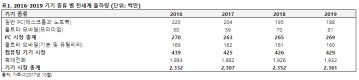
Gartner forecasts that global shipments of PCs, tablets, and smartphones in 2018 will reach 2.35 billion units, representing a 2% increase year-over-year. Ranjit Atwal, Principal Research Analyst at Gartner, stated, "According to a recent end-user survey we conducted, PC and tablet usage is as high as smartphone usage," and explained, "40% of respondents answered that they use PCs or tablets for specific tasks such as sending and receiving emails and watching videos, while 34% answered that they use smartphones because they can be used conveniently while on the move." Atwal also added, "The PC market is struggling due to longer product replacement cycles, whereas smartphone replacement cycles are relatively faster." Accordingly, general PC shipments are projected to decline by 4.4% in 2018, while mobile phone shipments are expected to increase by 2.4%.
2017.10.23by 김지혜 기자

Gartner Selects Top 10 Digital Innovation Companies in the Asia-Pacific Region
According to Gartner, top digital innovation companies in the Asia-Pacific region pose both a threat and an opportunity to global enterprises, yet chief information officers (CIOs) are not paying sufficient attention to these Asia-Pacific digital innovators. Analysts advised that CIOs seeking to build and expand their digital businesses should identify and understand these leading Asia-Pacific innovation companies as early as possible, and through discussions with their strategy teams, make decisions on whether to collaborate with or compete against these digital giants.
2017.11.09by 김지혜 기자

Nvidia invests $5 billion in Intel
NVIDIA and Intel, leaders in global AI computing technology, are now forging ahead in providing cutting-edge solutions through NVLink-based architecture integration. NVIDIA and Intel have officially announced a strategic partnership and stated that they will jointly develop customized data center and personal computing products to accelerate diverse applications and workloads ranging from hyperscale to enterprise and consumer markets, thereby laying the foundation for the next generation computing era.
2025.09.22by 배종인 기자
.jpg)
Applied Materials Launches Environmental Protection Campaign to Mark World Cleanup Day
Applied Materials Korea (CEO Park Kwang-seon) is carrying out environmental cleanup activities with employees and their families around the Dongtan Sinricheon area on the occasion of World Cleanup Day, evolving into a company that engages with the local community beyond technological innovation.
2025.09.22by 명세환 기자











