


Samsung Electronics Secures Core Battery Technology Five Times Faster than Lithium-ion Batteries
 Published2017.11.27 11:53
Samsung Electronics Advanced Institute of Technology (research team led by In-hyuk Son and Seok-kwang Du) has succeeded in developing a battery material called 'graphene ball' that can increase charging capacity by 45% compared to existing lithium-ion batteries while making charging speed more than five times faster.
While existing batteries took nearly an hour to fully charge even with fast charging technology, a battery using 'graphene ball' material can be fully charged in 12 minutes. In addition, it can maintain stability up to 60°C, which is the temperature standard required for electric vehicle batteries.
The research results related to this were recently published online in the scientific journal Nature Communications under the title "Realization of High-Speed Charging and High-Capacity Lithium-Ion Batteries Using Graphene Balls."
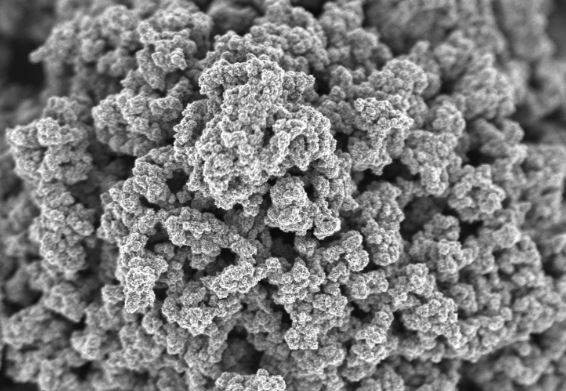
Samsung Electronics Advanced Institute of Technology, while searching for a way to apply graphene, which has high strength and conductivity, to batteries, identified a mechanism to mass-synthesize graphene in a three-dimensional form resembling popcorn using inexpensive silica (SiO2).
When 'graphene balls' were utilized as a protective layer for the positive electrode and as a negative electrode material in lithium-ion batteries, the results showed increased charging capacity, reduced charging time, and satisfaction with high-temperature safety.
Samsung Electronics Advanced Institute of Technology has filed two patents in the United States and Korea regarding technology related to 'graphene balls'.
“This research has enabled the inexpensive mass synthesis of multifunctional, highly crystalline graphene composite materials while significantly improving various characteristics of lithium-ion batteries,” said Inhyeok Son, a principal researcher at Samsung Electronics’ Advanced Institute of Technology and the first author of the paper. “We will continue to advance secondary battery technology to keep pace with the recent rapid growth of the mobile device and electric vehicle markets.”
Comments
Related news
Samsung Electronics Develops Amorphous Graphene Technology Grown on Semiconductors
Professor Hwang Dong-mok from the Division of Materials Science and Engineering at Sungkyunkwan University's College of Engineering, Dr. Lee Jae-hyun, Executive Vice President Hwang Sung-woo from Samsung Electronics' Advanced Institute of Technology, and Dr. Ju Won-je, among others, jointly announced that they have developed the world's first groundbreaking technology for synthesizing large-area single-atomic-layer amorphous graphene on semiconductor wafers.
2017.02.13by 김지혜 기자
Can Graphene Overcome the Limitations of Flexible Displays?
While there are ongoing discussions about foldable and flexible displays, what is the reason for the slow development of flexible displays? At a seminar on flexible display technology trends and issues held at KINTEX in Ilsan on the 17th, Dr. Kim Myeong-jong of the Korea Institute of Science and Technology (KIST), who gave a keynote presentation, stated, "Going forward, displays will be based on OLED and will move toward larger sizes, transparency, and flatness," and added, "Large-area CVD graphene is being applied in various fields, and since it is also used as a transparent electrode, it can be utilized in flexible and transparent displays as well."
2017.02.27by 김지혜 기자
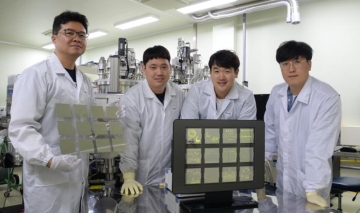
ETRI to Use Graphene Instead of ITO in Displays
ETRI (Electronics and Telecommunications Research Institute) has successfully developed a display by creating electrodes using graphene, referred to as a dream material, instead of indium tin oxide (ITO), which has been widely used as electrodes for conventional OLED displays. The display substrate developed by the research team measures 370mm x 470mm, which is approximately the size of a 19-inch monitor. The graphene electrode thickness is 5 nanometers (nm) or less. ETRI anticipates that combining graphene with a flexible substrate will enable the implementation of thin and flexible displays. If realized, this could serve as a core technology applicable to the manufacturing of wearable devices that can be applied to clothing and skin.
2017.04.17by 김지혜 기자

Intel Unveils Next-Generation 'Core Ultra Series 3' and vPro Platform for Enterprise PCs
Intel has officially unveiled the "Intel Core Ultra Series 3" for next-generation enterprise PCs and the latest vPro platform, addressing a wide range of demands from enterprise notebooks to high-performance workstations.
2026.03.26by 배종인 기자

ROHM Launches ESD Protection Diode Compatible with High-Speed Interfaces of 10Gbps or Higher
Semiconductor specialist ROHM has developed the 'RESDxVx series' of ESD (electrostatic discharge) protection diodes capable of responding to next-generation high-speed data communication environments exceeding 10Gbps, simultaneously enhancing both signal quality maintenance required in high-speed interfaces and IC protection performance.
2026.03.26by 배종인 기자











