



Artificial Intelligence, a Key Element of Future Transportation
 Published2017.12.15 11:23
NVIDIA showcased the autonomous driving capabilities of its NVIDIA DRIVE platform at GTC Japan, held for two days starting on the 12th, and stated that artificial intelligence will emerge as a key element of future transportation.
To prepare for changes in future transportation that will be driven by data-driven software technology, the industry is applying artificial intelligence computers to cars, trucks, and shuttle buses and conducting full-scale training using deep learning in data centers. These software-based systems have the advantage of being able to manage various levels of autonomous driving, ranging from Level II (partial automation) to Level V (full automation).
At GTC Japan, the final event of NVIDIA's GPU Technology Conference World Tour held in seven cities around the world this year, NVIDIA founder and CEO Jensen Huang explained how to implement the scalable architecture required for autonomous driving based on the NVIDIA Drive platform.
CEO Jensen Huang stated, “The future of transportation depends on software-based autonomous vehicles,” adding, “They will be equipped with a highly secure operating system based on sophisticated algorithms, and various types of applications will run on top of it.” Explaining that as the requirements for autonomous vehicles increase, automakers need scalable systems they can utilize, NVIDIA's R&D team showcased the training of autonomous test vehicles.
The next-generation NVIDIA Drive platform is based on Xavier, the world's most advanced system. CEO Jensen Huang stated that he hopes NVIDIA's Xavier will be supplied quickly to automakers and robot developers worldwide.
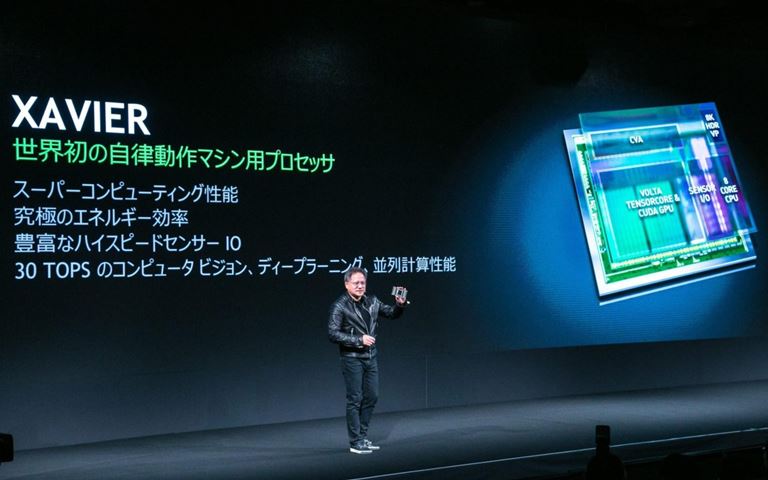
Autonomous vehicles equipped with Xavier can process external and internal sensor data using advanced neural networks, enabling eye tracking, gesture recognition, and natural language understanding, which allows for the implementation of applications based on 360-degree surrounding environment recognition.
On highways, Drive Zavier acts as an auxiliary driver, taking over the driving duties while fully recognizing the surrounding environment to execute functions such as cruise control, lane keeping, and automatic lane changes. The system's functionality can also be extended throughout the vehicle's lifespan through wireless software updates using Wi-Fi or cellular connections.
In addition, the NVIDIA Drive IX software development kit enables a smart experience in autonomous vehicles by allowing the car to notify the driver of potential hazards in the external environment and detect situations such as drowsy driving or decreased attention, thereby providing appropriate warnings.
CEO Jensen Huang explained, “Artificial intelligence will not only change the experience outside the vehicle, but will also completely transform how drivers enjoy driving and interact with the vehicle.”
Pioneer, a global manufacturer of automotive electronics, announced that it is collaborating with NVIDIA to apply the Drive platform to its 3D LiDAR sensors. Pioneer recently began supplying 3D LiDAR demonstration products to automotive manufacturers and ICT companies in Japan and around the world.
Tier IV, a Japanese developer of autonomous driving technology, unveiled 'Milee,' an electric golf cart capable of fully autonomous driving on the final mile using the NVIDIA Drive platform. Milee is equipped with all the necessary features for autonomous driving, including a 3D mapping positioning system using laser scanners, object detection, decision-making algorithms, and driving path mapping, and is designed for short-distance driving with a top speed of 20 km/h.
NVIDIA unveiled 'BB8,' a research autonomous vehicle containing the fundamental elements of autonomous driving, for the first time at GTC Japan, providing event participants with an opportunity to see firsthand the various sensors that enable autonomous driving and to reconsider the future of transportation brought about by artificial intelligence.
Comments
Related news
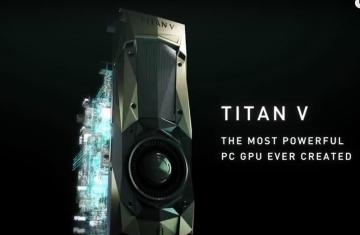
NVIDIA Unveils PC GPU 'Titan V'
NVIDIA unveiled the TITAN V, a powerful consumer GPU based on NVIDIA Volta, an advanced GPU architecture, at a conference affiliated with the Neural Information Processing Systems (NIPS). Jensen Huang, NVIDIA founder and CEO, personally presented the "TITAN V," a GPU specialized in computational processing for scientific simulations, at the NIPS conference. The TITAN V delivers processing power of 110 teraflops, approximately 9 times higher than previous products, through 21.1 billion transistors, while boasting excellent energy efficiency. CEO Jensen Huang stated, "Through Volta, we have set a vision of breaking through the limits of high-performance computing (HPC) and AI, and have pioneered new territory with new processor architecture, processing methods, numerical formats, memory architecture, and processor links," and added, "NVIDIA will provide researchers and scientists worldwide with the Volta-based 'TITAN V,' and we have high expectations for the groundbreaking discoveries they will demonstrate."
2017.12.11by 김지혜 기자
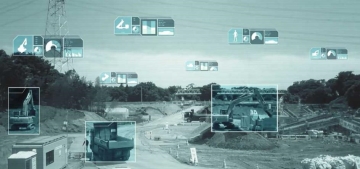
NVIDIA Signs AI Partnership with Komatsu for Construction Site Safety
Nvidia announced that it has established a partnership with Komatsu to introduce artificial intelligence at construction sites to enhance safety and efficiency on-site. At the GTC Japan event, which runs for two days starting on the 12th, Jensen Huang, founder and CEO of Nvidia, explained that the partnership between the two companies focuses on how Komatsu will utilize Nvidia's GPUs for visualization and analysis of entire construction sites. Going forward, the NVIDIA Jetson AI platform will serve as the brain of heavy equipment deployed at construction sites, and is expected to improve safety and productivity. At GTC Japan, the final event of this year's seven Global GPU Technology Conferences, CEO Jensen Huang stated, "As artificial intelligence is being used extensively across various industries, the next frontier to pioneer will be the field of autonomous intelligent machines. The machinery and work sites of the future will sense their surrounding conditions and maintain continuous alert status, thereby providing more efficient and safer work environments. In particular, the construction and mining sectors will benefit significantly from these technological advances."
2017.12.14by 김지혜 기자
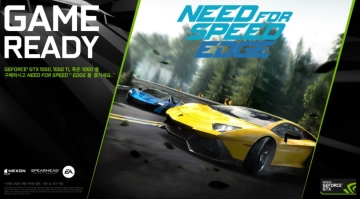
Nvidia GeForce GTX 10 Series Bundle Promotion with 'Need for Speed: EDGE'
Nvidia is conducting a promotion offering all customers who purchase GeForce GTX 1050, 1050 Ti, and 1060 graphics cards with a bundle coupon for the new online game 'NEED FOR SPEED: EDGE' and an in-game item A-Class TOP10 vehicle pack. 'Need for Speed: EDGE', developed by Electronic Arts' development studio Spearhead and launched by Nexon, is a new online game in the 'Need for Speed' series, which has led the racing game genre since its debut in 1994. By acquiring licenses for famous real-world automobiles, the game implements authentic designs and performance specifications of various vehicle types, further enhancing satisfaction among gaming enthusiasts who love automobiles.
2017.12.15by 김지혜 기자
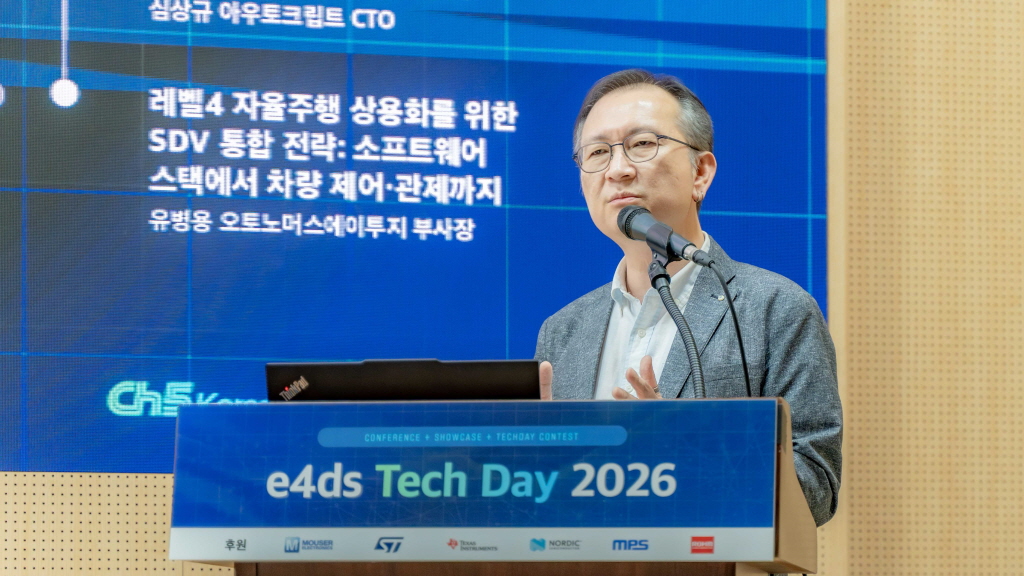
[e4ds Tech Day 2026 ⑨] Sim Sang-gyu, Autocrypt CTO: "In the Physical AI Era, Automotive Security Must Extend Beyond the Vehicle"
At e4ds Tech Day 2026, Sim Sang-gyu, CTO of Autocrypt, explained automotive cybersecurity strategies in the era of Physical AI and SDV (Software-Defined Vehicle). Automobiles are evolving as part of an ecosystem connected to AI, cloud, chargers, IoT, and robots, and he emphasized that the scope of security must expand beyond the vehicle interior to the entire connected environment. In particular, AI model tampering, adversarial attacks, OTA updates, and EV charger hacking were identified as major threats. He explained that response measures require zero trust, AI model integrity protection, intrusion detection, Security by Design and Default, and full lifecycle security management, and that proactive security system establishment beyond regulatory compliance is critical for securing future mobility competitiveness.
2026.10.12by 배종인 기자

Practical HIL Construction Strategy for Automotive and Off-Highway Controller Validation
As vehicle E/E architecture transitions to zonal structures and shifts to software-defined vehicles (SDV), the number of controllers (ECUs) requiring validation and software complexity are surging dramatically. Meanwhile, real vehicle testing cannot provide repeated verification under identical conditions and entails lead time and safety concerns. This white paper explains the principles of HIL (Hardware-in-the-Loop) validation and the structure of the NI platform composed of PXI, SLSC, and VeriStand, and through two actual implementation cases—Camera Record & Replay HIL for In-Cabin Monitoring Controller (ICMU) and Forklift Controller (VCU) HILS—describes how controller-level regression testing becomes possible. Additionally, it explicitly states application boundaries and limitations, such as lack of A2B support.
2026.10.12by 편집부











