



What are the measures to promote electric vehicles in Korea?
 Published2017.12.22 09:05
It is predicted that the electric vehicle industry will become a key trend by 2025.
As interest in eco-friendly cars grows due to environmental issues around the world, awareness of electric vehicles has also improved. China has stepped forward to reorganize its automobile industry around electric vehicles. Europe has also decided to completely phase out internal combustion engine vehicles by 2040. Toyota Motor of Japan has announced a policy to eliminate internal combustion engine vehicles by 2025.
In line with this movement, Korea has also established a policy to distribute 350,000 electric vehicles and 10,000 chargers by 2022, in line with comprehensive measures for fine dust management. Currently, local governments are providing subsidies for the distribution of electric vehicles and are implementing tax support policies such as individual consumption tax, acquisition tax reduction, parking lot discounts, charging fee discounts, and highway toll discounts.
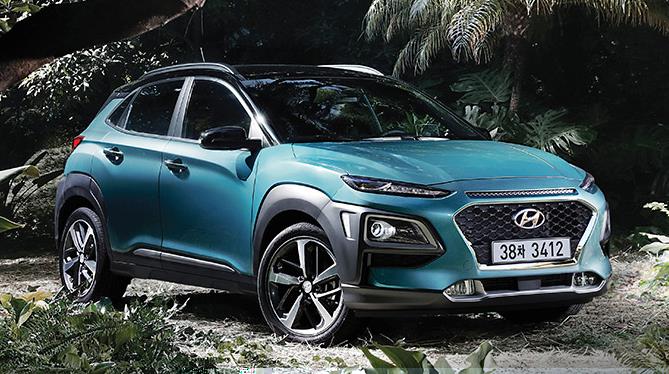
The charging infrastructure, which has been pointed out as a problem in the spread of electric vehicles, is expected to be installed at around 2,000 units by the end of this year, and a total of 3,614 units will be installed by 2018. Although it is not yet as many as internal combustion engine gas stations, it is not a small number compared to Japan (21 units per unit) and Germany (62 units per unit), which is 10.9 units per rapid charger.
There was a discussion among experts to identify issues that need to be resolved to revitalize the domestic electric vehicle market. The event was attended by Chairman Kim Pil-soo of the Korea Electric Vehicle Association (chairman), Director Lee Hyeong-seop of the Clean Air Planning Division of the Ministry of Environment, Director Park Jong-won of the Automobile and Aviation Division of the Ministry of Trade, Industry and Energy, Director Seo Hyeong-woo of the Advanced Automobile Technology Division of the Ministry of Land, Infrastructure and Transport, Senior Researcher Lee Hang-goo of the Korea Institute for Industrial Economics & Trade, Park Jeong-ho of Renault Samsung Motors, Professor Park Gyeong-rin of Jeju Electric Vehicle, Daeyoung Chaebi CEO Jeong Min-gyo, and SNE Research CEO Kim Gwang-ju.
There needs to be fostering of secondary industries such as recycling of waste batteries.
Chairman Kim Pil- soo: Electric vehicles have many difficult aspects because infrastructure is important. We cannot replicate other countries’ models and must create a Korean-style electric vehicle. The public response was lower than the number of units distributed, but this year there was a positive response. I think if we start when there is interest and the number of units exceeds 50,000 within 2-3 years, the market will form on its own.
Representative Jeong Min-gyo: This year, the number of companies that provide rapid or slow charging infrastructure has decreased to less than five. The difficulty in the charging infrastructure business is that there are not many players in the market. This is because it is difficult for companies to make a profit in the short term. The budget must act as a catalyst for infrastructure to be established. The private sector, rather than local governments or the government, should step forward. Since charging takes more than 30 minutes, customers are those who have parking spaces and spare spaces. I hope these people will participate.
Professor Park Kyung-lin: The electric vehicle market is growing. The sales rate in the third quarter of this year compared to last year exceeded 60%. We also have battery technology, which is the core technology for electric vehicles. Nevertheless, the current situation is that development is not as fast as in other countries. There are many issues, such as consumer awareness and infrastructure, but I think the problem is that there are few leading companies.
Internal combustion engine vehicles were built by large companies that put engines on automobile platforms, and small and medium-sized companies completed them through a subcontracting structure, but this is not the case with electric vehicles. The entry barriers for small and medium-sized companies are low. However, the domestic market structure is such that if a leading company goes fast, they will follow quickly, but if they go slow, they will follow slowly.
If the government creates a platform dedicated to electric vehicles with development support, the pace of development will accelerate. In order to activate electric vehicles, related back-end industries must be fostered.
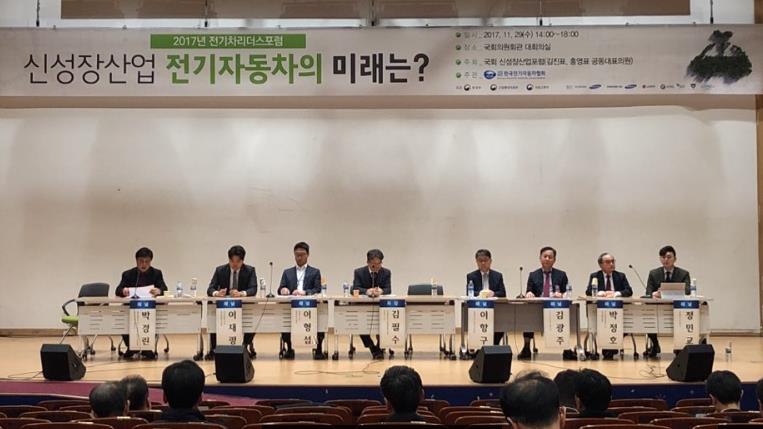
Chairman Kim Pil- soo: An electric vehicle platform for small and medium-sized companies is important. There is no infrastructure for personnel to manage electric vehicle maintenance, charger management, etc., and methods for reusing waste batteries. How do you think the market can be activated?
Professor Park Kyung-lin is preparing a waste battery recycling project in Jeju Island. This refers to waste batteries that are charged to less than 80% of their initial charge, and can be reused for ESS rather than electric vehicles. The used electric vehicle market has not yet been formed, so if waste batteries are recycled and the used car price is guaranteed, demand will increase thanks to the secondary industry.
Director Park Jeong-ho: From the perspective of a supplier, I think it is right to first develop the electric taxi and electric truck sectors. For taxis, securing a driving range is important, and the current 200 or so electric vehicles can travel 100 km in the first generation. The second generation of mid-sized electric vehicles can be used as taxis. Electric vehicles have less vibration, which reduces fatigue and also solves the problem of aging LPG. This is a possible story if only local governments have charging facilities.
Electric trucks are currently under development for the 1-ton class. They can be used not only for general cargo, but also as camper vans or food trucks because they are powered by electricity. They can also be used for electric refrigerators and freezer trucks, which will have a ripple effect on related industries.
There must be clear government measures, including clear goals and regulations.
Senior Researcher Lee Hang-gu: There was no promotion of electric vehicles in Korea. Because they started with too high expectations, they sprang up like mushrooms and failed, and there were no challenges since. In such a situation, existing automakers had no choice but to proceed.
Advanced countries are clearly setting goals and strengthening regulations. In Korea, there is no roadmap and commercialization is sluggish. Chargers are also a problem. In Japan, electric vehicles and chargers are growing together, but we are blaming each other for not having them. There should be a network system to manage electric vehicles and chargers, but because there is not, inefficiencies such as chargers breaking down or being used as parking lots continue to occur.
Government can't do everything. Successful business models require collaboration between companies.
Manager Lee Hyeong-seop: The reason why electric vehicles are not being supplied is because there is no system. A clear signal needs to be given to the market. Only then will charger manufacturers decide whether to enter the market or not. There is still uncertainty as the government's measures have changed several times.
Someday, internal combustion engine vehicles will disappear, and there should be regulations for the sale of internal combustion engine vehicles. We need to set a final goal, a year, and a method.
Chairman Kim Pil-soo: The purpose of rapid charging is for emergency purposes, but there are many misunderstandings due to weak publicity. How is the safety aspect progressing?
The Ministry of Land, Infrastructure and Transport is promoting the establishment of a testing center that can conduct battery safety and inspections. It is scheduled to be established in the year after next at the latest. In addition, various underwater tests are being conducted on floating batteries, such as how to respond when an electric vehicle falls into water. Installation is only possible if it meets international standards.
We provide firefighters with safety and measures in case of electric vehicle accidents two or three times a year. Also, micromobility is a trend these days, but if there is an accident in the early stage of the market, the market cannot be formed. Korea has some stronger standards than Europe. There are some areas where the European standards are lacking in the domestic environment. For example, Europe does not require windows. How do people drive cars without windows in Korea? We have set standards accordingly. Compared to other countries, the safety standards are trustworthy.
There are various laws related to electric vehicles, including transportation, roads, housing, land, construction, and building infrastructure. We will discuss regulatory reforms to help develop electric vehicles.
Comments 1
1 Comments:
Related news
LG Electronics Establishes EV Parts Factory in Michigan
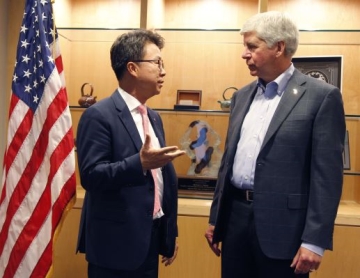
LG Electronics will establish an electric vehicle parts factory in Michigan, USA. LG Electronics plans to directly produce electric vehicle parts in Michigan, USA, where major automakers are concentrated, and strengthen local partnerships to accelerate the expansion of its automotive parts business. In particular, the company aims to solidify its position in the global electric vehicle parts industry by capturing the rapidly growing US electric vehicle market. According to market research firm IHS, the United States is one of the three largest electric vehicle markets alongside China (257,929 units) and Europe (108,639 units), with 104,178 pure electric vehicles sold last year. From this year through 2020, the US electric vehicle market is projected to achieve a compound annual growth rate of 65.5%.
2017.08.23by 김자영 기자

LG Innotek to Participate in EV Charging Standardization
LG Innotek has joined CharIN (Charging Interface Initiative e.V.), an international electric vehicle charging association that leads the standardization of EV charging methods. The company is expected to gain momentum in expanding its electric vehicle components business. CharIN is a global organization that develops the Combined Charging System (CCS) as a standard, which is expanding in Korea, North America, and Europe. Over 100 companies are active as member organizations, ranging from major automakers such as BMW, Daimler, GM, and Volkswagen to component suppliers including Bosch and Continental. LG Innotek has been actively proposed by CharIN member companies to participate as a key member in charging standard development. This is in recognition of the company's electric vehicle charging control communication technology and competitive advantages in vehicle components.
2017.10.20by 김지혜 기자

Samsung Electronics Secures Core Battery Technology Five Times Faster than Lithium-ion Batteries
Samsung Electronics Advanced Institute of Technology (research team led by Son In-hyuk and Doo Seok-kwang) has successfully developed 'graphene balls,' a battery material that can improve charging capacity by 45% compared to conventional lithium-ion batteries while enabling charging speeds more than five times faster. Conventional batteries require nearly one hour for full charging even with fast-charging technology, but batteries using the 'graphene balls' material can be fully charged in 12 minutes. Additionally, they can maintain stability up to 60°C, the temperature standard required for electric vehicle batteries. The research results have been recently published online in the scientific journal Nature Communications under the title "High-speed charging and high-capacity lithium-ion battery implementation using graphene balls."
2017.11.27by 김지혜 기자

[e4ds Tech Day 2026 ⑨] Sim Sang-gyu, Autocrypt CTO: "In the Physical AI Era, Automotive Security Must Extend Beyond the Vehicle"
At e4ds Tech Day 2026, Sim Sang-gyu, CTO of Autocrypt, explained automotive cybersecurity strategies in the era of Physical AI and SDV (Software-Defined Vehicle). Automobiles are evolving as part of an ecosystem connected to AI, cloud, chargers, IoT, and robots, and he emphasized that the scope of security must expand beyond the vehicle interior to the entire connected environment. In particular, AI model tampering, adversarial attacks, OTA updates, and EV charger hacking were identified as major threats. He explained that response measures require zero trust, AI model integrity protection, intrusion detection, Security by Design and Default, and full lifecycle security management, and that proactive security system establishment beyond regulatory compliance is critical for securing future mobility competitiveness.
2026.10.12by 배종인 기자

Practical HIL Construction Strategy for Automotive and Off-Highway Controller Validation
As vehicle E/E architecture transitions to zonal structures and shifts to software-defined vehicles (SDV), the number of controllers (ECUs) requiring validation and software complexity are surging dramatically. Meanwhile, real vehicle testing cannot provide repeated verification under identical conditions and entails lead time and safety concerns. This white paper explains the principles of HIL (Hardware-in-the-Loop) validation and the structure of the NI platform composed of PXI, SLSC, and VeriStand, and through two actual implementation cases—Camera Record & Replay HIL for In-Cabin Monitoring Controller (ICMU) and Forklift Controller (VCU) HILS—describes how controller-level regression testing becomes possible. Additionally, it explicitly states application boundaries and limitations, such as lack of A2B support.
2026.10.12by 편집부












어찌됐든 머지않은 미래로군요...