


ROHM Announces Intelligent Boost/Buck Control IC Requiring No Microcontroller Control
 Published2018.01.02 09:20
Last October, ROHM shipped a battery charging IC capable of automatically responding to various charging changes, such as wireless and USB PD (USB Power Delivery) charging. This is because the adoption of USB PD, which enables charging connector standardization by allowing up to 100W charging in mobile devices such as laptops, has recently increased, and the release of devices supporting two or more charging methods has also increased.
For example, most smartphones released in the market in the second half of this year, such as the iPhone 8 and Galaxy Note, already support USB charging and wireless charging as standard. Nintendo and Huawei laptops are also already releasing devices that support USB PD to the market.
Existing multi-charging methods, such as boost and buck charging using AC adapters supporting 5V / 1.5 ~ 3A and wireless charging based on the WPC Qi standard, provide convenience to users when charging devices, but increase the burden of multi-design for designers developing mobile devices equipped with batteries.
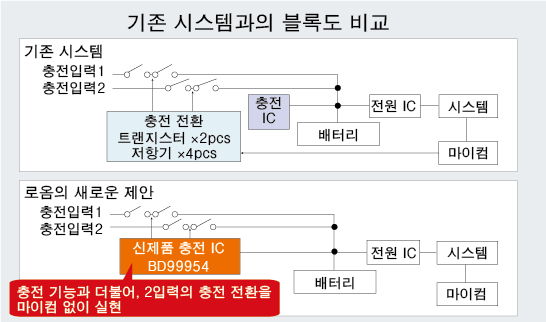
ROHM has released the BD99954, a charging control IC capable of distinguishing inputs between USB PD and wireless charging ICs, to overcome this complex design environment. The IC BD99954 replaces the 2 transistors and 4 resistors required for the two existing charge inputs with 2 BD99954s, and is designed to enable charge switching without the need for a FET drive input control microcontroller required for the existing charging system.
This intelligently supports two charging paths, USB PD and wireless charging, with a single charging IC, thereby enabling the simultaneous implementation of the latest charging methods with the utmost simplicity. This allows developers to dramatically reduce the burden of multi-design.
FET-driven input control that does not require a microcontroller
In conventional systems, the design of an input control microcontroller for driving FETs is essential due to the use of transistors and resistors. However, the BD99954 automatically steps up and down the charging voltage range between 20V (such as USB PD) and 5V (common for conventional USB and wireless charging). This eliminates the need for existing microcontroller functions, thereby reducing mounting area and shortening development time. For example, when charging a 2-cell battery (8.4V), charging to 8.4V is possible by stepping down with a 20V input, while charging to 8.4V is possible by stepping up with a 5V input.
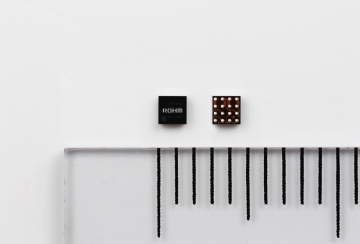
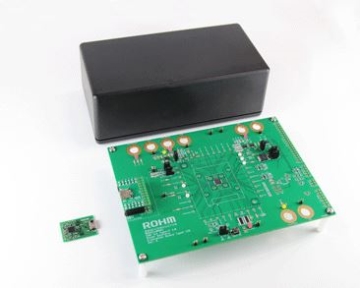
The BD99954 2-system charging compatible IC is intended for battery-powered mobile devices that operate at 100W or less, such as laptops, tablet PCs, smartphones, power banks, wireless audio, and battery-powered displays, and the BD99954MWV-EVK-101, an evaluation board for development support, is also currently on sale.

Comments
Related news
If there is a boost DC/DC converter that satisfies mobile miniaturization and battery life
ROHM Co., Ltd. announced the development of BD1865GWL, a compact, highly efficient, high-power step-up DC/DC converter that operates from a single-cell lithium-ion battery for smartphones and tablets. The BD1865GWL, suitable for mobile devices equipped with USB and HDMI terminals, applies analog design technology to enable ultra-low voltage operation down to a minimum of 2.5V during battery discharge in mobile devices requiring miniaturization and extended battery life. As a result, the company explained that battery operating time is extended compared to conventional 2.7V products.
2016.03.16by 명세환 기자
Rohm Launches USB PD Power Supply Evaluation Board
Rohm announced the launch of the BM92AxxMWV-EVK-001 series (6 types) power supply evaluation boards that realize USB Power Delivery (USB PD) through USB Type-C connectors.
2017.07.06by 김자영 기자

Intel Unveils Next-Generation 'Core Ultra Series 3' and vPro Platform for Enterprise PCs
Intel has officially unveiled the "Intel Core Ultra Series 3" for next-generation enterprise PCs and the latest vPro platform, addressing a wide range of demands from enterprise notebooks to high-performance workstations.
2026.03.26by 배종인 기자
ROHM Launches ESD Protection Diode Compatible with High-Speed Interfaces of 10Gbps or Higher
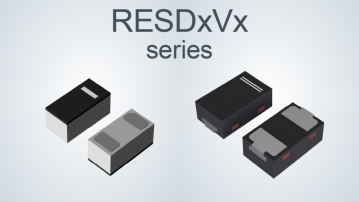
Semiconductor specialist ROHM has developed the 'RESDxVx series' of ESD (electrostatic discharge) protection diodes capable of responding to next-generation high-speed data communication environments exceeding 10Gbps, simultaneously enhancing both signal quality maintenance required in high-speed interfaces and IC protection performance.
2026.03.26by 배종인 기자
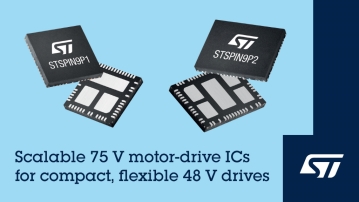
ST Launches 75V Drive IC Targeting 48V Industrial Motor Driving
ST Microelectronics has unveiled the 'STSPIN9P' series of 75V motor drive ICs tailored for 48V-class industrial drive system design. The new product family is characterized by half-bridge and full-bridge configurations that enable design scalability according to motor type and output conditions. Power supply circuits, protection functions, and current sensing circuits are integrated on-chip to simplify system configuration, and the devices are designed to support applications up to 500W maximum. The company plans to provide reference designs and demo boards to support development and evaluation in industrial automation, robotics, pumps, fans, lighting, and textile machinery.
2026.03.26by 배종인 기자











