


Infineon Supports NVIDIA Drive AI Platform for Level 5 Autonomous Driving
 Published2018.01.10 12:29
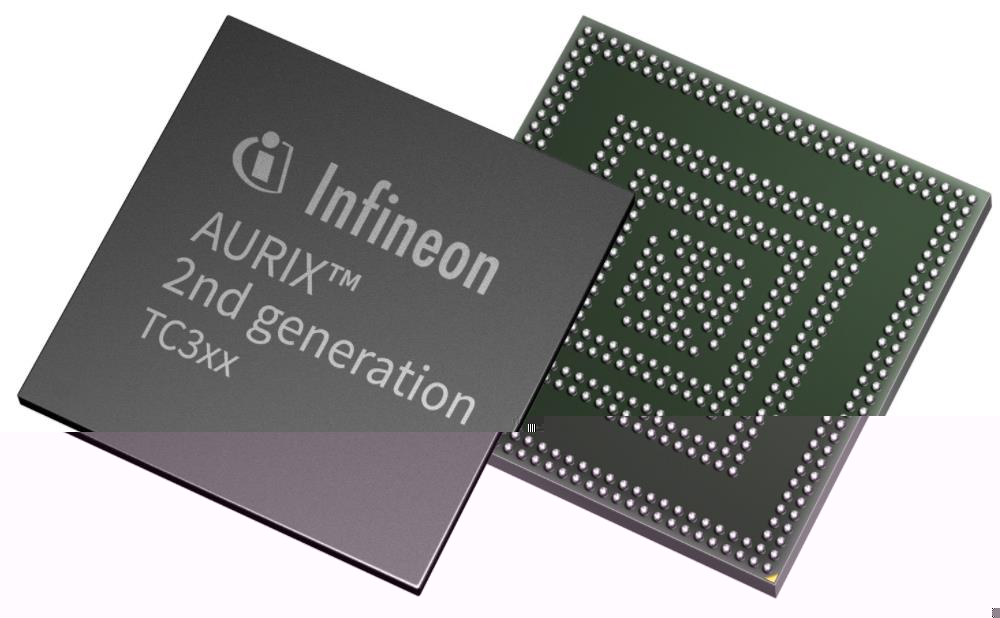
Infineon Technologies announced that it is expanding its collaboration with NVIDIA for safe autonomous driving. Infineon's AURIX TC3xx series automotive microcontrollers are used in the NVIDIA DRIVE Pegasus AI automotive computing platform. The supercomputer for autonomous driving meets the Level 5 autonomous driving requirements defined by the SAE (Society of Automotive Engineers).
Infineon supplies safety controllers, safety power supply ICs, and selected vehicle communication interface ICs for various NVIDIA DRIVE systems. These devices enhance levels of autonomous driving capability, ranging from auto cruise to auto chauffeur and fully autonomous driving.
Through the collaboration between Infineon and NVIDIA, platform users can access AURIX capabilities via an AUTOSAR-compatible software stack. This allows for the reuse of high-level application code and reduces development time by 20 to 40 percent compared to existing platforms.
For over 30 years, Infineon has been providing critical safety and reliability technologies for all stages of autonomous driving. “The collaboration between Infineon and NVIDIA to develop multiple generations of DRIVE automotive computers provides the automotive industry with a consistent platform for developing driver assistance systems and fully autonomous driving systems at all levels,” said Ritesh Tyag, Head of Infineon’s Silicon Valley Automotive Innovation Center (SVAIC).
Multicore microcontrollers enable the platform to meet the highest level of functional safety standards (ISO 26262 ASIL-D) for ADAS (Advanced Driver Assistance Systems) and fully autonomous driving systems. The AURIX TC3xx series enables the implementation of a scalable and efficient platform with significantly improved performance compared to the previous generation.
With regard to ADAS and autonomous driving functions, AURIX microcontrollers support ASIL-D applications with safe computational performance of over 3,000 DMIPS, hardware self-test mechanisms for logic and memory, integrated monitoring, and redundant peripherals. Furthermore, the next-generation AURIX provides a higher level of integration, enhanced high-speed connectivity interfaces, and advanced security features.
The microcontroller serves as the core layer of the platform's safety monitoring framework and performs monitoring functions for the SoC. AURIX plays a critical role in DRIVE Pegasus achieving system-level ASIL-D safety. It also manages the driving sequence and monitoring of warning signals for the autonomous driving platform. Furthermore, the AURIX microcontroller provides key in-vehicle interfaces for multiple network communication channels, such as CAN-FD, Gigabit Ethernet, and FlexRay.
Comments
Related news
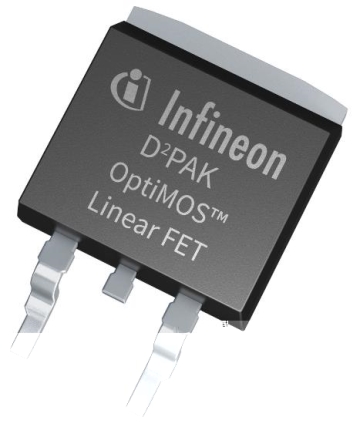
Infineon Launches New OptiMOS Linear FET Series
Infineon Technologies has launched the OptiMOS Linear FET series. The new product family combines the excellent on-state resistance (RDS(on)) of trench MOSFETs with the wide safe operating area (SOA) of planar MOSFETs, resolving the trade-off between RDS(on) and linear mode functionality. OptiMOS Linear FET can operate in the saturation region of enhancement-mode MOSFETs. The OptiMOS Linear FET series is suitable for hot-swap, e-fuse, and protection applications commonly used in telecommunications and battery management systems (BMS).
2017.08.09by 김지혜 기자
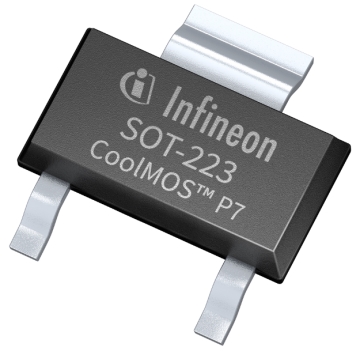
Infineon launches cost-effective, low-power SMPS
Infineon Technologies has launched the CoolMOS™ P7 product in SOT-223 package. Designed for drop-in compatibility with DPAK, it is perfectly compatible with standard DPAK footprints and is suitable for applications such as smartphone chargers, laptop adapters, TV power supplies, and lighting. CoolMOS P7 is designed to meet the demands of the low-power SMPS market. It combines outstanding performance and ease of use, and enables the utilization of an improved form factor. Additionally, by utilizing superjunction technology with excellent price competitiveness, customers can reduce overall BOM (bill of materials) costs.
2017.08.29by 김지혜 기자
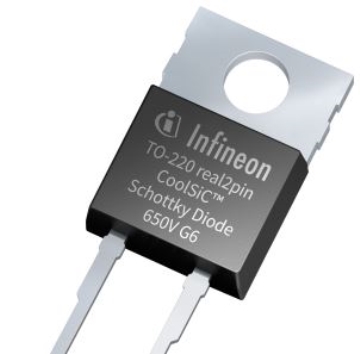
Infineon launches 650V diode suitable for high-speed switching
Infineon Technologies (Korea Representative Director Lee Seung-soo) has launched the CoolSiC™ Schottky diode 650V G6 product family. The CoolSiC G6 diode provides high reliability, quality, and efficiency, and perfectly complements the 600V/650V CoolMOS™ 7 product family, meeting current and future requirements for server and PC power supplies, telecom equipment power supplies, PV inverters, and more.
2017.10.16by 김자영 기자

Intel Unveils Next-Generation 'Core Ultra Series 3' and vPro Platform for Enterprise PCs
Intel has officially unveiled the "Intel Core Ultra Series 3" for next-generation enterprise PCs and the latest vPro platform, addressing a wide range of demands from enterprise notebooks to high-performance workstations.
2026.03.26by 배종인 기자

ROHM Launches ESD Protection Diode Compatible with High-Speed Interfaces of 10Gbps or Higher
Semiconductor specialist ROHM has developed the 'RESDxVx series' of ESD (electrostatic discharge) protection diodes capable of responding to next-generation high-speed data communication environments exceeding 10Gbps, simultaneously enhancing both signal quality maintenance required in high-speed interfaces and IC protection performance.
2026.03.26by 배종인 기자











