



Gartner: “Advancement of Emotional AI Changes the Landscape of Personal Devices”
 Published2018.01.12 11:24
Gartner predicted that with the advancement of emotional AI systems, personal devices would be able to better understand human emotions by 2022. Artificial intelligence is currently changing the way humans and technology interact, creating various forms of disruptive growth drivers.
“Emotion AI Systems and Affective Computing enable personal devices to identify, analyze, process, and respond to emotions and moods so that they can provide context-appropriate, personalized experiences,” said Roberta Cozza, a principal research analyst at Gartner. “To stay in the market, companies will need to integrate AI technology to suit every aspect of their devices.”
The recent craze for emotional AI systems is driven by the proliferation of virtual personal assistants (VPAs) and conversational AI technology. Artificial intelligence technology provides richer customer experiences, including educational software, video games, diagnostic software, exercise and health functions, and autonomous vehicles.
Researcher Koza stated, “Prototypes or commercial products of emotional AI systems already exist,” adding, “These can enhance the user experience to an astonishing degree by analyzing various data, such as users’ facial expressions, intonation, and behavioral patterns, and adding emotional context.”
He added, “It also collects, analyzes, and processes user emotional data by fulfilling and responding to user requirements through wearables, connected vehicles, computer vision, audio, and sensors, going beyond smartphones and connected home devices.”
According to Gartner, personal devices are projected to see that by 2021, 10% of wearable device users will experience lifestyle changes and their lifespan will be extended by an average of six months; by 2020, 60% of personal technology device manufacturers will utilize third-party AI cloud services to enhance product features and services; and by 2022, security technologies combined with machine learning, biometrics, and user behavior will reduce the share of password-based authentication in total digital authentication to less than 10%.
Comments
Related news

Gartner Selects Top 10 Digital Innovation Companies in the Asia-Pacific Region
According to Gartner, top digital innovation companies in the Asia-Pacific region pose both a threat and an opportunity to global enterprises, yet chief information officers (CIOs) are not paying sufficient attention to these Asia-Pacific digital innovators. Analysts advised that CIOs seeking to build and expand their digital businesses should identify and understand these leading Asia-Pacific innovation companies as early as possible, and through discussions with their strategy teams, make decisions on whether to collaborate with or compete against these digital giants.
2017.11.09by 김지혜 기자

Gartner: "Asia-Pacific CIOs Actively Adopt Digital Innovation Technologies"
Gartner's annual survey of chief information officers (CIOs) revealed that CIOs in the Asia Pacific region are adopting innovative technologies such as the Internet of Things (IoT) and artificial intelligence (AI), as well as conversational interfaces, at higher rates compared to CIOs in other regions. Gartner announced these survey results at the Gartner Symposium/ITxpo held recently in Australia. The 2018 Gartner CIO Agenda Survey was conducted with 3,160 CIOs globally, including 537 CIOs from 17 countries in the Asia Pacific region. The surveyed enterprises' combined revenue and public sector budgets totaled $3.4 trillion, with IT spending reaching $49 billion.
2017.11.15by 김지혜 기자
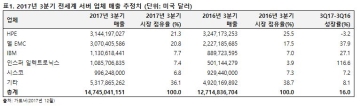
Gartner: Global Server Revenue Increased 16% Year-Over-Year in Q3
Gartner Inc. announced that global server revenues in the third quarter of 2017 increased 16% year-over-year, while shipments rose 5.1% since the second quarter of 2016. Jeffrey Hewitt, senior research director at Gartner, stated, "Global server revenues in the third quarter of 2017 continued to show strong growth with notable regional expansion. Infrastructure buildout for cloud and hybrid cloud implementations was a key growth driver in the server market during this period."
2017.12.13by 김지혜 기자
Nvidia invests $5 billion in Intel
NVIDIA and Intel, leaders in global AI computing technology, are now forging ahead in providing cutting-edge solutions through NVLink-based architecture integration. NVIDIA and Intel have officially announced a strategic partnership and stated that they will jointly develop customized data center and personal computing products to accelerate diverse applications and workloads ranging from hyperscale to enterprise and consumer markets, thereby laying the foundation for the next generation computing era.
2025.09.22by 배종인 기자
.jpg)
Applied Materials Launches Environmental Protection Campaign to Mark World Cleanup Day
Applied Materials Korea (CEO Park Kwang-seon) is carrying out environmental cleanup activities with employees and their families around the Dongtan Sinricheon area on the occasion of World Cleanup Day, evolving into a company that engages with the local community beyond technological innovation.
2025.09.22by 명세환 기자











